
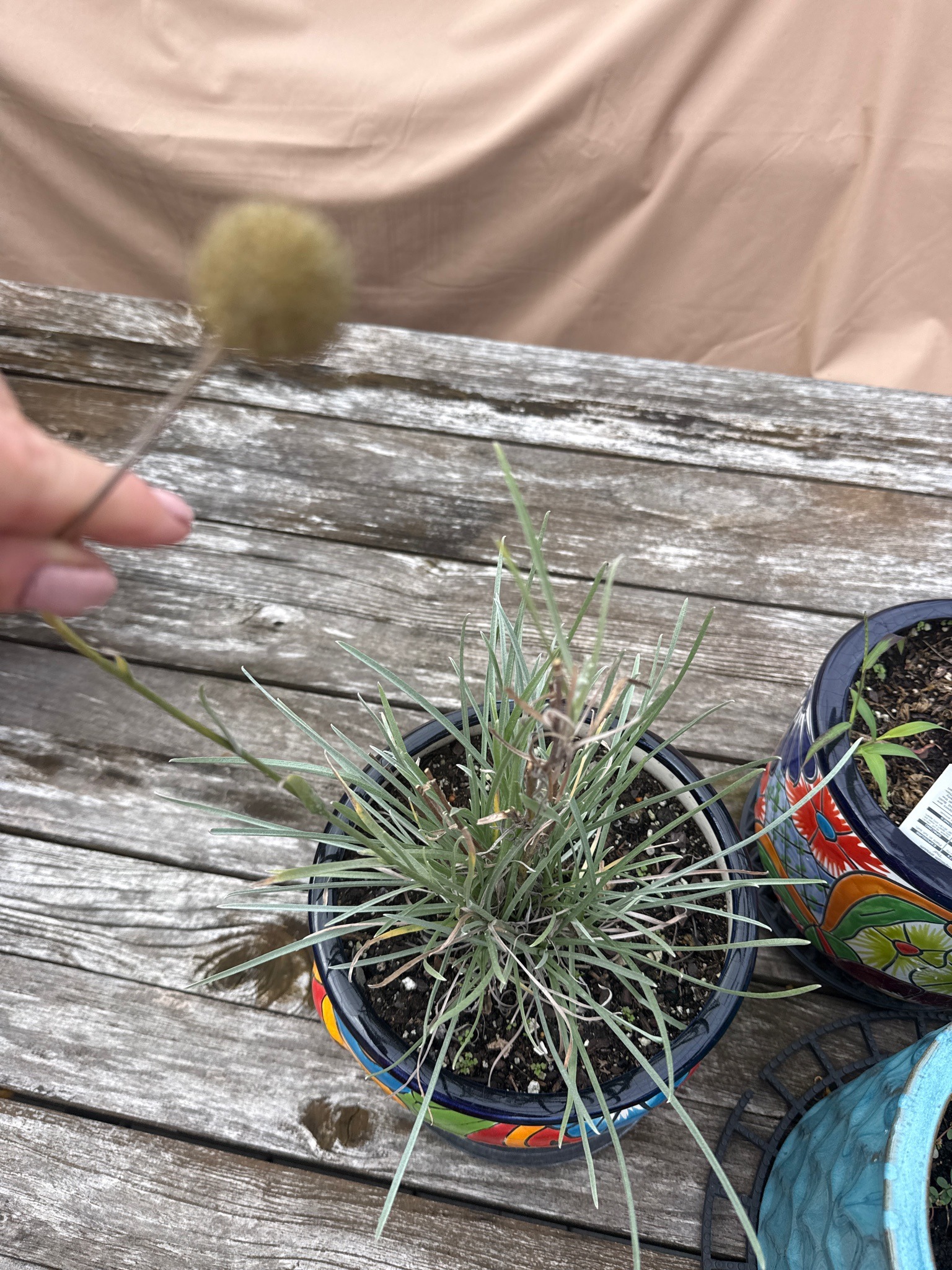
Billy Buttons
Pycnosorus globosus
A herbaceous perennial featuring narrow, linear, silvery-gray leaves forming a basal tuft and distinctive, spherical bright yellow flower heads held on long, slender stems.
- Light
- Full sun, requiring at least 6 hours of direct sunlight daily.
- Water
- Moderate drought tolerance once established. Water deeply when the top few inches of soil become dry, ensuring good drainage to prevent root moisture issues.
- Growth
- Herbaceous perennial forming a compact rosette of foliage with upright flowering stems. Reaches a mature height of 1 to 2 feet with a similar spread, exhibiting a moderate growth rate.
Care instructions
Provide full sun, well-draining soil, and allow the soil to dry out between waterings. Fertilize sparingly during the spring growing season with a balanced, low-nitrogen fertilizer.
Growing details
Sunlight
Full sun, requiring at least 6 hours of direct sunlight daily.
Watering
Moderate drought tolerance once established. Water deeply when the top few inches of soil become dry, ensuring good drainage to prevent root moisture issues.
Soil
Prefers sandy or loamy soils with excellent drainage and a neutral to slightly acidic pH range between 6.0 and 7.0.
Hardiness zone
USDA Hardiness Zones 8 through 11, appreciating protection from severe freezing temperatures.
Growth habit
Herbaceous perennial forming a compact rosette of foliage with upright flowering stems. Reaches a mature height of 1 to 2 feet with a similar spread, exhibiting a moderate growth rate.
Bloom season
Blooms from late spring through summer, producing dense, globose, button-like bright yellow flower heads on leafless scapes.
Propagation
Propagated successfully through division of established clumps in spring or by sowing seeds in well-draining seed-starting mix under warm conditions.
Common pests & issues
Susceptible to root rot if grown in heavy, poorly draining soils. Watch for occasional aphids or fungal leaf spots during humid weather, managed by improving air circulation and light levels.
Similar species
Other members of the daisy family with globose inflorescences, such as Craspedia uniflora, distinguished primarily by minor floral bract differences and leaf morphology.