
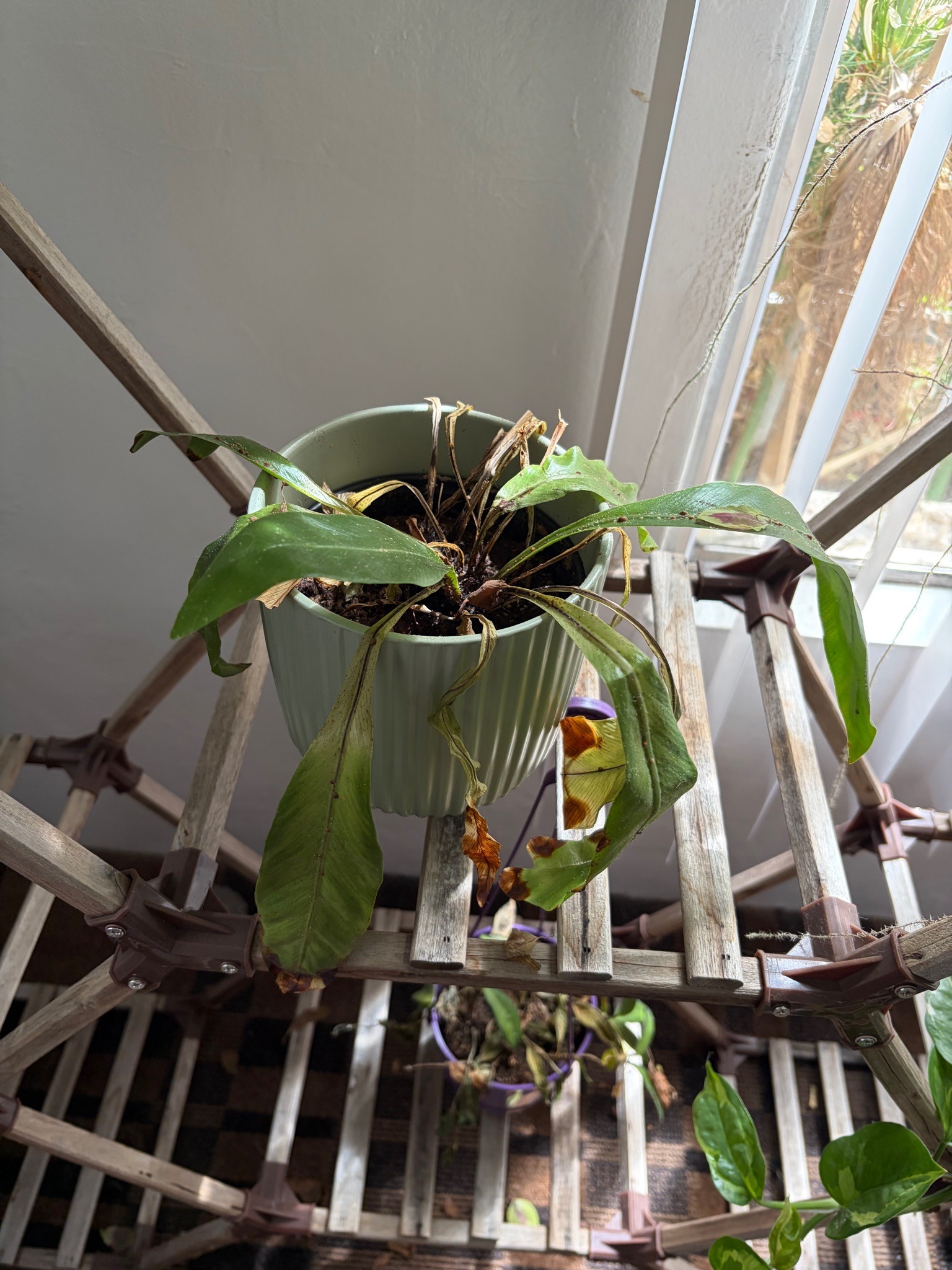
Bird's Nest Fern
Asplenium nidus
An epiphyte fern featuring simple, glossy, bright green fronds that emerge from a central fuzzy rosette, resembling a bird's nest.
- Light
- Bright indirect light to partial shade, approximately 4 to 6 hours daily. Avoid direct sunlight which can scorch the fronds.
- Water
- Water when the top inch of soil feels slightly dry. Maintain even moisture. Avoid pouring water directly into the center crown to prevent rot.
- Growth
- Evergreen perennial epiphyte with a rosette growth habit. Mature indoor height and spread typically reach 2 to 4 feet.
Care instructions
Provide bright indirect light, keep the soil consistently moist but never waterlogged, maintain high ambient humidity, and use a balanced liquid fertilizer diluted to half strength monthly during the spring and summer.
Growing details
Sunlight
Bright indirect light to partial shade, approximately 4 to 6 hours daily. Avoid direct sunlight which can scorch the fronds.
Watering
Water when the top inch of soil feels slightly dry. Maintain even moisture. Avoid pouring water directly into the center crown to prevent rot.
Soil
Well-draining, organic-rich potting mix with a slightly acidic to neutral pH range of 5.5 to 6.5.
Hardiness zone
USDA Hardiness Zones 11 to 12. Grown primarily as an indoor houseplant in cooler climates.
Growth habit
Evergreen perennial epiphyte with a rosette growth habit. Mature indoor height and spread typically reach 2 to 4 feet.
Bloom season
Non-flowering
Propagation
Propagated via spores, though challenging and slow. Typically acquired as nursery-grown specimens.
Common pests & issues
Prone to root rot from overwatering or water sitting in the crown. Brown tips can result from low humidity or underwatering. Pests include mealybugs and scale insects.
Similar species
Asplenium antiquum, which has narrower, more upright fronds compared to the broader, arching fronds of Asplenium nidus.