
Black Cherry
Prunus serotina
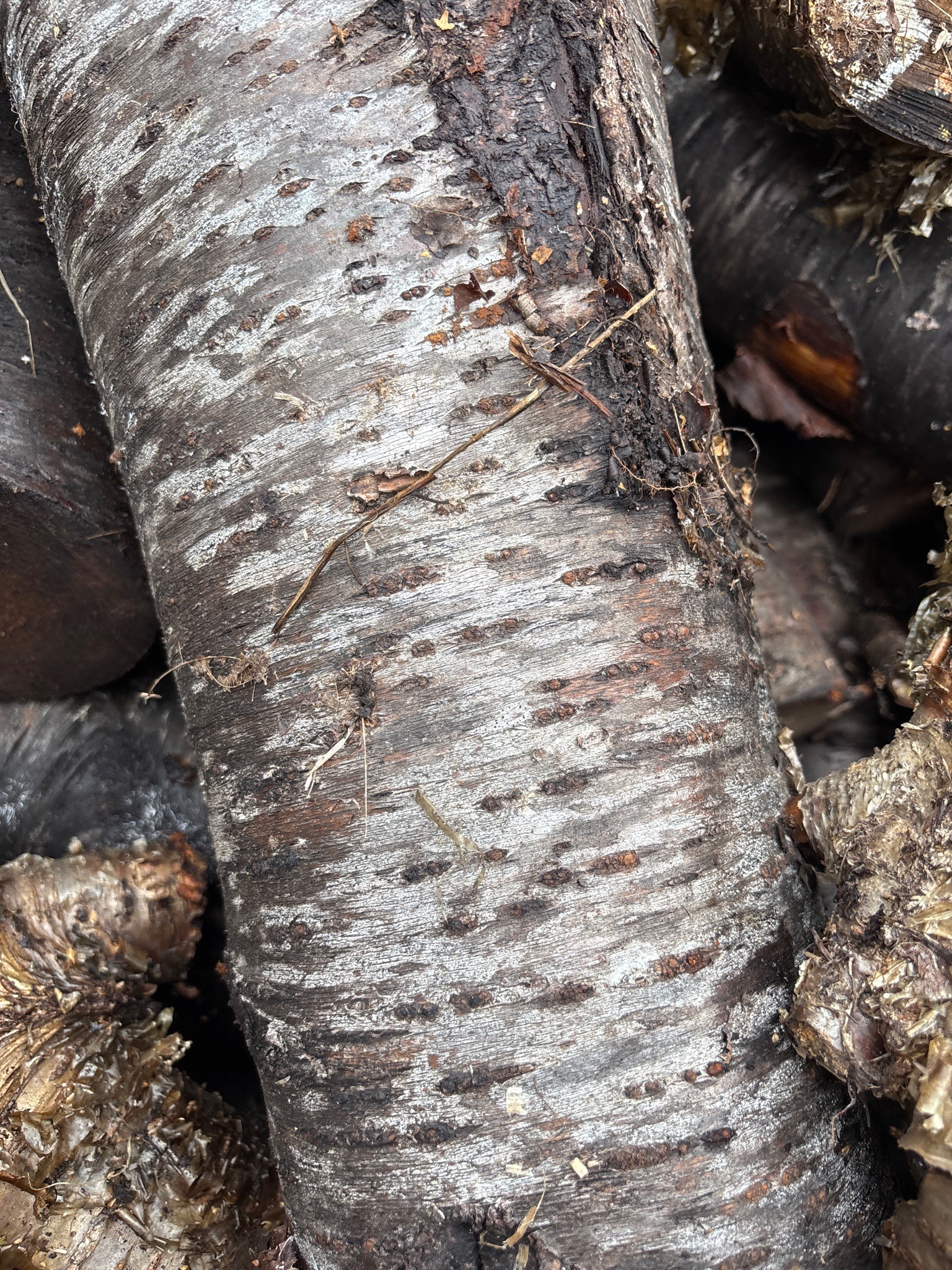
A medium to large deciduous tree recognized by its distinctive dark, rough bark that breaks into small, scaly, irregular plates resembling burnt cornflakes, and horizontal lenticels visible on younger bark.
- Light
- Full sun to partial shade, requiring at least six hours of direct sunlight daily
- Water
- Moderate moisture; water deeply during dry periods to maintain soil hydration while avoiding waterlogged conditions
- Growth
- Deciduous tree with an upright, oval to rounded crown, growing to mature heights of 50 to 80 feet with a moderate to fast growth rate
Care instructions
Plant in full sun to partial shade with well-draining soil. Water regularly during establishment and provide moderate moisture thereafter.
Growing details
Sunlight
Full sun to partial shade, requiring at least six hours of direct sunlight daily
Watering
Moderate moisture; water deeply during dry periods to maintain soil hydration while avoiding waterlogged conditions
Soil
Prefers rich, moist, loamy, and well-draining soils with a slightly acidic to neutral pH range of 6.0 to 7.0
Hardiness zone
USDA zones 3 through 9
Growth habit
Deciduous tree with an upright, oval to rounded crown, growing to mature heights of 50 to 80 feet with a moderate to fast growth rate
Bloom season
Spring, producing pendulous racemes of small, fragrant, white flowers
Propagation
Propagated primarily from seeds requiring cold stratification, or through softwood cuttings
Common pests & issues
Susceptible to tent caterpillars, aphids, black knot, and leaf spot diseases; proper spacing and air circulation help minimize fungal issues
Similar species
Pin Cherry (Prunus pensylvanica), which features brighter reddish-brown bark and smaller stature, and Chokecherry (Prunus virginiana), which typically grows as a shrub or small multi-stemmed tree