
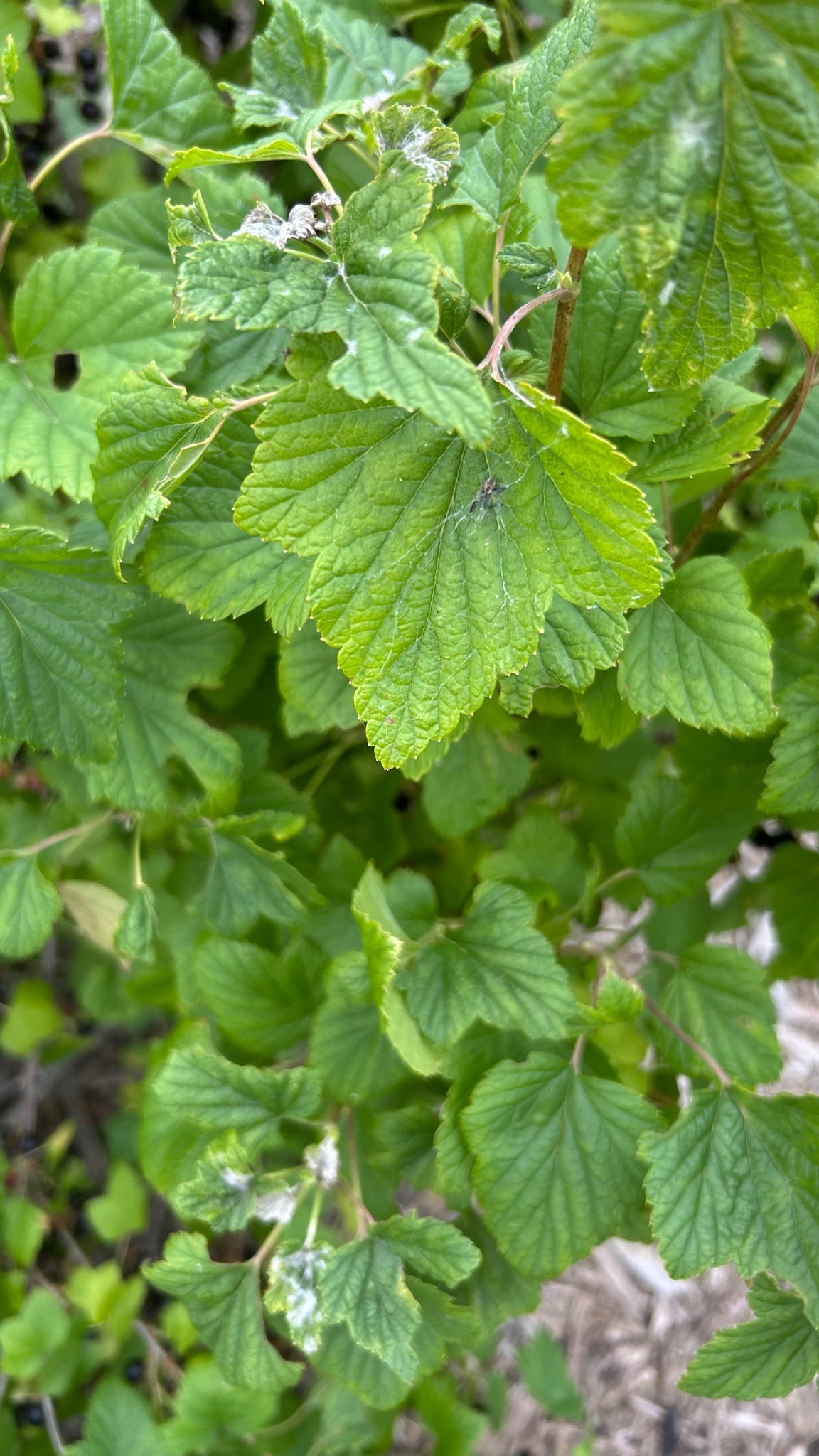
Black Currant
Ribes nigrum
A medium-sized deciduous shrub characterized by palmately lobed, light-to-medium green leaves with aromatic glands, woody upright stems, and small drooping racemes of pale flowers followed by dark purple-black berries.
- Light
- Full sun to partial shade (4 to 6 hours or more of sunlight daily)
- Water
- Requires regular watering to maintain consistently moist soil; avoid waterlogging. Drought can reduce foliage quality and crop production.
- Growth
- Deciduous multi-stemmed upright shrub reaching 1 to 1.5 meters (3 to 5 feet) in height and spread with a moderate growth rate.
Care instructions
Plant in full sun to partial shade in moisture-retentive, well-draining soil. Keep soil consistently moist, especially during early establishment and fruit formation. Apply balanced organic fertilizer in early spring and prune older woody stems annually to promote vigorous growth.
Growing details
Sunlight
Full sun to partial shade (4 to 6 hours or more of sunlight daily)
Watering
Requires regular watering to maintain consistently moist soil; avoid waterlogging. Drought can reduce foliage quality and crop production.
Soil
Rich, loamy, organic matter-dense soil with good drainage and a pH range of 6.0 to 6.8.
Hardiness zone
USDA Zones 3 through 7
Growth habit
Deciduous multi-stemmed upright shrub reaching 1 to 1.5 meters (3 to 5 feet) in height and spread with a moderate growth rate.
Bloom season
Spring (April to May); flowers are small, greenish-white to reddish, hanging in loose racemes.
Propagation
Hardwood cuttings taken in late autumn or winter, softwood cuttings in summer, or stem layering.
Common pests & issues
Susceptible to powdery mildew (visible white fungal coating on leaves), white pine blister rust, aphid infestations, and currant clearwing moth larvae.
Similar species
Red Currant (Ribes rubrum), which features smoother foliage and translucent red fruit; Gooseberry (Ribes uva-crispa), which typically possesses prominent stem thorns.