
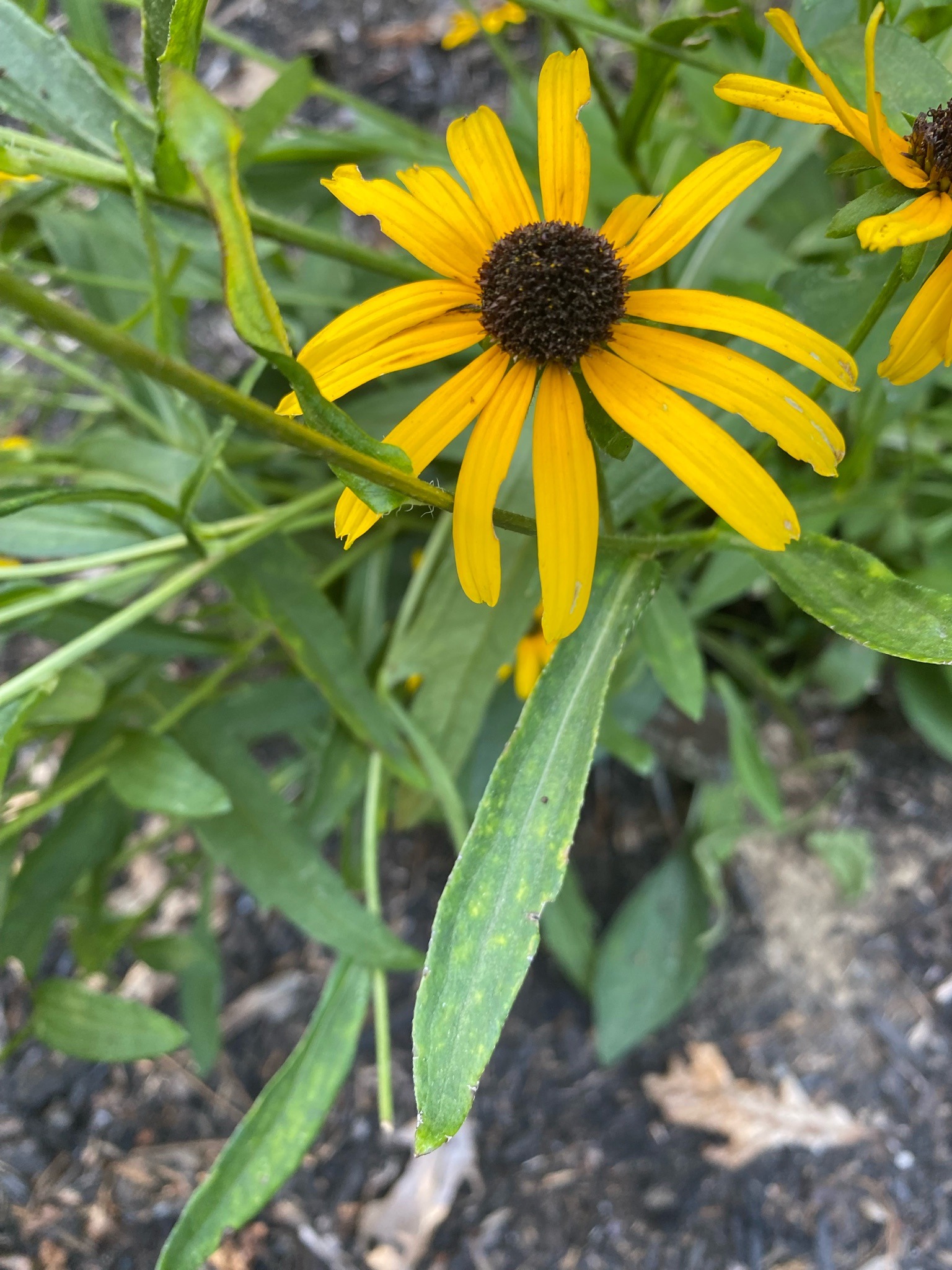
Black-eyed Susan
Rudbeckia hirta
An upright herbaceous flowering plant featuring bright yellow ray florets surrounding a prominent dark brown or black central cone.
- Light
- Full sun, requiring at least 6 hours of direct sunlight daily
- Water
- Moderate moisture needs; water when the top few inches of soil become dry. Drought-tolerant once established.
- Growth
- Usually grown as a short-lived perennial or biennial, reaching heights of 1 to 3 feet with a spread of 1 to 2 feet, featuring an upright and clump-forming habit.
Care instructions
Provide full sun and well-draining soil. Water regularly during establishment and dry spells. Fertilization is generally not necessary.
Growing details
Sunlight
Full sun, requiring at least 6 hours of direct sunlight daily
Watering
Moderate moisture needs; water when the top few inches of soil become dry. Drought-tolerant once established.
Soil
Prefers loamy, well-draining soil with a neutral pH between 6.0 and 7.0, though adaptable to clay and sandy soils.
Hardiness zone
USDA Zones 3 to 9
Growth habit
Usually grown as a short-lived perennial or biennial, reaching heights of 1 to 3 feet with a spread of 1 to 2 feet, featuring an upright and clump-forming habit.
Bloom season
Blooms from mid-summer through autumn with prominent yellow daisy-like flower heads.
Propagation
Propagated easily through seeds sown in spring or autumn, or by clump division in early spring.
Common pests & issues
Susceptible to powdery mildew in humid conditions and occasionally bothered by aphids or beetles.
Similar species
Purple coneflower (Echinacea purpurea), which features pinkish-purple ray petals rather than bright yellow ones.