
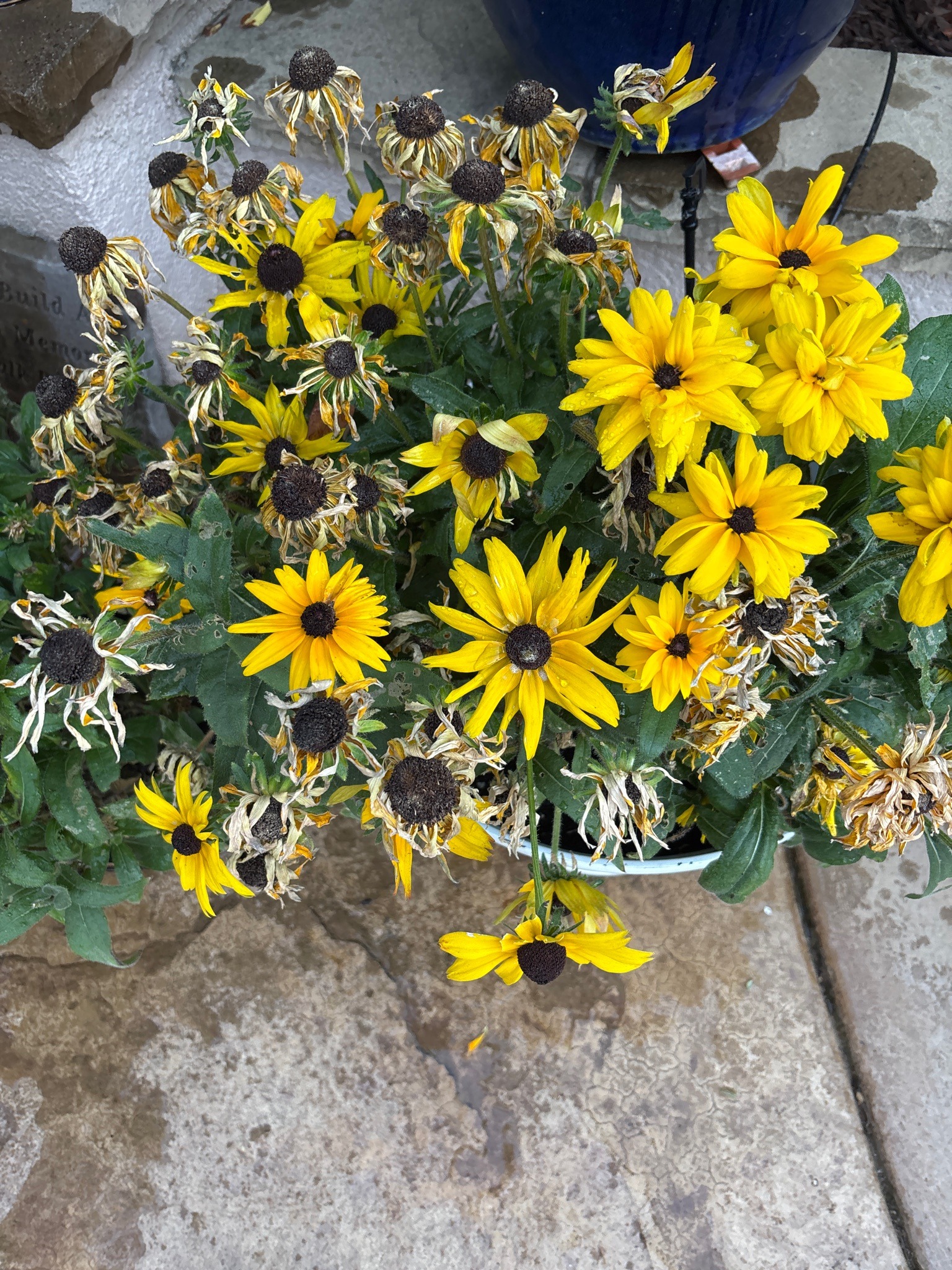
Black-eyed Susan
Rudbeckia hirta
An herbaceous plant featuring bright yellow, daisy-like flowers with prominent dark brown or black central cone disks and rough, hairy green leaves.
- Light
- Full sun, requiring at least 6 to 8 hours of direct sunlight per day.
- Water
- Moderate watering needs. Allow the top inch of soil to dry out between waterings. Drought-tolerant once fully established.
- Growth
- Herbaceous perennial typically growing 2 to 3 feet tall with a spread of 1 to 2 feet, displaying an upright and branching growth habit.
Care instructions
Provide full sun and well-draining soil. Water regularly to establish deep roots, keeping the soil moderately moist, and fertilize lightly during the active growing season.
Growing details
Sunlight
Full sun, requiring at least 6 to 8 hours of direct sunlight per day.
Watering
Moderate watering needs. Allow the top inch of soil to dry out between waterings. Drought-tolerant once fully established.
Soil
Prefers rich, well-draining loam with a neutral pH between 6.0 and 7.0, though it adapts well to clay or sandy soils.
Hardiness zone
USDA Hardiness Zones 3 through 9.
Growth habit
Herbaceous perennial typically growing 2 to 3 feet tall with a spread of 1 to 2 feet, displaying an upright and branching growth habit.
Bloom season
Blooms from early summer through autumn, producing vibrant yellow ray florets surrounding dark brown circular disk florets.
Propagation
Propagated easily by division in early spring or autumn, or by sowing seeds directly in the garden after the last frost.
Common pests & issues
Susceptible to powdery mildew and leaf spots in humid conditions with poor air circulation. Prevent by spacing plants adequately and avoiding overhead watering.
Similar species
Coneflower (Echinacea purpurea) looks similar but generally features pink, purple, or white ray petals with drooping rays rather than bright yellow petals.