
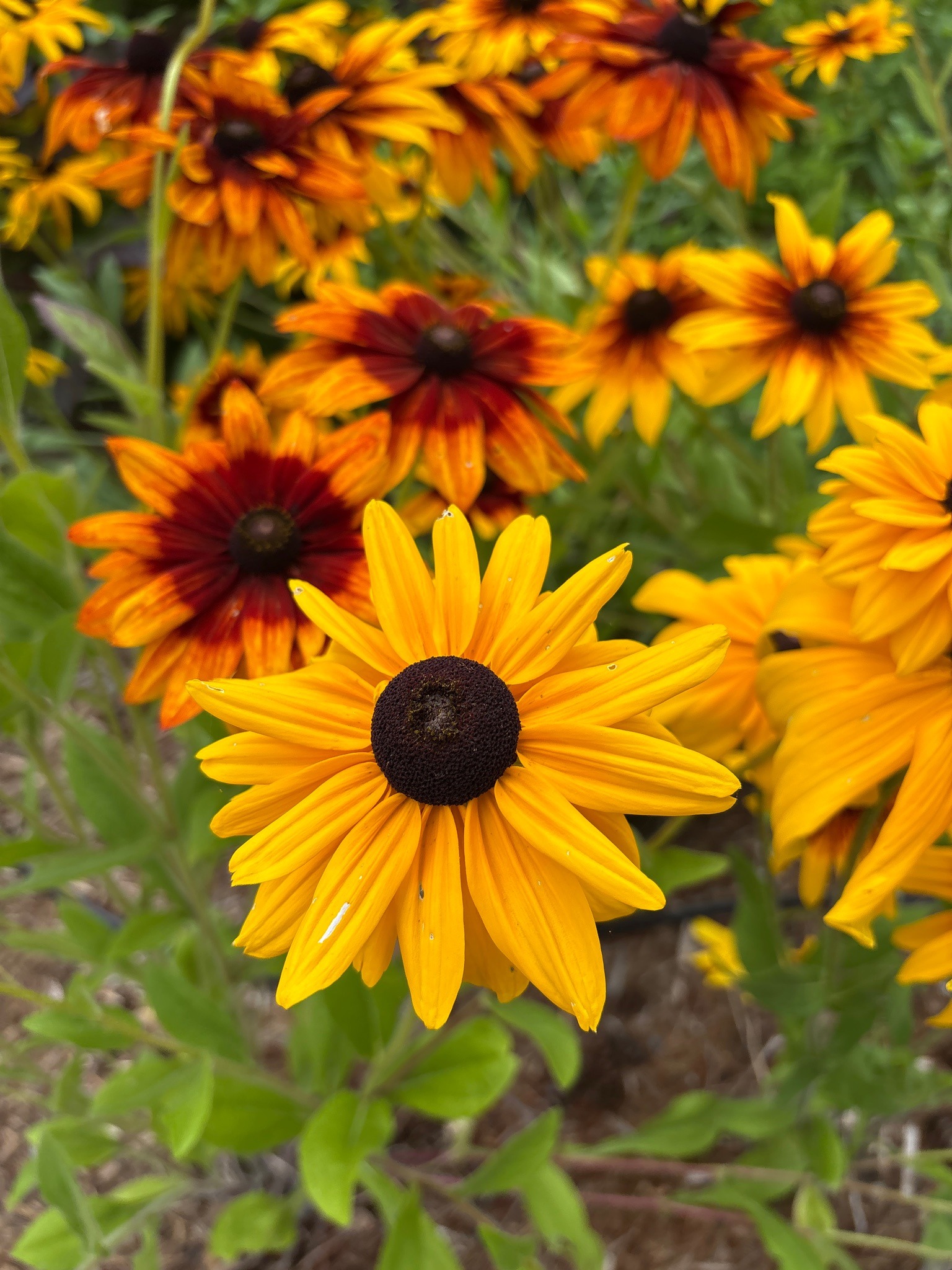
Black-Eyed Susan
Rudbeckia hirta
A popular flowering plant featuring golden-yellow to orange-red rays surrounding a dark brown or black central cone, set against rough, hairy green leaves and stems.
- Light
- Full sun (6 or more hours of direct sunlight daily for optimal flowering)
- Water
- Moderate watering when young; drought-tolerant once established. Water deep at the base to keep foliage dry and prevent fungal issues.
- Growth
- Short-lived herbaceous perennial or biennial, growing upright in clumps. Reaches 1 to 3 feet in height and 1 to 2 feet in spread.
Care instructions
Plant in a location receiving full sun and well-draining soil. Water regularly when establishing, but allow soil to dry out between waterings once mature. Apply a balanced organic fertilizer sparingly in spring if soil quality is poor.
Growing details
Sunlight
Full sun (6 or more hours of direct sunlight daily for optimal flowering)
Watering
Moderate watering when young; drought-tolerant once established. Water deep at the base to keep foliage dry and prevent fungal issues.
Soil
Adaptable to a wide range of soils, including clay and loamy soils, as long as drainage is adequate. Prefers neutral to slightly acidic pH (6.0 to 7.0).
Hardiness zone
USDA Zones 3 through 9
Growth habit
Short-lived herbaceous perennial or biennial, growing upright in clumps. Reaches 1 to 3 feet in height and 1 to 2 feet in spread.
Bloom season
Blooms from early summer to early autumn (June through September). Displays Daisy-like head flowers with bright yellow or bicolor red-yellow rays surrounding a prominent dark raised center cone.
Propagation
Easily propagated by seed sown directly in autumn or early spring, or by root division in early spring for perennial cultivars.
Common pests & issues
Susceptible to powdery mildew, leaf spot, and rust during warm, humid conditions. Aphids and snails may occasionally attack young growth.
Similar species
Echinacea purpurea (Coneflower) features pink to purple petals with a spiky orange-brown cone. Rudbeckia fulgida has slightly smaller flowers and is a strictly perennial species compared to R. hirta.