
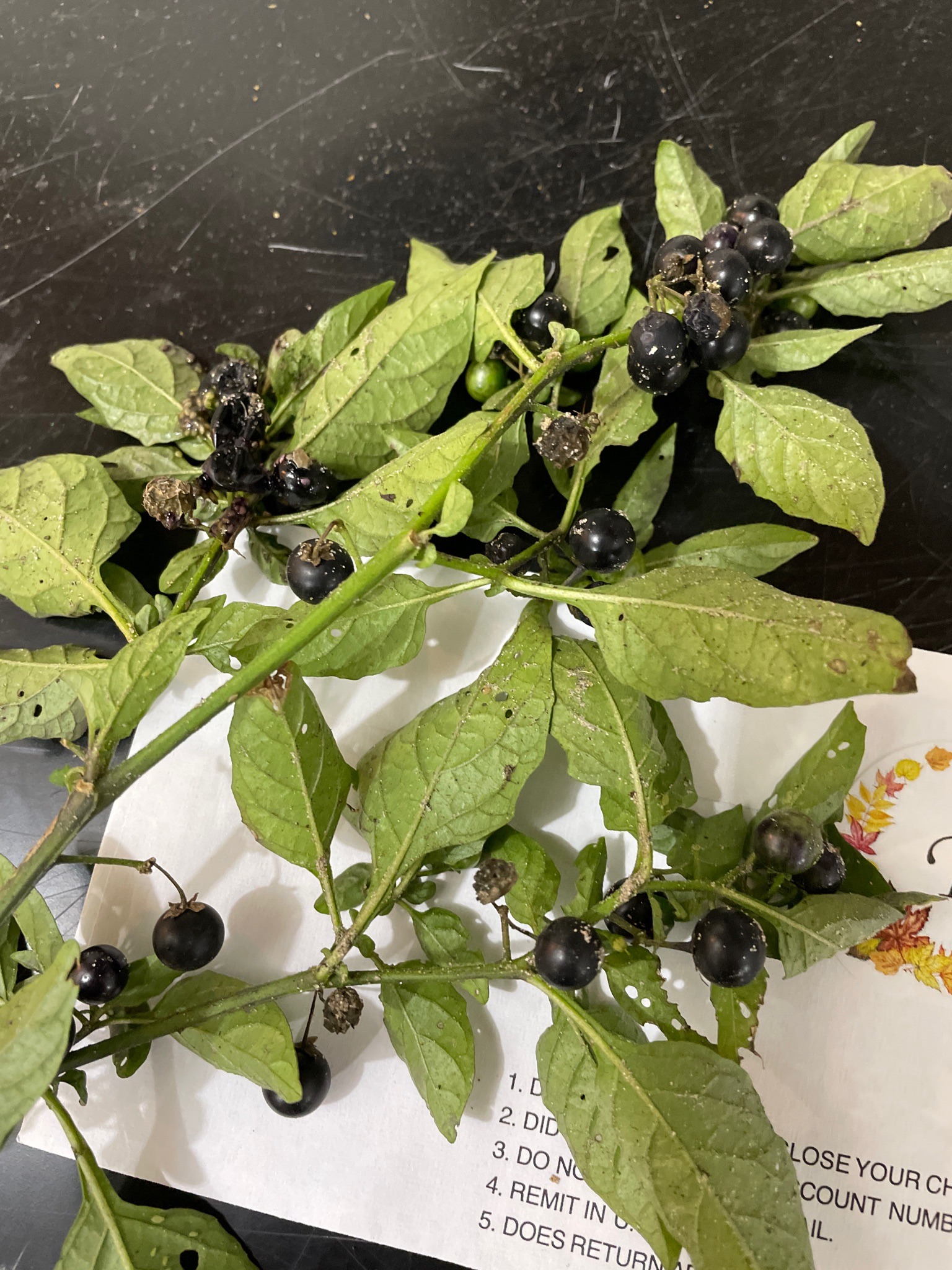
Black Nightshade
Solanum nigrum
An herbaceous annual or short-lived perennial plant featuring alternate, ovate to lanceolate green leaves with wavy or smooth margins, branching stems, small white star-shaped flowers with yellow central stamens, and glossy dark purple-black spherical berries clustered along the stems.
- Light
- Full sun to partial shade, requiring approximately 6 to 8 hours of direct sunlight daily.
- Water
- Moderate watering frequency, keeping the soil evenly moist but never waterlogged. Allow the top inch of soil to dry out between watering sessions to prevent root rot.
- Growth
- An herbaceous annual or short-lived perennial weed featuring an upright, branching growth habit. Reaches a mature height and spread of 1 to 3 feet with a moderate to fast growth rate.
Care instructions
Provide full sun to partial shade exposure with consistent, moderate moisture in well-draining, nutrient-rich loamy soil. Apply a balanced liquid fertilizer during the active growing season to support continuous foliage and fruit development.
Growing details
Sunlight
Full sun to partial shade, requiring approximately 6 to 8 hours of direct sunlight daily.
Watering
Moderate watering frequency, keeping the soil evenly moist but never waterlogged. Allow the top inch of soil to dry out between watering sessions to prevent root rot.
Soil
Well-draining loamy or sandy soil with a neutral to slightly acidic pH range of 6.0 to 7.0.
Hardiness zone
USDA Hardiness Zones 3 through 10, typically grown as an annual in colder temperate climates.
Growth habit
An herbaceous annual or short-lived perennial weed featuring an upright, branching growth habit. Reaches a mature height and spread of 1 to 3 feet with a moderate to fast growth rate.
Bloom season
Blooms from mid-summer through early autumn, producing small, white, star-shaped flowers with prominent yellow anthers arranged in drooping umbel-like clusters.
Propagation
Propagated easily from seeds harvested from mature berries. Sow seeds directly in the ground or in containers in the spring after the final frost, pressing them lightly into the soil surface.
Common pests & issues
Susceptible to common garden pests such as aphids, spider mites, and flea beetles. Fungal issues like powdery mildew and root rot can occur in excessively damp or poorly ventilated conditions.
Similar species
Often confused with Bittersweet Nightshade (Solanum dulcamara) and Eastern Black Nightshade (Solanum ptycanthum). Solanum dulcamara can be distinguished by its vining habit and purple flowers, while Solanum ptycanthum typically has duller black berries and distinct inner corolla markings.