
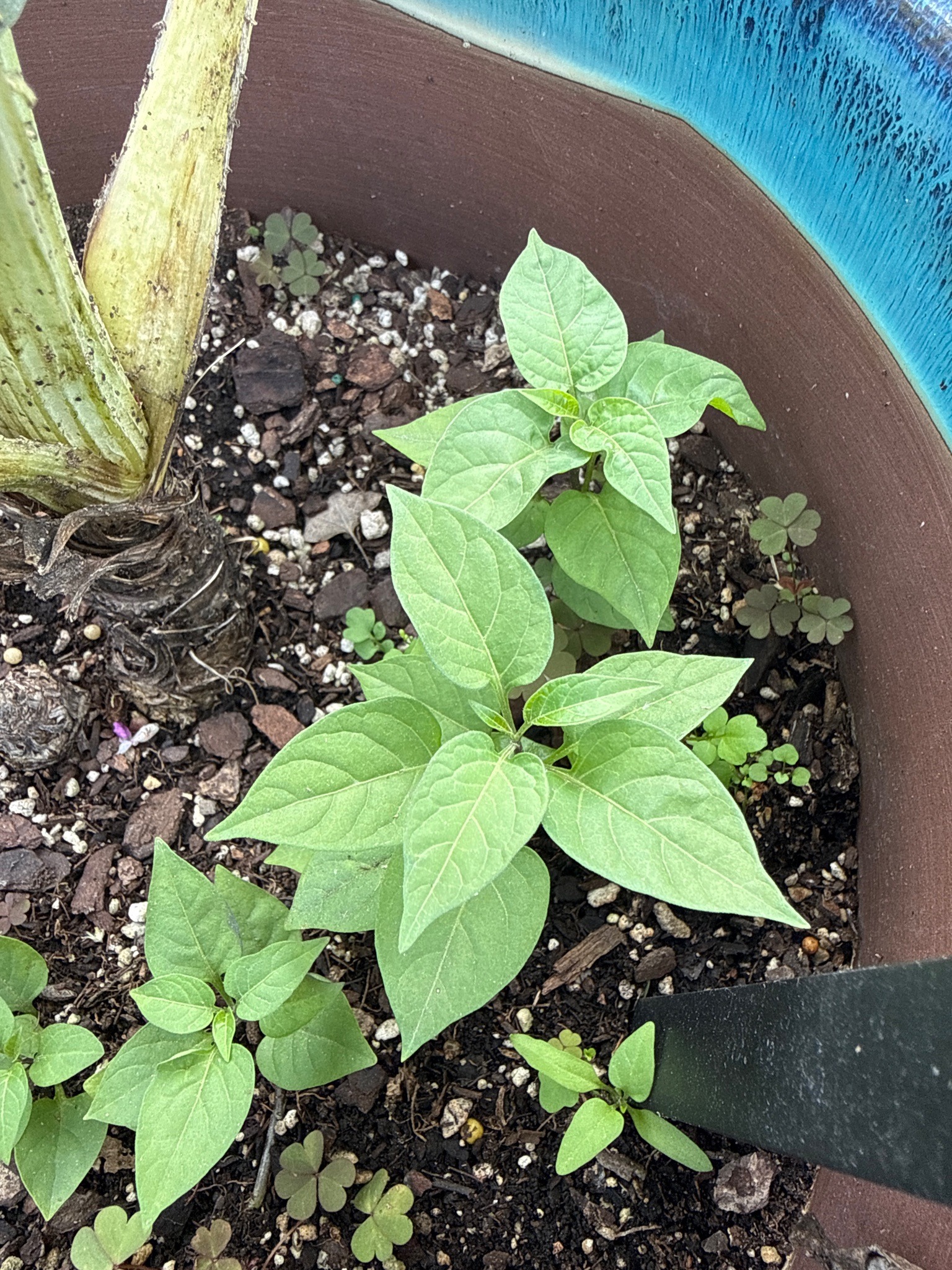
Black Nightshade
Solanum nigrum
An herbaceous plant featuring alternate, ovate to lanceolate green leaves with wavy or smooth margins and prominent venation, growing as a frequent weed in cultivated soils.
- Light
- Full sun to partial shade, approximately 6 hours of direct sunlight daily
- Water
- Requires moderate and consistent watering. Allow the top inch of soil to dry out between waterings. Drought tolerance is low.
- Growth
- An herbaceous annual or short-lived perennial growing in an upright or branching habit, reaching mature heights of 30 to 70 centimeters with a similar spread
Care instructions
Grow in well-draining soil with regular moisture. Prefers full sun to partial shade. Feed with a balanced, all-purpose fertilizer during the active growing season.
Growing details
Sunlight
Full sun to partial shade, approximately 6 hours of direct sunlight daily
Watering
Requires moderate and consistent watering. Allow the top inch of soil to dry out between waterings. Drought tolerance is low.
Soil
Adaptable to various soil types but thrives in rich, loamy, well-draining soils with a neutral pH between 6.0 and 7.0
Hardiness zone
USDA Hardiness Zones 4 through 8, grown primarily as an annual in cooler climates
Growth habit
An herbaceous annual or short-lived perennial growing in an upright or branching habit, reaching mature heights of 30 to 70 centimeters with a similar spread
Bloom season
Flowers from summer to autumn, producing small, white, star-shaped blossoms with prominent yellow central stamens arranged in drooping clusters
Propagation
Propagated easily by seeds dispersed naturally or sown directly in soil during the spring months
Common pests & issues
Susceptible to aphids, whiteflies, and fungal issues such as powdery mildew, managed through proper air circulation and standard horticultural treatments
Similar species
Can be confused with other Solanum species such as Solanum ptycanthum (Eastern black nightshade), distinguished primarily by subtle differences in calyx expansion and inflorescence structure