
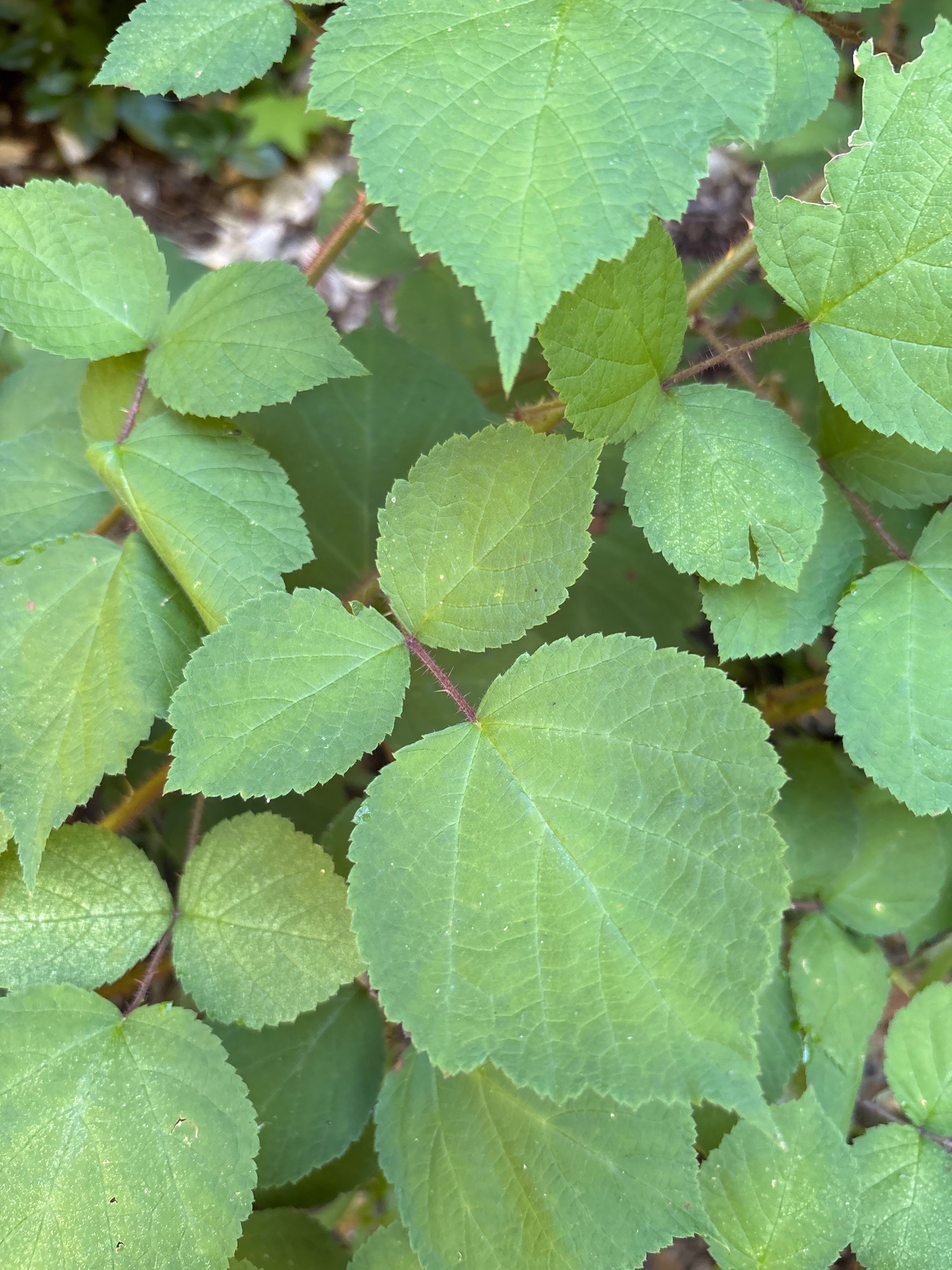
Blackberry
Rubus fruticosus
A deciduous shrub featuring sprawling, thorny stems (canes), alternate compound leaves usually composed of three to five leaflets with serrated margins, and prickly petioles.
- Light
- Full sun, requiring at least six to eight hours of direct sunlight daily for optimal vegetative growth and flowering.
- Water
- Requires regular watering, about an inch of water per week, especially during dry spells. Avoid waterlogged soils.
- Growth
- Perennial shrub with a sprawling, scrambling habit. Canes typically reach heights and spreads of 3 to 10 feet, often forming dense thickets with a rapid growth rate.
Care instructions
Provide full sun exposure, well-draining soil rich in organic matter, and consistent moisture during the growing season. Prune old fruiting canes annually after the growing cycle to encourage robust new stem development.
Growing details
Sunlight
Full sun, requiring at least six to eight hours of direct sunlight daily for optimal vegetative growth and flowering.
Watering
Requires regular watering, about an inch of water per week, especially during dry spells. Avoid waterlogged soils.
Soil
Prefers loamy, well-draining soils with a slightly acidic to neutral pH range of 5.5 to 6.5.
Hardiness zone
USDA Hardiness Zones 5 through 9.
Growth habit
Perennial shrub with a sprawling, scrambling habit. Canes typically reach heights and spreads of 3 to 10 feet, often forming dense thickets with a rapid growth rate.
Bloom season
Flowers in late spring to mid-summer, producing clusters of white to pale pink blossoms with five petals.
Propagation
Propagated easily through stem cuttings, tip layering, root cuttings, or division of established root systems.
Common pests & issues
Susceptible to fungal issues like rust and powdery mildew, as well as pests such as aphids and spider mites. Ensure good air circulation and avoid overhead watering to prevent fungal spread.
Similar species
Raspberries (Rubus idaeus), which can be distinguished by their lighter undersides of leaves and canes that typically have smaller or fewer prickles compared to blackberries.