
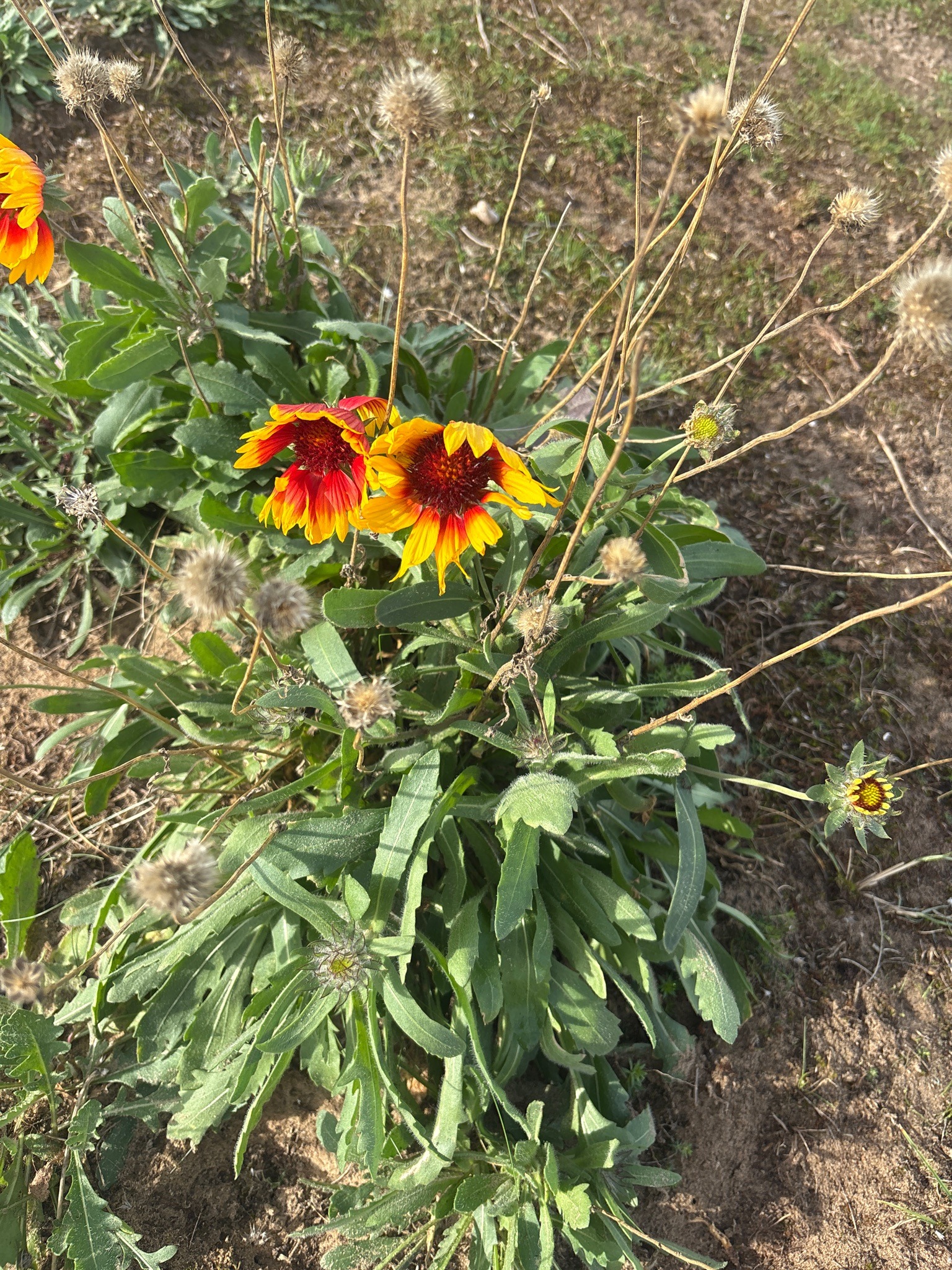
Blanket flower
Gaillardia pulchella
Blanket flower is a branching, hairy-stemmed plant featuring striking daisy-like flowers with vibrant red centers surrounded by bright yellow petal tips.
- Light
- Full sun, requiring at least 6 to 8 hours of direct sunlight daily
- Water
- Low water requirements; allow soil to dry out completely between waterings. Highly drought tolerant once established, and susceptible to rot if overwatered or kept in soggy soil.
- Growth
- Short-lived perennial grown often as an annual, forming an upright mound ranging from 12 to 24 inches in height with a similar spread, boasting a fast growth rate.
Care instructions
Grow in full sun and well-draining soil. Water sparingly once established as it has high drought tolerance. Avoid heavy, wet soils to prevent root problems, and apply a light fertilizer only if soil is exceptionally poor.
Growing details
Sunlight
Full sun, requiring at least 6 to 8 hours of direct sunlight daily
Watering
Low water requirements; allow soil to dry out completely between waterings. Highly drought tolerant once established, and susceptible to rot if overwatered or kept in soggy soil.
Soil
Prefers sandy, loamy, or well-draining soils with a neutral to slightly alkaline pH range of 6.0 to 7.5. Excellent drainage is essential.
Hardiness zone
USDA zones 3 through 10, adaptable to both cold winters and hot summer climates
Growth habit
Short-lived perennial grown often as an annual, forming an upright mound ranging from 12 to 24 inches in height with a similar spread, boasting a fast growth rate.
Bloom season
Blooms continuously from early summer through the first autumn frosts, featuring prominent composite flower heads with red and yellow rays.
Propagation
Easily propagated via seeds sown directly in spring or through stem cuttings and root division during the active growing season.
Common pests & issues
Generally trouble-free but can occasionally be affected by powdery mildew, aster yellows, or fungal leaf spots if airflow is poor or humidity is excessively high. Root rot occurs in poorly draining soils.
Similar species
Rudbeckia species (Coneflowers), which can be distinguished by their prominent dark cone centers and solid yellow rays lacking the distinct multi-colored red and yellow gradient found on blanket flowers.