
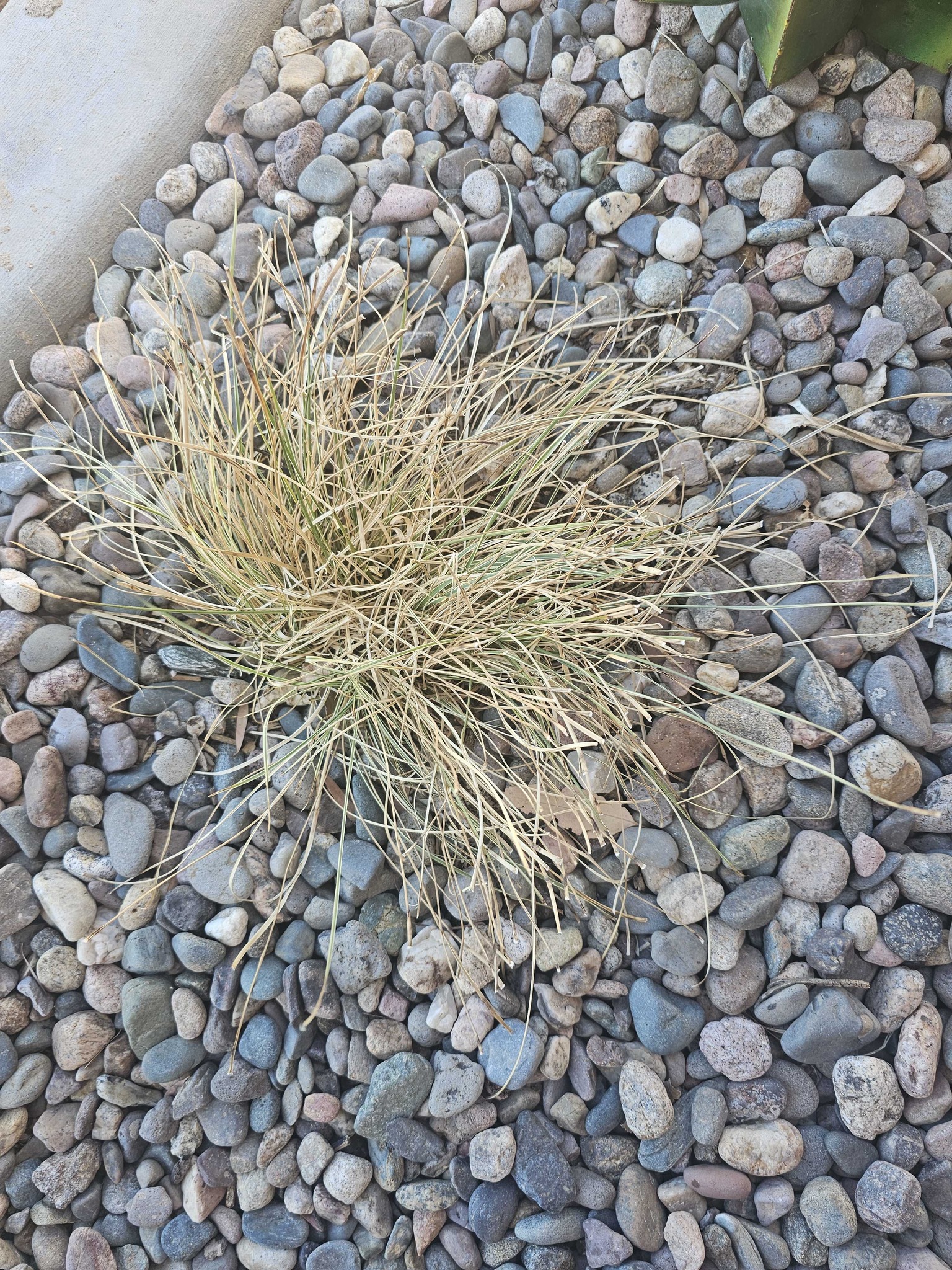
Blue Fescue
Festuca glauca
A compact, clumping ornamental grass featuring fine-textured, needle-like foliage that exhibits silvery-blue or gray-green coloration.
- Light
- Full sun, requiring at least 6 hours of direct sunlight daily for optimal foliage color.
- Water
- Low watering requirements. Drought tolerant once established. Water deeply but infrequently, ensuring the surrounding soil dries out completely.
- Growth
- Perennial bunchgrass forming dense, rounded mounds. Typically reaches a mature height and spread of 8 to 12 inches.
Care instructions
Provide full sun and well-draining soil. Water sparingly once established, allowing the soil to dry completely between watering sessions. Avoid overwatering to prevent root rot.
Growing details
Sunlight
Full sun, requiring at least 6 hours of direct sunlight daily for optimal foliage color.
Watering
Low watering requirements. Drought tolerant once established. Water deeply but infrequently, ensuring the surrounding soil dries out completely.
Soil
Prefers lean, sandy, or gravely soils with excellent drainage and a neutral to slightly acidic pH range of 6.0 to 7.0.
Hardiness zone
USDA Hardiness Zones 4 through 8, demonstrating strong cold tolerance.
Growth habit
Perennial bunchgrass forming dense, rounded mounds. Typically reaches a mature height and spread of 8 to 12 inches.
Bloom season
Produces small, inconspicuous flower panicles in late spring to early summer that mature to a straw color.
Propagation
Propagated primarily through division of mature clumps in spring, or via seeds sown in spring.
Common pests & issues
Generally resistant to major pests and diseases, but susceptible to root rot and fungal issues if planted in poorly draining, overly moist soils.
Similar species
Festuca ovina (Sheep Fescue), which has a softer texture and more variable green-to-blue coloration, and Festuca amethystina, which is generally taller with finer panicles.