
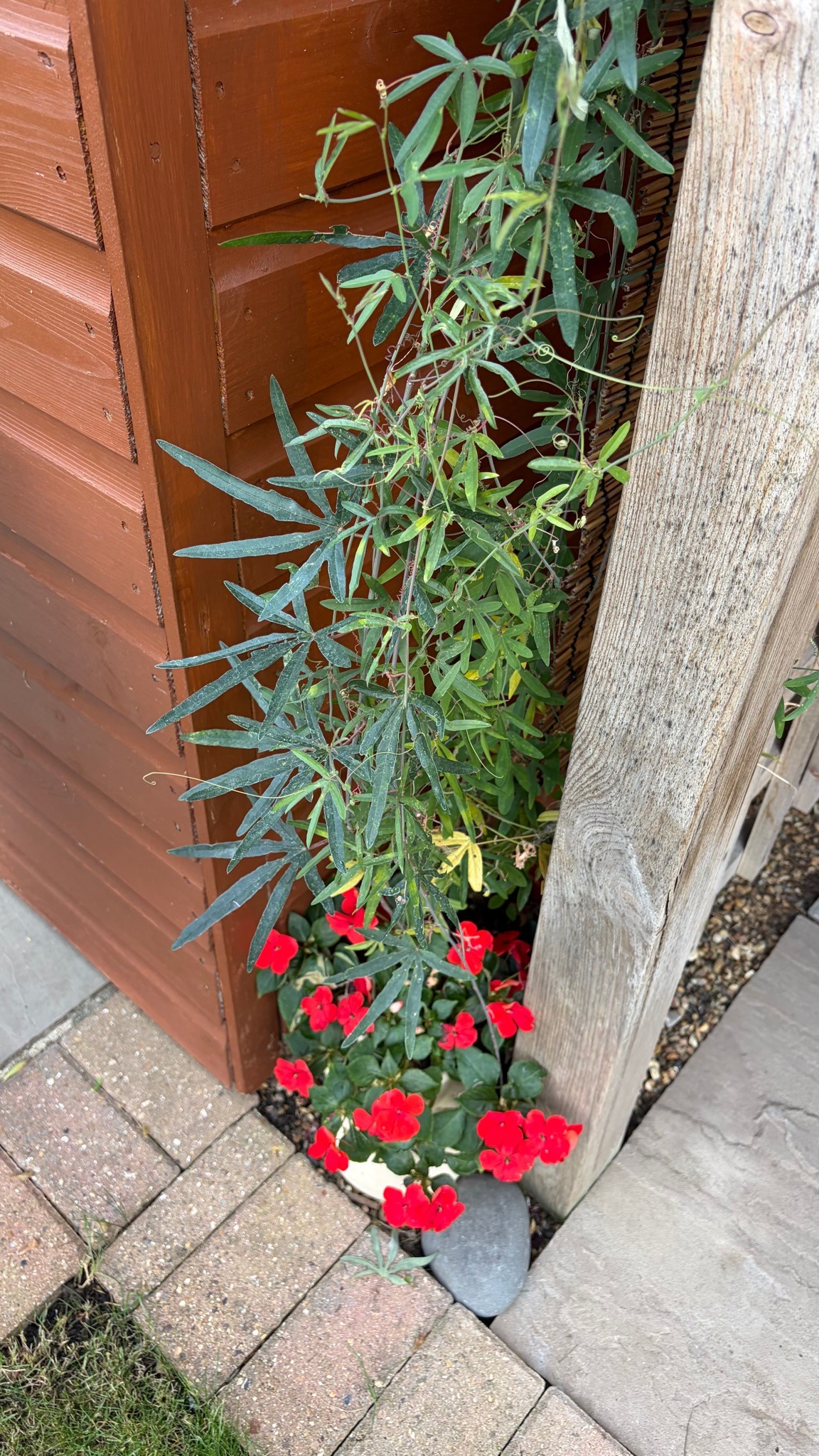
Blue Passion Flower (climbing vine) and Busy Lizzie (red flowers at the base)
Passiflora caerulea and Impatiens walleriana
The image shows a combination of two plants: a climbing vine with deeply lobed, palmate green leaves and tendrils (Passiflora caerulea) growing upward next to a wooden structure, and a compact bedding plant with bright red flowers (Impatiens walleriana) clustered at the base.
- Light
- Full sun to partial shade, approximately 6 hours or more of direct sunlight daily for best flowering performance.
- Water
- Water regularly to keep the soil evenly moist. Allow the top layer of soil to dry out slightly between waterings, avoiding waterlogging while preventing prolonged drought.
- Growth
- Passiflora caerulea is a vigorous, woody-stemmed climbing vine utilizing tendrils, capable of reaching 10 to 30 feet in length. Impatiens walleriana is a tender, succulent-stemmed perennial typically grown as an annual, forming bushy mounds 6 to 24 inches tall.
Care instructions
Provide bright light to full sun for optimal growth, ensuring the soil remains consistently moist but well-drained. Apply a balanced liquid fertilizer during the active growing season every few weeks to encourage continuous vine growth and abundant flowering.
Growing details
Sunlight
Full sun to partial shade, approximately 6 hours or more of direct sunlight daily for best flowering performance.
Watering
Water regularly to keep the soil evenly moist. Allow the top layer of soil to dry out slightly between waterings, avoiding waterlogging while preventing prolonged drought.
Soil
Rich, loamy, well-draining soil with a neutral to slightly acidic pH range of 6.0 to 7.0.
Hardiness zone
USDA Hardiness Zones 8 through 11 for Passiflora caerulea, often grown as an annual or container plant in cooler climates.
Growth habit
Passiflora caerulea is a vigorous, woody-stemmed climbing vine utilizing tendrils, capable of reaching 10 to 30 feet in length. Impatiens walleriana is a tender, succulent-stemmed perennial typically grown as an annual, forming bushy mounds 6 to 24 inches tall.
Bloom season
Summer to early autumn. Passiflora produces complex, intricate flowers featuring white, blue, and purple filaments, while Impatiens produces flat, vibrant red blossoms.
Propagation
Passiflora caerulea can be propagated via stem cuttings or seeds. Impatiens walleriana is easily propagated through stem cuttings rooted in water or moist soil, or from seeds sown in early spring.
Common pests & issues
Watch for aphids, spider mites, and whiteflies, especially in warmer or indoor conditions. Fungal issues such as root rot can occur if the soil remains excessively wet and lacks proper drainage.
Similar species
Other Passiflora species such as Passiflora incarnata, which features slightly different leaf lobe counts and flower coloration.