
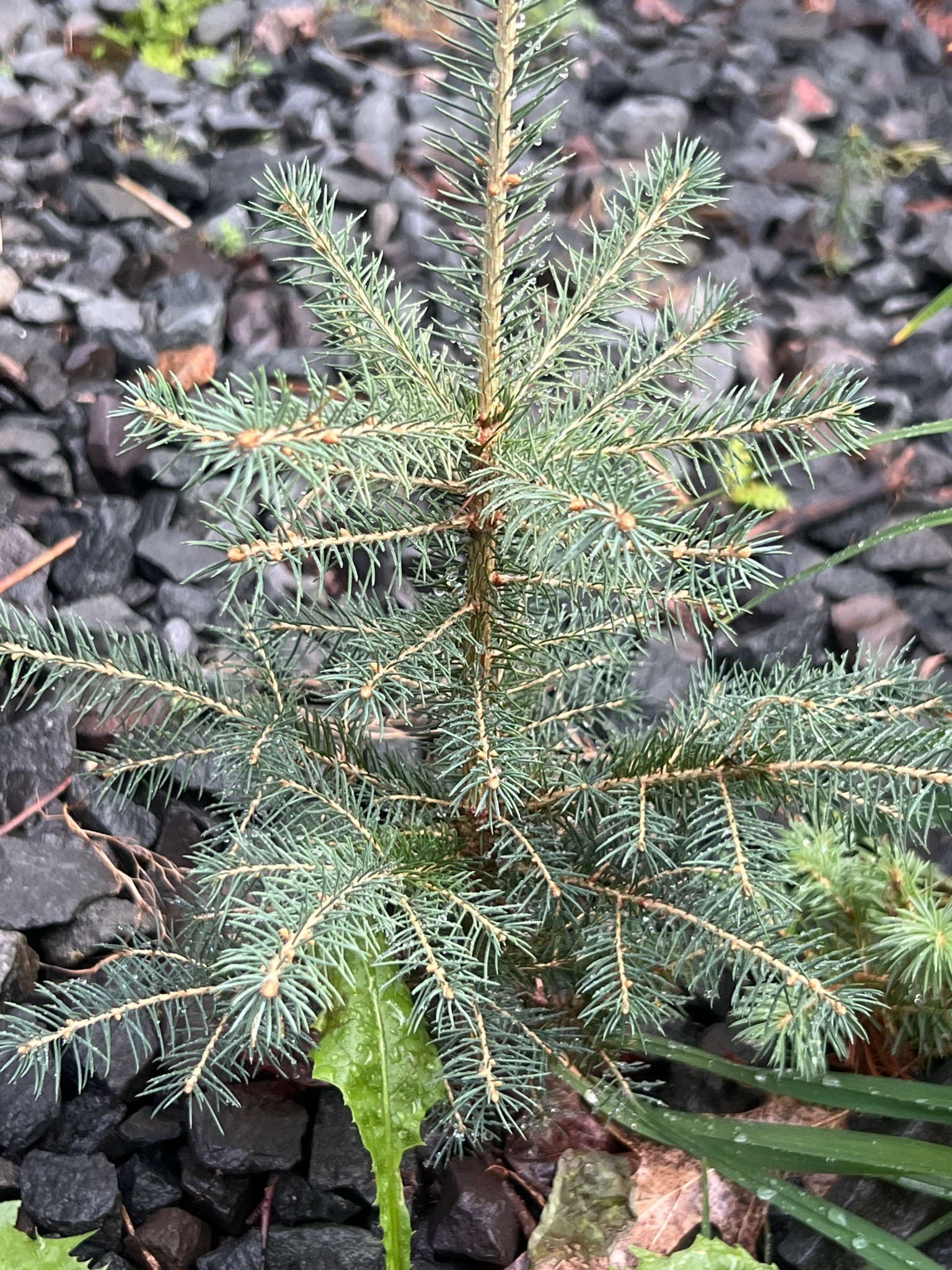
Blue Spruce
Picea pungens
A stiffly pyramidal evergreen conifer featuring sharp, needle-like leaves that range from blue-green to silvery-blue and cylindrical hanging cones.
- Light
- Full sun, requiring at least 6 hours of direct sunlight daily for optimal color vibrancy.
- Water
- Moderate water needs when young; once established, it is moderately drought-tolerant. Water deeply when the top few inches of soil become dry.
- Growth
- Perennial evergreen tree with an upright, conical growth habit. It grows at a slow to medium rate, reaching mature heights of 30 to 60 feet and spreads of 10 to 20 feet in cultivation.
Care instructions
Provide full sun and well-draining soil. Water deeply during dry spells while the root system establishes, and apply a balanced slow-release fertilizer in early spring.
Growing details
Sunlight
Full sun, requiring at least 6 hours of direct sunlight daily for optimal color vibrancy.
Watering
Moderate water needs when young; once established, it is moderately drought-tolerant. Water deeply when the top few inches of soil become dry.
Soil
Prefers consistently moist, well-draining sandy loam or clay soils with an acidic to neutral pH range of 6.0 to 7.5.
Hardiness zone
USDA zones 2 through 7
Growth habit
Perennial evergreen tree with an upright, conical growth habit. It grows at a slow to medium rate, reaching mature heights of 30 to 60 feet and spreads of 10 to 20 feet in cultivation.
Bloom season
Non-flowering (produces inconspicuous pollen cones and seed cones in spring)
Propagation
Propagated primarily from seeds, though named cultivars are often grafted onto seedling rootstocks to ensure true-to-type traits.
Common pests & issues
Susceptible to spider mites, aphids, and fungal needle casts in humid conditions, which can be managed with proper spacing, good airflow, and appropriate horticultural treatments.
Similar species
Engelmann spruce (Picea engelmannii), which has softer needles and a slightly narrower habit, and white spruce (Picea glauca), which generally features greener foliage.