
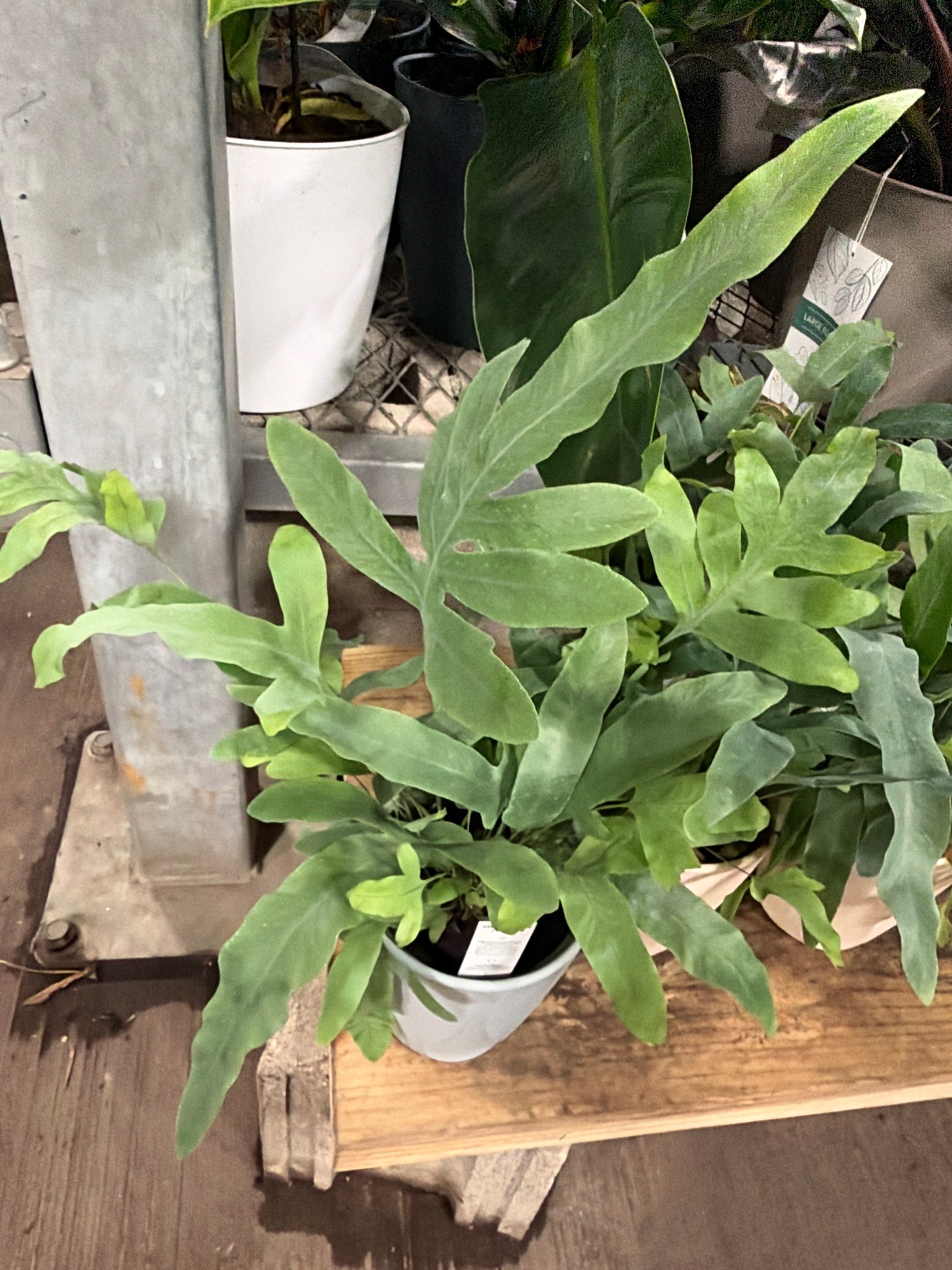
Blue Star Fern
Phlebodium aureum
An epiphytic fern featuring distinctive, deeply lobed, glaucous blue-green fronds with a slightly wavy margin, growing from creeping fuzzy rhizomes.
- Light
- Bright indirect light to partial shade, approximately 4 to 6 hours of filtered sunlight daily.
- Water
- Water evenly when the top inch of soil feels slightly dry. Avoid getting water directly into the center crown to prevent rot.
- Growth
- Perennial epiphyte with a spreading growth habit, featuring creeping surface rhizomes. Typically reaches a mature height and spread of 1 to 3 feet.
Care instructions
Provide bright indirect light, keep the soil consistently moist but never waterlogged, use a well-draining organic potting medium, and maintain moderate to high indoor humidity.
Growing details
Sunlight
Bright indirect light to partial shade, approximately 4 to 6 hours of filtered sunlight daily.
Watering
Water evenly when the top inch of soil feels slightly dry. Avoid getting water directly into the center crown to prevent rot.
Soil
Rich, loose, well-draining organic soil mix with a slightly acidic to neutral pH range of 5.5 to 6.5.
Hardiness zone
USDA Hardiness Zones 9 through 11 when grown outdoors; grown primarily as an indoor houseplant in cooler zones.
Growth habit
Perennial epiphyte with a spreading growth habit, featuring creeping surface rhizomes. Typically reaches a mature height and spread of 1 to 3 feet.
Bloom season
Non-flowering
Propagation
Propagated primarily through division of established rhizomes in spring, or via spores under specialized conditions.
Common pests & issues
Prone to root rot if overwatered or kept in heavy, poorly draining soil. Indoor pests can include mealybugs and spider mites, which can be managed with insecticidal soap.
Similar species
Staghorn Fern (Platycerium bifurcatum), which has distinctly different antler-shaped fronds and shield fronds.