
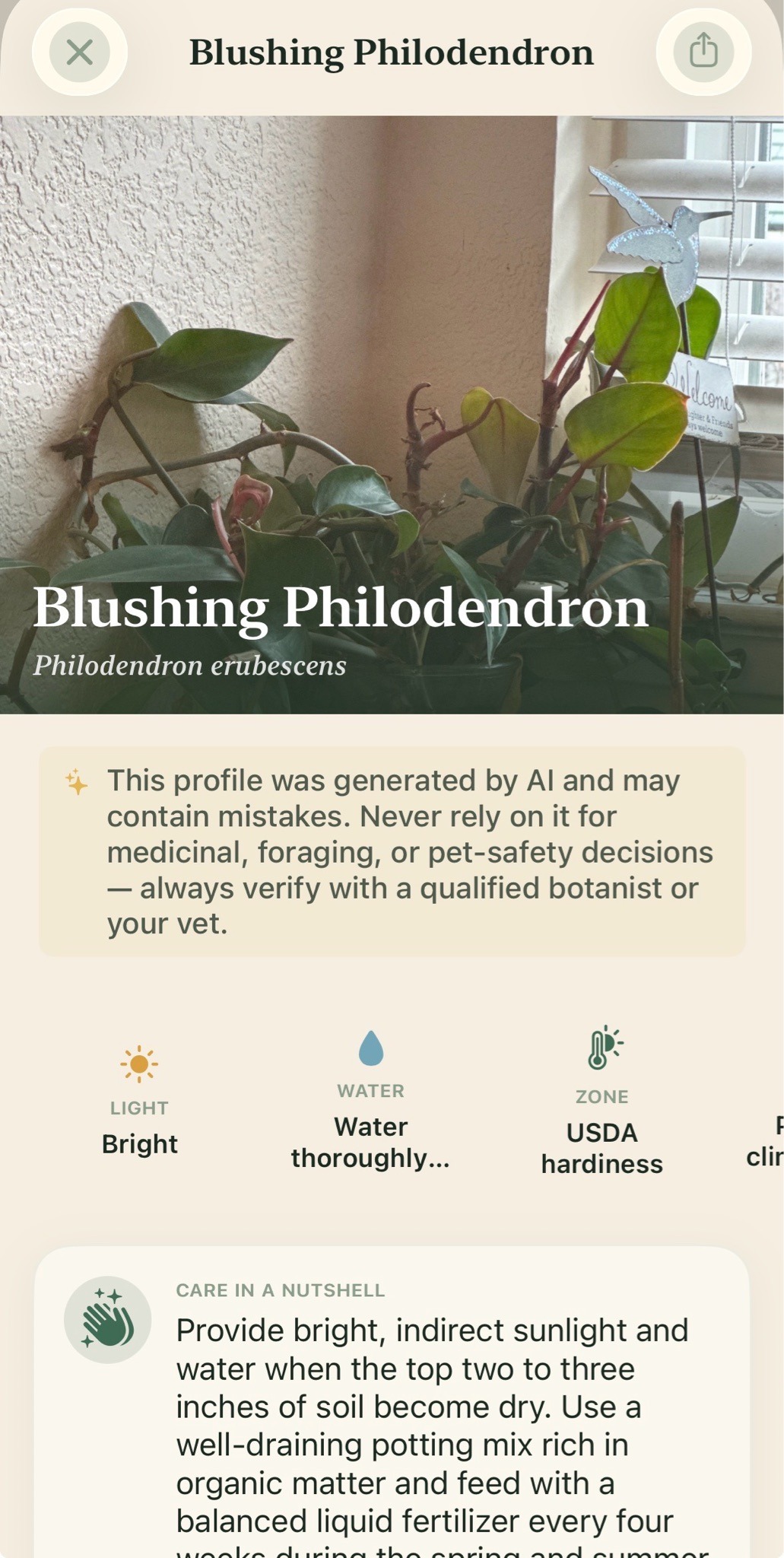
Blushing Philodendron
Philodendron erubescens
An evergreen climbing vine featuring glossy, dark green leaves with distinctive reddish-purple undersides and red petioles, capable of growing aerial roots.
- Light
- Bright, indirect light, approximately 6 to 8 hours per day; avoid direct harsh sunlight to prevent leaf scorch.
- Water
- Water thoroughly when the top 2-3 inches of soil are dry. Reduce watering frequency during the winter months. Drought tolerance is low, and overwatering can cause root rot.
- Growth
- Perennial climbing epiphyte or vine with a fast growth rate, able to reach mature heights of 10 to 20 feet indoors when supported by a trellis or moss pole.
Care instructions
Provide bright, indirect sunlight and water thoroughly when the top two to three inches of soil become dry. Use a well-draining potting mix rich in organic matter and feed with a balanced liquid fertilizer every four weeks during the spring and summer.
Growing details
Sunlight
Bright, indirect light, approximately 6 to 8 hours per day; avoid direct harsh sunlight to prevent leaf scorch.
Watering
Water thoroughly when the top 2-3 inches of soil are dry. Reduce watering frequency during the winter months. Drought tolerance is low, and overwatering can cause root rot.
Soil
Well-draining, loose potting mix rich in organic matter, such as a blend of peat moss, perlite, and orchid bark, with a slightly acidic to neutral pH between 5.5 and 6.5.
Hardiness zone
USDA zones 9 through 11; grown primarily as a houseplant in cooler temperate regions.
Growth habit
Perennial climbing epiphyte or vine with a fast growth rate, able to reach mature heights of 10 to 20 feet indoors when supported by a trellis or moss pole.
Bloom season
Rarely blooms when grown indoors as a houseplant; features typical arum-family spathe and spadix inflorescences with reddish tones when flowering occurs in natural tropical habitats.
Propagation
Propagated easily through stem cuttings placed in water or a moist potting medium during the spring or summer growing season, ensuring each cutting has at least one node.
Common pests & issues
Prone to common houseplant pests such as spider mites, mealybugs, and scale insects. Leaf yellowing typically indicates overwatering or insufficient drainage.
Similar species
Philodendron hederaceum (Heartleaf Philodendron), which features entirely green leaves lacking the distinct reddish undersides and petioles found in Philodendron erubescens.