
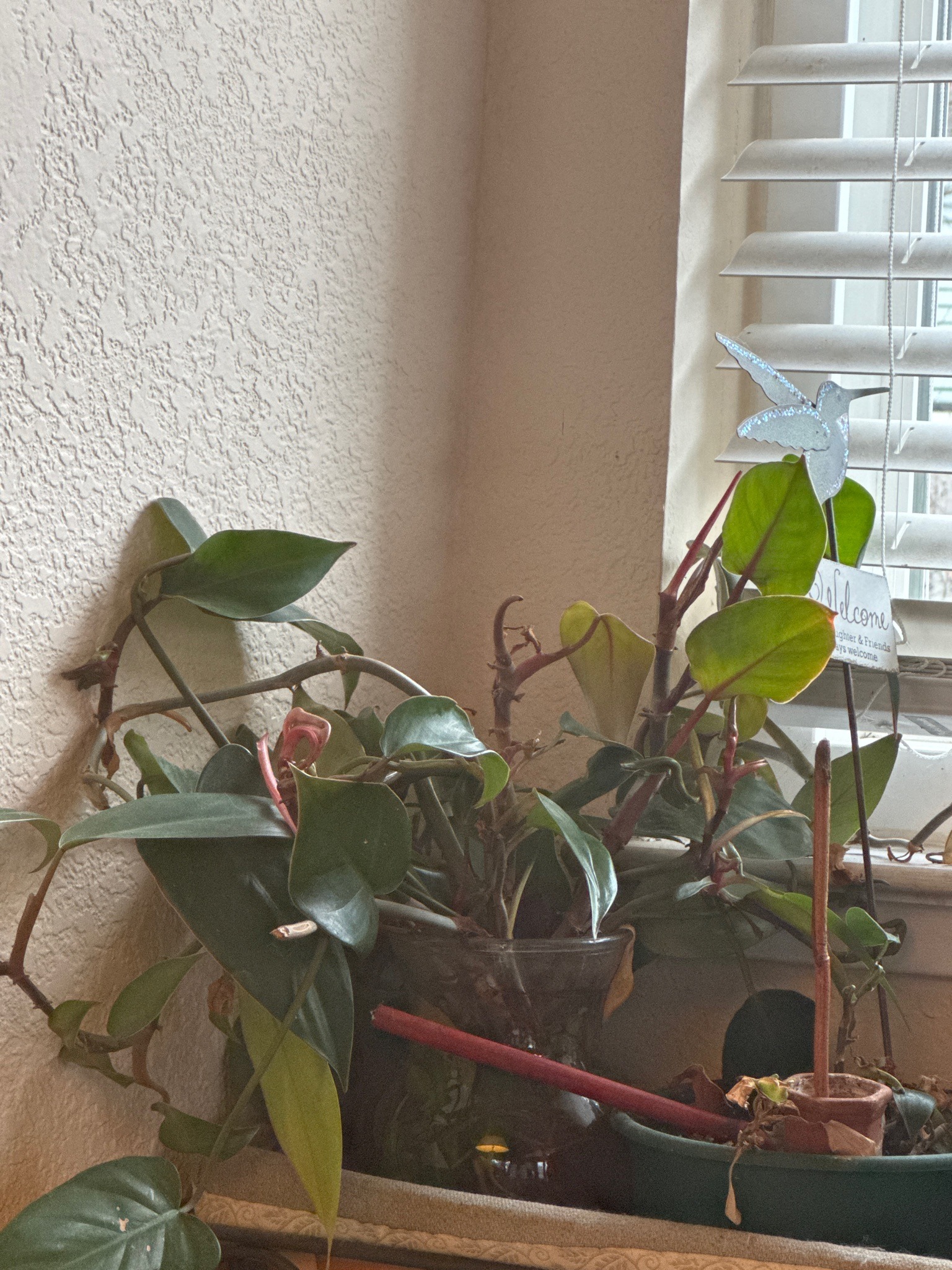
Blushing Philodendron
Philodendron erubescens
A climbing evergreen vine featuring large, glossy, heart-shaped or arrowhead-shaped leaves that often display a reddish-purple underside and distinctive reddish stems and sheaths.
- Light
- Bright, indirect light for 6 to 8 hours daily; avoid harsh, direct sunlight to prevent leaf scorching.
- Water
- Water thoroughly when the top soil is dry to the touch, reducing frequency during the cooler winter months.
- Growth
- Perennial climbing epiphyte or hemiepiphyte that can reach mature indoor heights of 3 to 6 feet or more with proper support.
Care instructions
Provide bright, indirect sunlight and water when the top two to three inches of soil become dry. Use a well-draining potting mix rich in organic matter and feed with a balanced liquid fertilizer every four weeks during the spring and summer growing season.
Growing details
Sunlight
Bright, indirect light for 6 to 8 hours daily; avoid harsh, direct sunlight to prevent leaf scorching.
Watering
Water thoroughly when the top soil is dry to the touch, reducing frequency during the cooler winter months.
Soil
Chunky, well-draining aroid soil mix containing perlite, orchid bark, and peat moss, with a preferred pH between 5.5 and 6.5.
Hardiness zone
USDA hardiness zones 10 through 11 when grown outdoors; generally grown indoors in cooler temperate regions.
Growth habit
Perennial climbing epiphyte or hemiepiphyte that can reach mature indoor heights of 3 to 6 feet or more with proper support.
Bloom season
Rarely blooms when grown indoors; produces a typical aroid inflorescence featuring a spathe and spadix when mature.
Propagation
Propagated easily through stem cuttings placed in water or a moist rooting medium during the spring or summer months.
Common pests & issues
Prone to root rot if overwatered, and can occasionally attract common pests such as mealybugs, spider mites, and scale insects.
Similar species
Often confused with Philodendron domesticum or Philodendron 'McColley's Finale', but distinguished by its distinct reddish stems, petioles, and leaf undersides.