
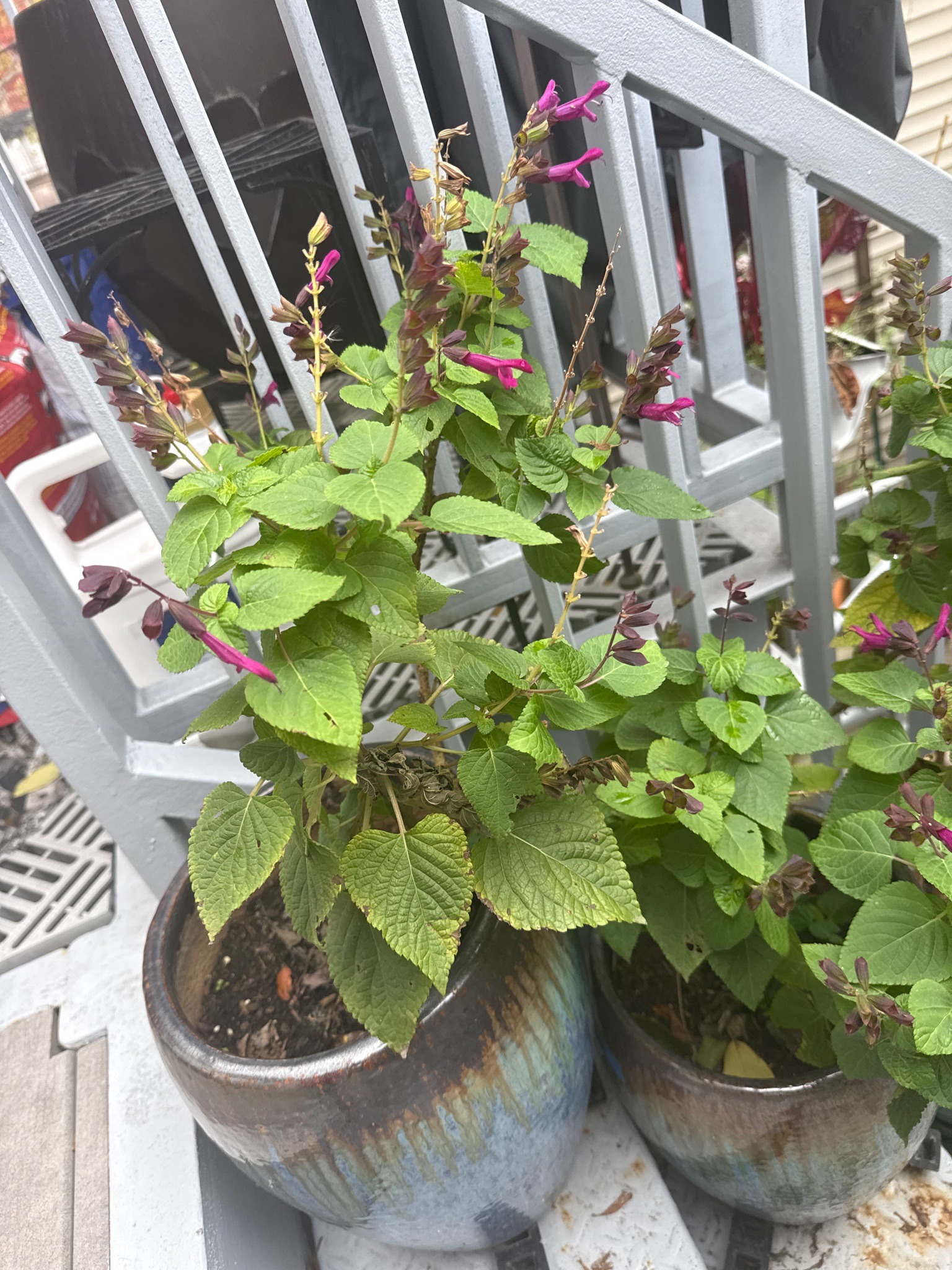
Bog Sage
Salvia uliginosa
Bog sage is an upright perennial featuring vibrant magenta or bright blue flowers arranged in terminal spikes, complemented by bright green, lance-shaped, serrated leaves and square stems typical of the mint family.
- Light
- Full sun to partial shade, requiring at least 6 hours of direct sunlight daily.
- Water
- High moisture requirements; water regularly to keep the soil evenly moist. It does not tolerate prolonged drought.
- Growth
- Upright, herbaceous perennial forming clumps that reach mature heights of 3 to 5 feet with a spread of 2 to 3 feet, exhibiting a moderate to fast growth rate.
Care instructions
Provide full sun to partial shade with consistently moist, well-draining soil. Water frequently to prevent the soil from drying out completely. Apply a balanced, slow-release fertilizer in spring to support continuous growth and flowering.
Growing details
Sunlight
Full sun to partial shade, requiring at least 6 hours of direct sunlight daily.
Watering
High moisture requirements; water regularly to keep the soil evenly moist. It does not tolerate prolonged drought.
Soil
Prefers rich, organic, well-draining soil with a slightly acidic to neutral pH range of 6.0 to 7.0.
Hardiness zone
USDA Hardiness Zones 8 through 10, functioning as an annual or needing winter protection in colder climates.
Growth habit
Upright, herbaceous perennial forming clumps that reach mature heights of 3 to 5 feet with a spread of 2 to 3 feet, exhibiting a moderate to fast growth rate.
Bloom season
Blooms from mid-summer through autumn, producing slender spikes of vivid tubular flowers.
Propagation
Propagated easily through stem cuttings taken in spring or summer, or by division of established root clumps in early spring.
Common pests & issues
Generally resilient, but susceptible to root rot if soil remains waterlogged without drainage. Pests such as aphids or whiteflies may occasionally appear and can be managed with insecticidal soap.
Similar species
Can be confused with other Salvia species like Salvia guarantanica, but is distinguished by its specific flower coloration, lighter green foliage, and preference for moister soil conditions.