
Bolivian Coriander
Porophyllum ruderale
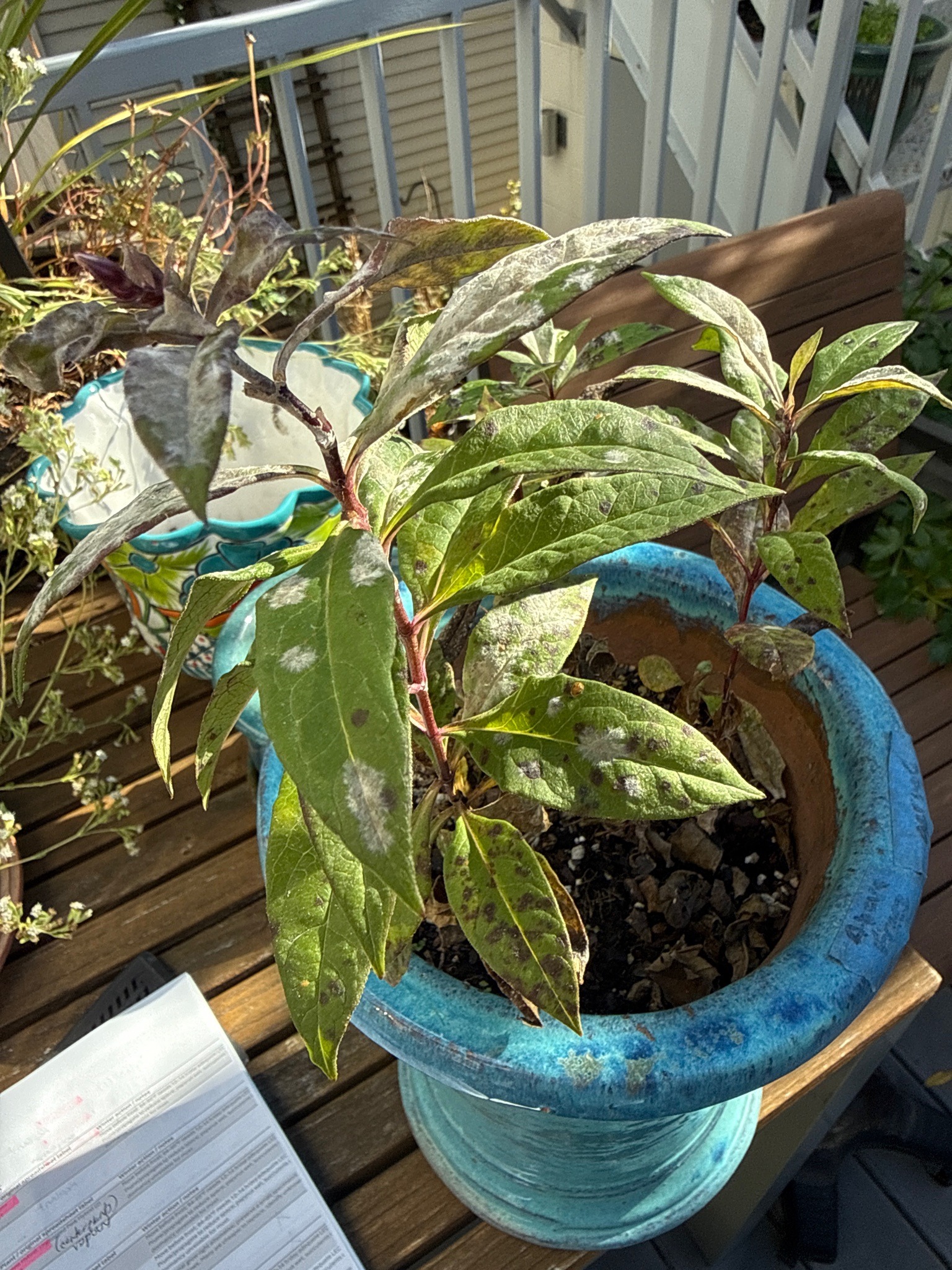
An upright herbaceous annual with slender stems, alternate lanceolate leaves, and small tubular flower heads. The foliage exhibits noticeable grey-white powdery patches and dark necrotic leaf spots indicative of fungal infection.
- Light
- Full sun, requiring 6 to 8 hours of direct sunlight daily.
- Water
- Moderate watering frequency. Allow the soil surface to dry out between watering sessions. Avoid overhead watering to reduce the spread of fungal spores.
- Growth
- Upright herbaceous annual growing to a mature height of 1 to 3 feet with a spread of 1 foot, featuring a moderate growth rate.
Care instructions
Provide full sun exposure of at least six hours per day. Water thoroughly when the top inch of soil becomes dry, ensuring good drainage to prevent root rot. Plant in a well-draining loamy or sandy soil mix with a neutral pH. Apply a balanced water-soluble fertilizer monthly during the active growing season.
Growing details
Sunlight
Full sun, requiring 6 to 8 hours of direct sunlight daily.
Watering
Moderate watering frequency. Allow the soil surface to dry out between watering sessions. Avoid overhead watering to reduce the spread of fungal spores.
Soil
Well-draining sandy loam or standard potting mix with a pH between 6.0 and 7.0.
Hardiness zone
USDA Hardiness Zones 9 to 11, grown as an annual in cooler climates.
Growth habit
Upright herbaceous annual growing to a mature height of 1 to 3 feet with a spread of 1 foot, featuring a moderate growth rate.
Bloom season
Blooms from mid-summer to early autumn, producing small, dull-colored tubular flower heads.
Propagation
Propagated easily from seeds sown in spring after the last frost or through stem cuttings rooted in a moist potting medium.
Common pests & issues
Frequently affected by powdery mildew, visible as white powdery patches on the leaves, and leaf spot diseases caused by excess humidity and poor air circulation. Prevent by increasing spacing, ensuring adequate sunlight, and avoiding damp foliage.
Similar species
Porophyllum lanceolatum, which can be distinguished by narrower leaves and differing gland patterns along the leaf margins.