
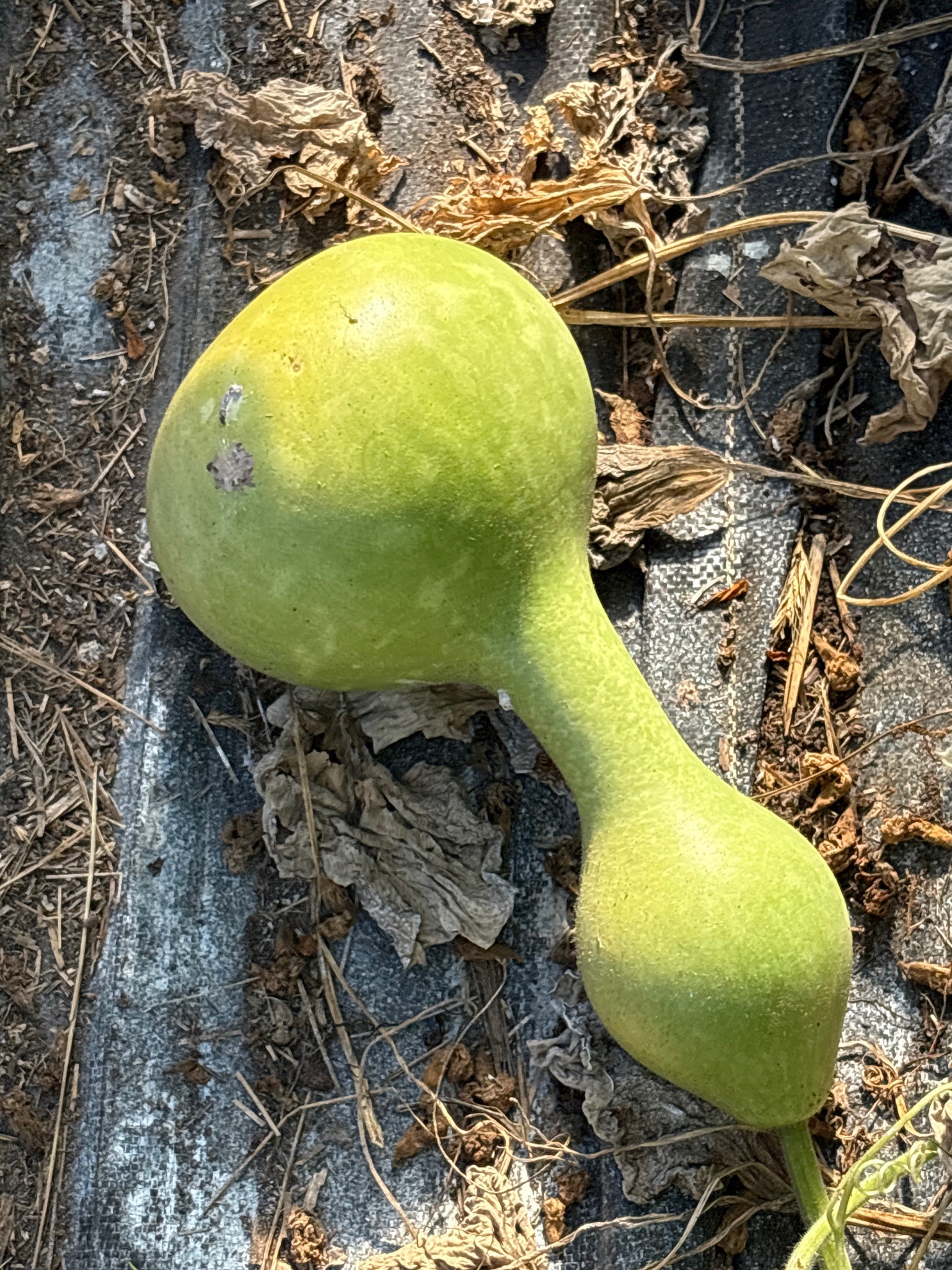
Bottle Gourd
Lagenaria siceraria
A vigorous climbing or trailing vine featuring large, rounded leaves, white nocturnal flowers, and distinctively shaped hard-shelled fruits that often resemble a dumbbell or bottle.
- Light
- Full sun, requiring 6 to 8 hours of direct sunlight daily
- Water
- Moderate to high watering frequency; keep soil consistently moist during the growing phase but avoid waterlogged conditions
- Growth
- Fast-growing annual or perennial climbing vine that can reach lengths of 15 feet or more, utilizing tendrils to ascend structures or spreading extensively across the ground
Care instructions
Provide full sun exposure for at least six hours daily. Grow in fertile, well-draining soil with a neutral pH. Water consistently to maintain even moisture, allowing the top layer of soil to dry between waterings. Apply a balanced liquid fertilizer during the growing season to support strong vine development.
Growing details
Sunlight
Full sun, requiring 6 to 8 hours of direct sunlight daily
Watering
Moderate to high watering frequency; keep soil consistently moist during the growing phase but avoid waterlogged conditions
Soil
Rich, loamy, well-drained soil with an optimal pH range between 6.0 and 6.8
Hardiness zone
USDA zones 9 through 11 when grown as a perennial, though frequently cultivated as an annual in cooler temperate regions
Growth habit
Fast-growing annual or perennial climbing vine that can reach lengths of 15 feet or more, utilizing tendrils to ascend structures or spreading extensively across the ground
Bloom season
Summer; produces solitary, white, star-shaped flowers that open at night and wilt by morning
Propagation
Propagated primarily through seeds sown directly in warm soil after the last spring frost, or started indoors in biodegradable pots a few weeks prior to transplanting
Common pests & issues
Vulnerable to powdery mildew, downy mildew, aphids, and cucumber beetles. Preventative measures include proper plant spacing for air circulation, overhead watering avoidance, and using floating row covers on young plants.
Similar species
Luffa cylindrica (sponge gourd), which can be distinguished by its fibrous internal matrix and oblong shape rather than the smooth, woody shell of the bottle gourd.