
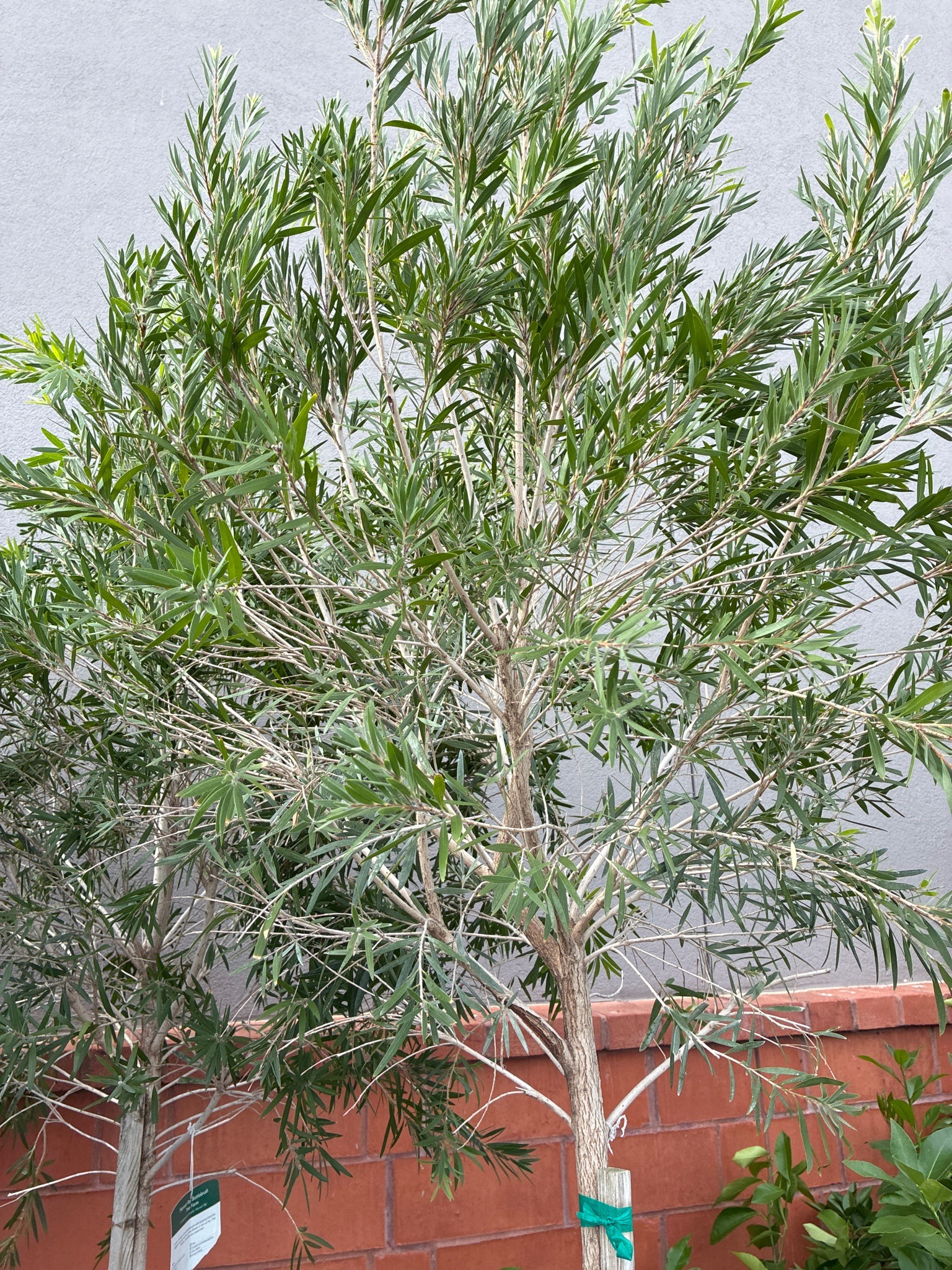
Bottlebrush Tree
Melaleuca viminalis
An evergreen shrub or small tree featuring a weeping growth habit, slender light-green leaves, and papery, fibrous bark. It is known for its dense branching structure and distinct cascading branchlets.
- Light
- Full sun, requiring at least 6 to 8 hours of direct sunlight daily for optimal growth and flowering.
- Water
- Moderate water needs once established. Prefers regular watering during dry spells, allowing the top layer of soil to dry out between waterings. Highly drought-tolerant once mature.
- Growth
- Perennial evergreen tree or large shrub with a weeping or upright canopy. Typically reaches a mature height of 15 to 30 feet and a spread of 10 to 15 feet with a moderate growth rate.
Care instructions
Provide full sun exposure and well-draining soil. Water deeply during the first growing season to establish a deep root system, then reduce frequency as it develops good drought tolerance. Apply a balanced, slow-release fertilizer in early spring.
Growing details
Sunlight
Full sun, requiring at least 6 to 8 hours of direct sunlight daily for optimal growth and flowering.
Watering
Moderate water needs once established. Prefers regular watering during dry spells, allowing the top layer of soil to dry out between waterings. Highly drought-tolerant once mature.
Soil
Adaptable to a wide range of well-draining soils including sandy, loamy, or clay types. Prefers a neutral to slightly acidic pH range between 5.5 and 7.0.
Hardiness zone
USDA Hardiness Zones 8 through 11, withstanding mild frost but requiring protection from hard freezes.
Growth habit
Perennial evergreen tree or large shrub with a weeping or upright canopy. Typically reaches a mature height of 15 to 30 feet and a spread of 10 to 15 feet with a moderate growth rate.
Bloom season
Blooms primarily in spring and summer, occasionally re-blooming throughout the year in warm climates. Features bright red, cylindrical, brush-like flower spikes composed of numerous prominent stamens.
Propagation
Propagated through semi-hardwood cuttings taken in late spring or summer, or grown from seed sown in spring on a warm, well-draining seed-starting medium.
Common pests & issues
Generally resilient, but susceptible to root rot in poorly draining soils. Common pests include scale insects, spider mites, and aphids, which can be managed with horticultural oils or insecticidal soap.
Similar species
Melaleuca citrina (Lemon Bottlebrush), which has broader, aromatic leaves that release a citrus scent when crushed, whereas Melaleuca viminalis features narrower, weeping leaves and a more cascading habit.