
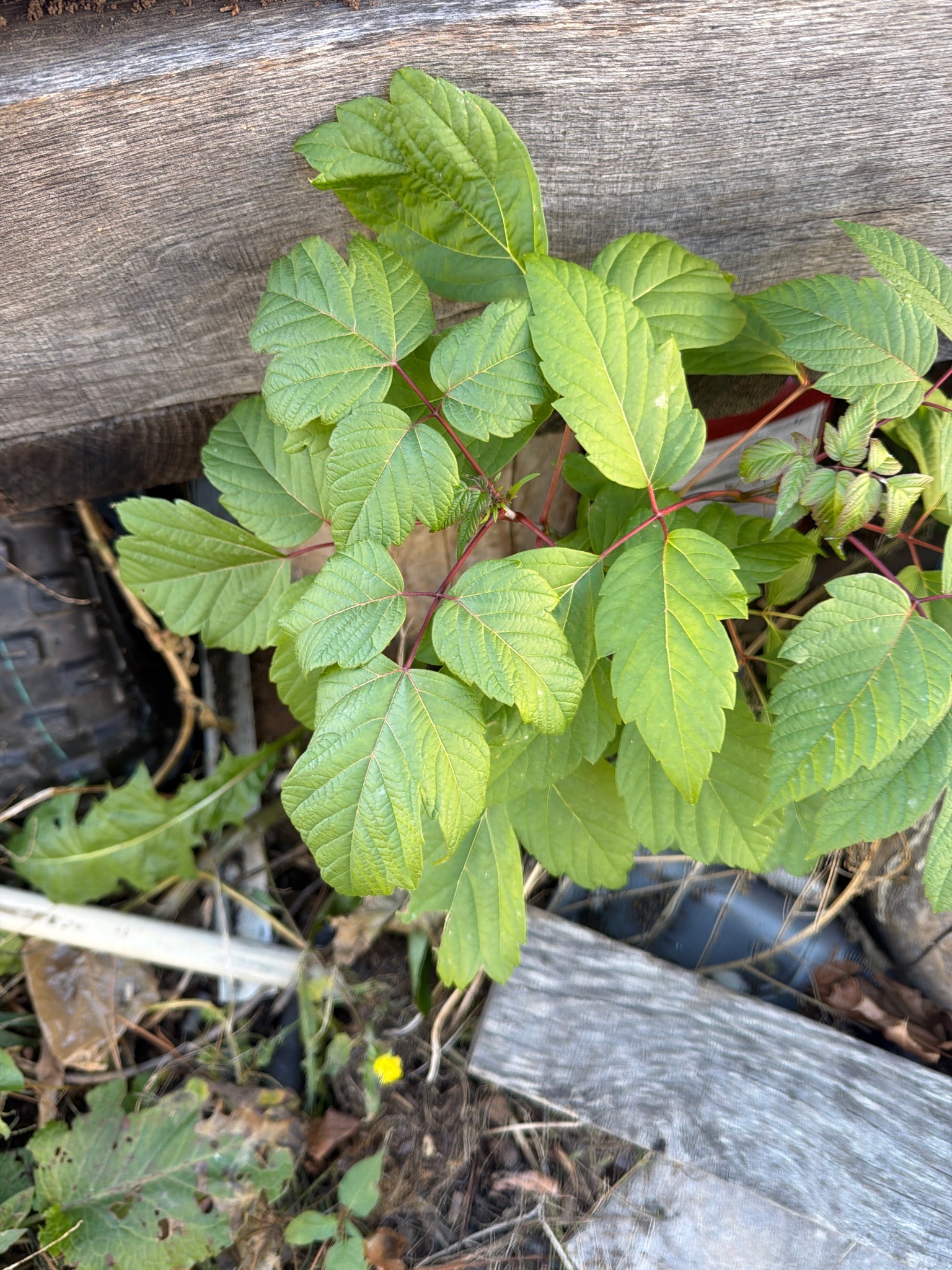
Box Elder
Acer negundo
A deciduous tree species featuring compound leaves with typically three to five leaflets, serrated margins, and bright green coloration, often emerging from reddish stems.
- Light
- Full sun to partial shade, requiring at least 6 hours of direct sunlight daily.
- Water
- Moderate watering needs. Water deeply when the top few inches of soil are dry. Exhibits good tolerance to seasonal moisture fluctuations once established.
- Growth
- Perennial tree growing with a fast growth rate, reaching mature heights of 30 to 50 feet with an equally broad, rounded canopy.
Care instructions
Provide full sun to partial shade and moderate watering. Ensure well-draining soil and apply a balanced fertilizer in spring if growth is slow.
Growing details
Sunlight
Full sun to partial shade, requiring at least 6 hours of direct sunlight daily.
Watering
Moderate watering needs. Water deeply when the top few inches of soil are dry. Exhibits good tolerance to seasonal moisture fluctuations once established.
Soil
Adaptable to various soil types including clay, loam, and sand, provided there is good drainage. Prefers neutral to slightly acidic pH levels.
Hardiness zone
USDA Zones 2 through 9.
Growth habit
Perennial tree growing with a fast growth rate, reaching mature heights of 30 to 50 feet with an equally broad, rounded canopy.
Bloom season
Spring, featuring small, pendulous greenish flowers that appear before or alongside the new leaves.
Propagation
Propagated easily through seeds sown in autumn or via hardwood and softwood cuttings taken during the growing season.
Common pests & issues
Susceptible to boxelder bugs, aphids, and fungal leaf spots. Proper pruning and ensuring good air circulation help minimize disease incidence.
Similar species
Poison ivy (Toxicodendron radicans), which also features compound leaves with three leaflets, but poison ivy lacks the true opposite branching structure characteristic of maples like Acer negundo.