
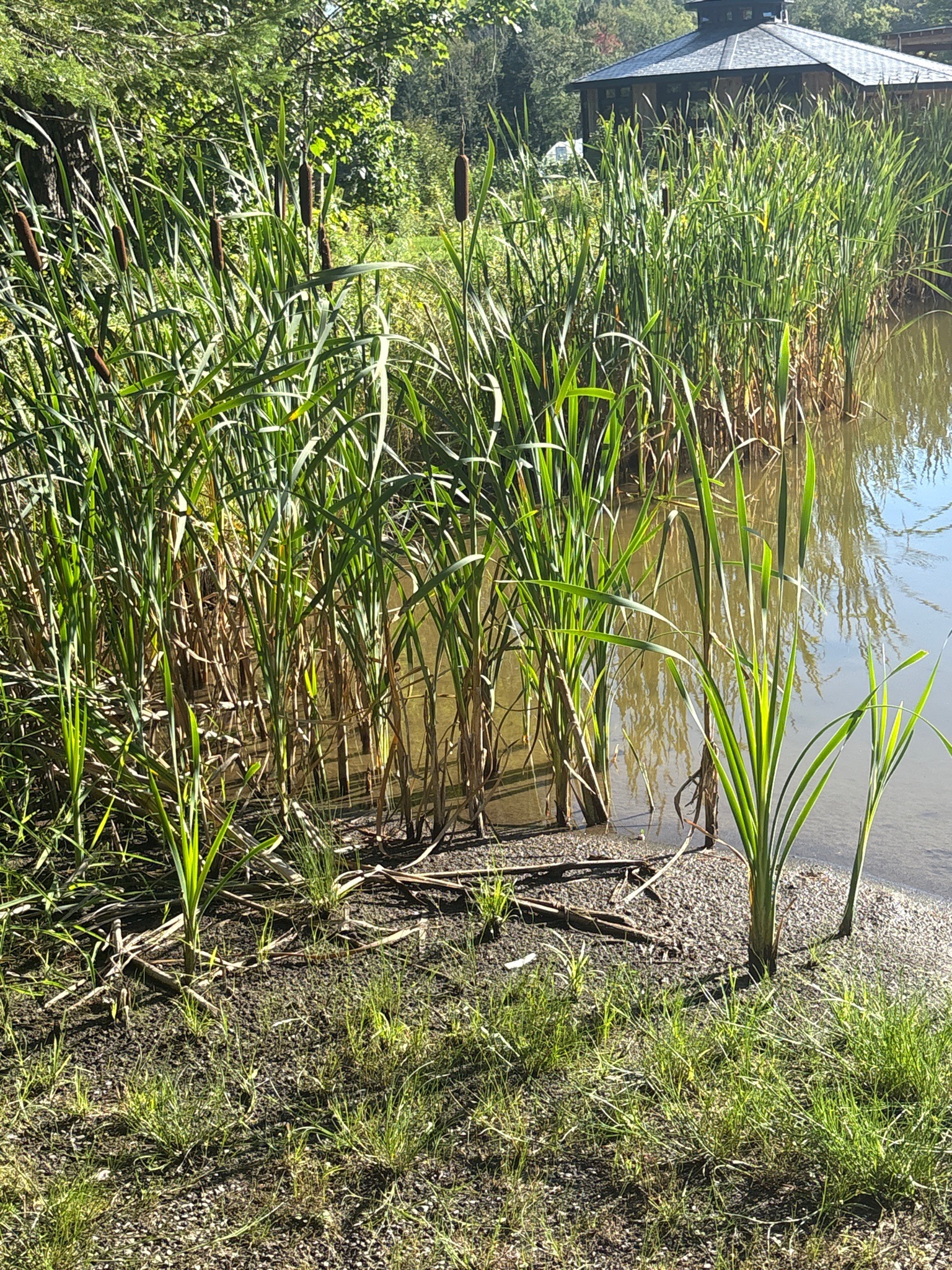
Broadleaf Cattail
Typha latifolia
A tall, robust wetland perennial featuring long, flat, strap-like green leaves and characteristic cylindrical, brown, cigar-like flower spikes at the terminal ends of the stems.
- Light
- Full sun, requiring at least 6 to 8 hours of direct sunlight daily for optimal growth and flowering.
- Water
- Requires constantly saturated, boggy soil or standing water up to several inches deep. Highly intolerant of dry soil conditions.
- Growth
- An herbaceous, rhizomatous perennial growing in dense colonies, reaching mature heights of 4 to 10 feet with an indefinite spread.
Care instructions
Plant in wet soil or shallow standing water in full sun. Minimal maintenance is required once established, as it naturally spreads via underground rhizomes in aquatic environments.
Growing details
Sunlight
Full sun, requiring at least 6 to 8 hours of direct sunlight daily for optimal growth and flowering.
Watering
Requires constantly saturated, boggy soil or standing water up to several inches deep. Highly intolerant of dry soil conditions.
Soil
Adapts to clay, loam, or organic muck with a neutral to slightly acidic or alkaline pH, provided moisture is continuously abundant.
Hardiness zone
USDA zones 2 through 11, demonstrating strong cold hardiness and heat tolerance.
Growth habit
An herbaceous, rhizomatous perennial growing in dense colonies, reaching mature heights of 4 to 10 feet with an indefinite spread.
Bloom season
Flowers from early summer to mid-summer, producing dense cylindrical spikes composed of tiny brown flowers, transitioning to fluffy seed heads in autumn.
Propagation
Easily propagated by dividing the thick underground rhizomes in spring or by sowing seeds directly onto wet soil surfaces.
Common pests & issues
Generally resilient, though can occasionally be affected by fungal leaf spot or minor insect infestations by caterpillars and borers, rarely requiring intervention.
Similar species
Narrow-leaf cattail (Typha angustifolia), which can be distinguished by its narrower leaves and a distinct gap between the male and female portions of the flower spike.