
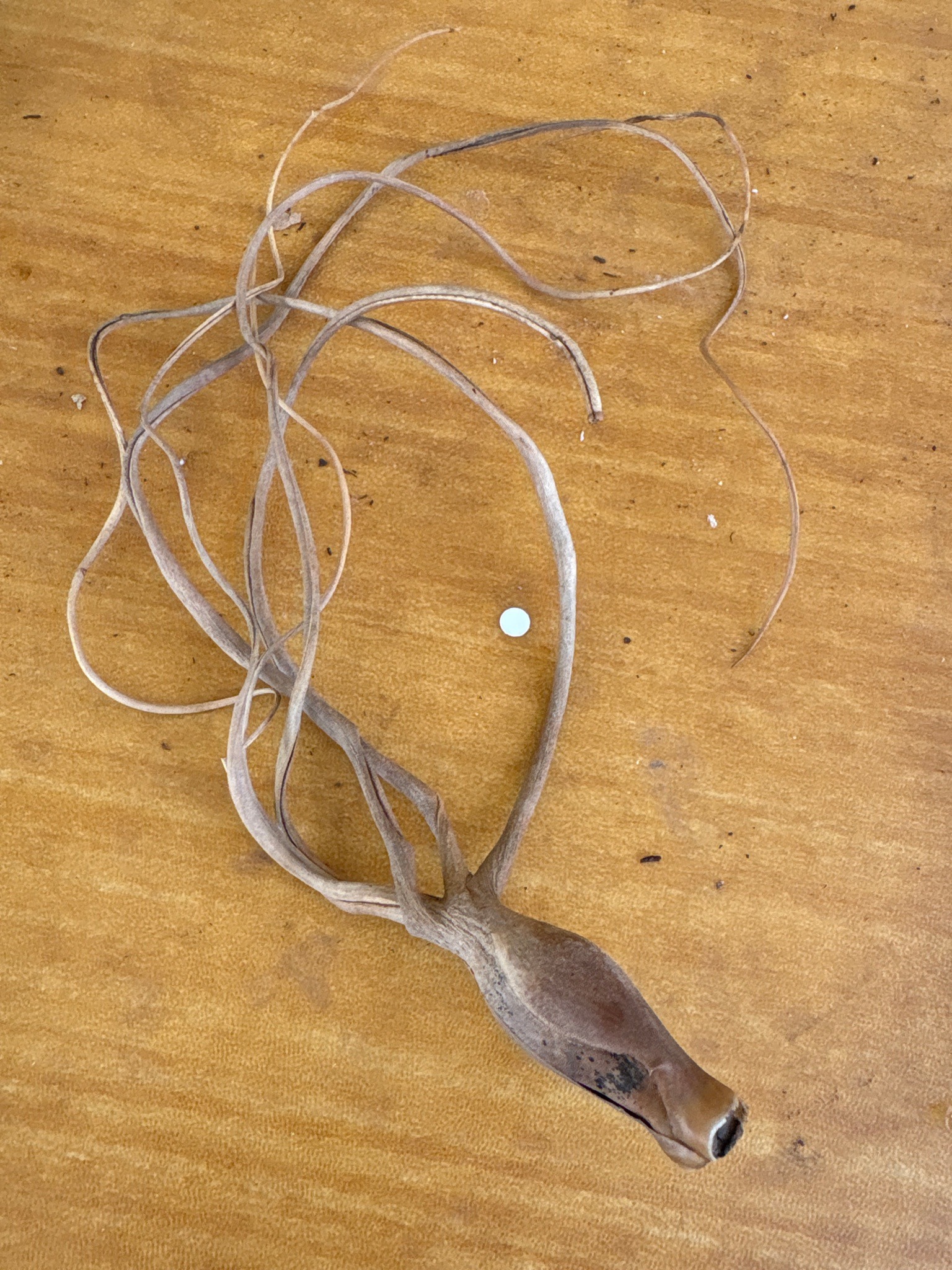
Bulbous Air Plant
Tillandsia bulbosa
An epiphytic bromeliad featuring a pseudobulbous, bulb-like base with narrow, glossy, contorted or snake-like leaves radiating outward. In health, leaves are green to purplish, but dried specimens turn greyish-brown.
- Light
- Bright, filtered or indirect light for 4 to 6 hours daily. Direct mid-day sun can burn the leaves.
- Water
- Mist regularly or submerge fully in water once a week. Thorough drying after watering is critical, as trapping moisture inside the hollow base causes internal rot.
- Growth
- Epiphytic, slow-growing rosette with a swollen base. Reaches around 6 to 12 inches in height and spread.
Care instructions
Provide bright, indirect sunlight with good air circulation. Soak the plant in water for 20-30 minutes every 1-2 weeks, ensuring it dries thoroughly upside down within a few hours to prevent water collection in the bulbous base. No soil required.
Growing details
Sunlight
Bright, filtered or indirect light for 4 to 6 hours daily. Direct mid-day sun can burn the leaves.
Watering
Mist regularly or submerge fully in water once a week. Thorough drying after watering is critical, as trapping moisture inside the hollow base causes internal rot.
Soil
Soil-free epiphytic growth. Can be mounted on wood, cork, or rock, or placed inside open glass vessels with adequate air flow.
Hardiness zone
USDA Zones 10 through 11
Growth habit
Epiphytic, slow-growing rosette with a swollen base. Reaches around 6 to 12 inches in height and spread.
Bloom season
Typically blooms in spring to early summer, producing a central spike with bright red-to-pink bracts and tubular purple or violet flowers.
Propagation
Propagated by separating offsets (pups) that form near the base after the mother plant finishes blooming once they reach roughly one-third the size of the parent.
Common pests & issues
Base rot from excess moisture accumulation in the hollow pseudobulb is the primary issue. Pests like mealybugs and scale may occasionally hide in leaf crevices.
Similar species
Tillandsia caput-medusae, which also has a swollen base but possesses silver trichome fuzz covering its wavy leaves, unlike the smooth, glossy surface of T. bulbosa.