
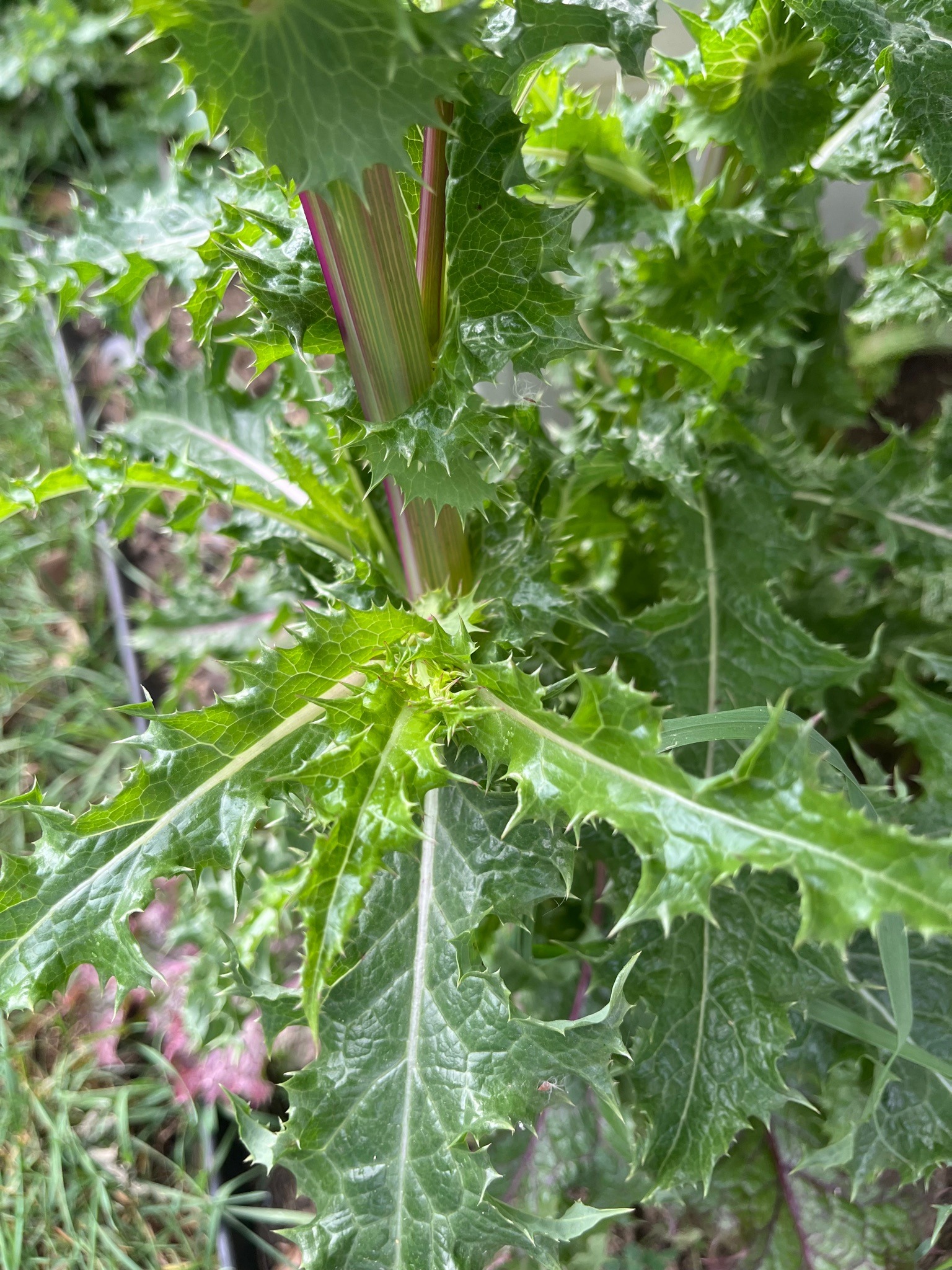
Bull Thistle
Cirsium vulgare
A biennial herbaceous plant featuring deeply lobed, spiny green leaves with hairy upper surfaces and winged stems covered in sharp spines.
- Light
- Full sun, requiring at least 6 to 8 hours of direct sunlight daily
- Water
- Low to moderate watering needs; highly drought-tolerant once established. Water deeply when the soil feels dry.
- Growth
- Biennial plant forming a low rosette of leaves in the first year, followed by a tall, erect flowering stem reaching heights of 2 to 5 feet in the second year.
Care instructions
Provide full sunlight exposure, well-draining soil, and allow the ground to dry out between watering sessions.
Growing details
Sunlight
Full sun, requiring at least 6 to 8 hours of direct sunlight daily
Watering
Low to moderate watering needs; highly drought-tolerant once established. Water deeply when the soil feels dry.
Soil
Adaptable to various soil types including clay, loam, and sand, provided there is good drainage. Prefers a neutral to slightly alkaline pH range of 6.0 to 7.5.
Hardiness zone
USDA zones 3 through 9, exhibiting strong cold tolerance.
Growth habit
Biennial plant forming a low rosette of leaves in the first year, followed by a tall, erect flowering stem reaching heights of 2 to 5 feet in the second year.
Bloom season
Flowers from mid-summer through early autumn, producing dense, pink-to-purple, thistle-type flower heads.
Propagation
Propagates primarily by seed distributed by wind, as well as occasional self-seeding.
Common pests & issues
Generally resistant to major garden pests and diseases, though can occasionally be affected by aphids or fungal rusts in damp conditions.
Similar species
Canada Thistle (Cirsium arvense), which spreads aggressively via underground roots, whereas Bull Thistle relies solely on seeds and features much larger flower heads and significantly sharper leaf spines.