
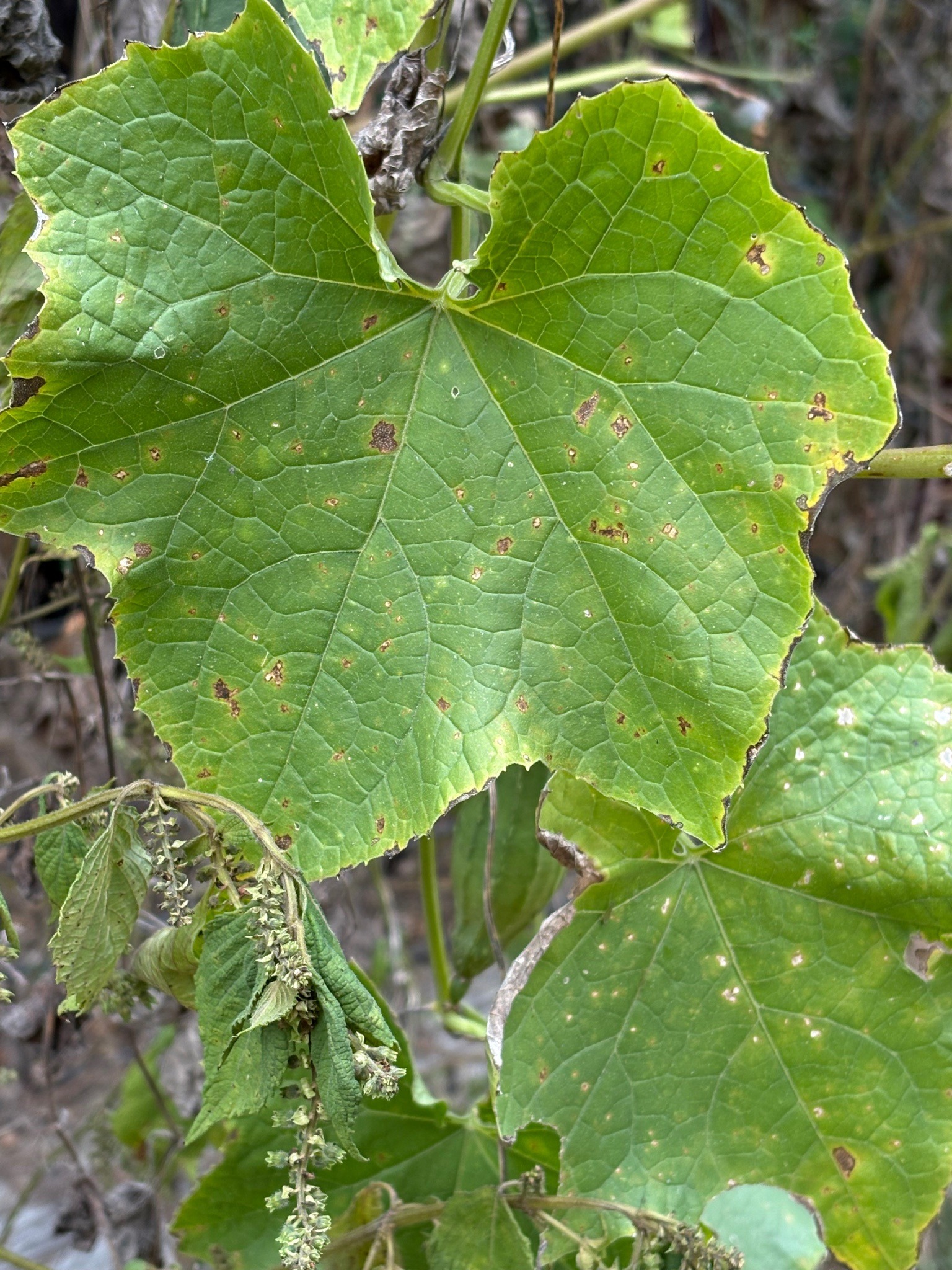
Bur cucumber
Sicyos angulatus
An herbaceous annual vine featuring large, alternate, simple leaves that are deeply cordate at the base with jaggedly lobed, angled margins and prominent palmate venation.
- Light
- Full sun to partial shade, requiring at least 6 hours of direct sunlight daily for optimal growth.
- Water
- Requires regular moisture, equivalent to about 1 inch of water per week, preferring consistently damp soil without waterlogging. Tolerates brief dry spells once established.
- Growth
- Fast-growing herbaceous annual vine that climbs via tendrils, reaching lengths of 15 to 25 feet with a sprawling spread.
Care instructions
Grow in full sun to partial shade with consistently moist, well-draining soil rich in organic matter. Provide adequate spacing and a trellis or vertical support structure for climbing.
Growing details
Sunlight
Full sun to partial shade, requiring at least 6 hours of direct sunlight daily for optimal growth.
Watering
Requires regular moisture, equivalent to about 1 inch of water per week, preferring consistently damp soil without waterlogging. Tolerates brief dry spells once established.
Soil
Prefers fertile, loamy, well-drained soils with a neutral pH ranging from 6.0 to 7.0.
Hardiness zone
USDA hardiness zones 3 through 9, functioning as a warm-season annual in colder climates.
Growth habit
Fast-growing herbaceous annual vine that climbs via tendrils, reaching lengths of 15 to 25 feet with a sprawling spread.
Bloom season
Flowers from mid-summer to early autumn, producing small, greenish-white or yellowish blossoms arranged in small clusters.
Propagation
Propagated easily from seeds sown directly in the ground after the final spring frost, or started indoors in biodegradable pots.
Common pests & issues
Susceptible to fungal pathogens such as powdery mildew and downy mildew, as well as sap-sucking insects like aphids. Preventative measures include proper air circulation and avoiding overhead watering.
Similar species
Wild cucumber (Echinocystis lobata), which can be distinguished by its distinctly spiny fruit capsules and deeply divided, star-like leaves.