
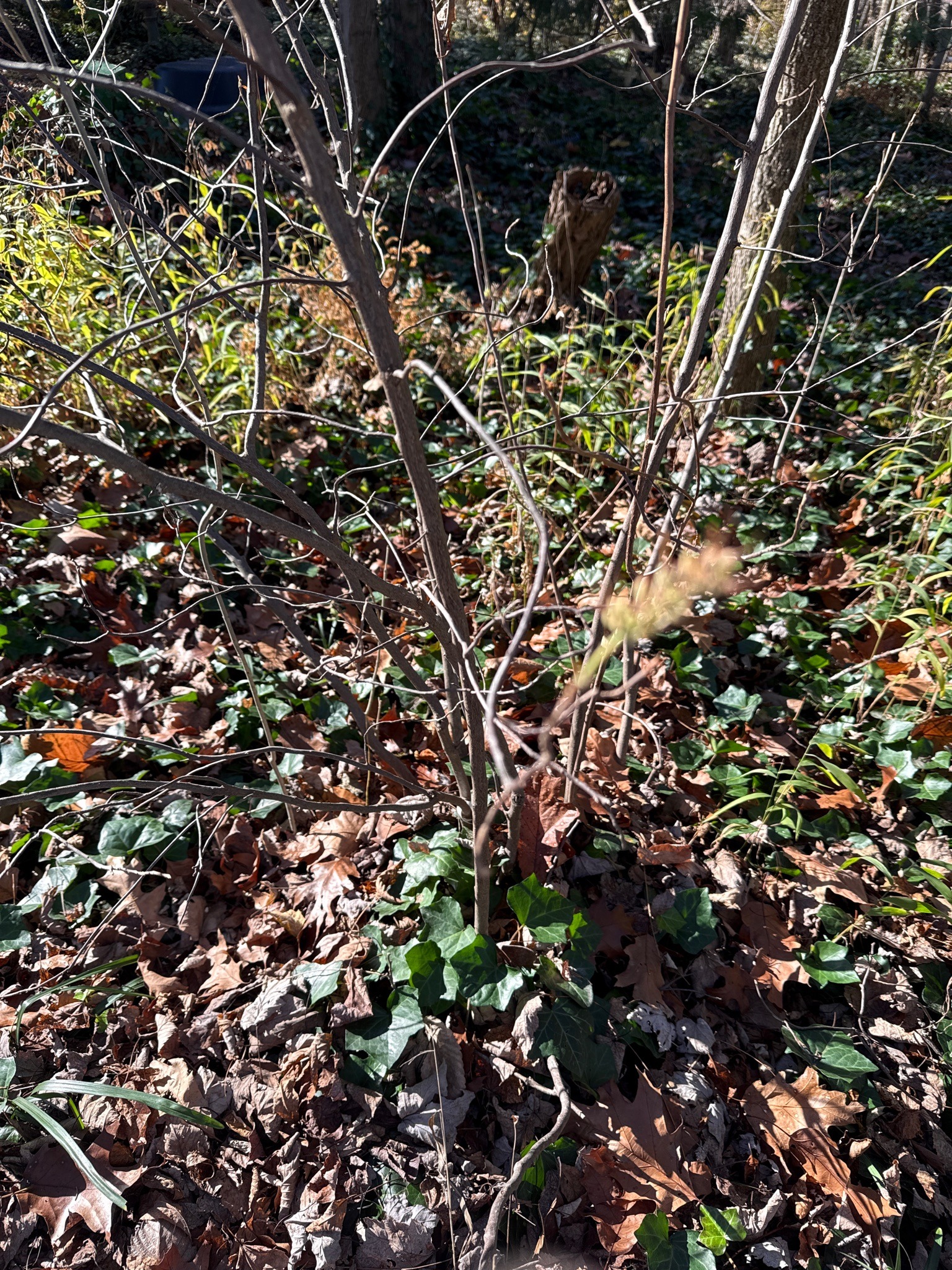
Burning Bush
Euonymus alatus
A deciduous shrub known for its brilliant red autumn foliage and distinctive corky ridges or wings on the stems.
- Light
- Full sun to partial shade, requiring at least 6 hours of direct sunlight daily for optimal leaf coloration.
- Water
- Water deeply when the top few inches of soil become dry. Drought-tolerant once established, but avoid waterlogged soil.
- Growth
- Perennial deciduous shrub with a dense, rounded growth habit, reaching mature heights and spreads of 5 to 15 feet.
Care instructions
Plant in full sun to partial shade in well-draining soil. Water regularly during the first growing season to establish a deep root system. Once established, it is moderately drought-tolerant. Apply a balanced slow-release fertilizer in early spring.
Growing details
Sunlight
Full sun to partial shade, requiring at least 6 hours of direct sunlight daily for optimal leaf coloration.
Watering
Water deeply when the top few inches of soil become dry. Drought-tolerant once established, but avoid waterlogged soil.
Soil
Adaptable to a wide range of well-draining soils including loam, clay, and sand, with a preferred pH range of 6.0 to 7.5.
Hardiness zone
USDA zones 4 through 8
Growth habit
Perennial deciduous shrub with a dense, rounded growth habit, reaching mature heights and spreads of 5 to 15 feet.
Bloom season
Spring, producing small, inconspicuous yellowish-green flowers.
Propagation
Propagated easily through softwood cuttings taken in late spring or semi-hardwood cuttings in summer, as well as by seed.
Common pests & issues
Generally robust, but can be susceptible to scale insects, spider mites, and powdery mildew in poorly ventilated or excessively humid conditions.
Similar species
Euonymus europaeus (European spindle tree), which lacks the prominent corky stem wings typical of Euonymus alatus.