
Bushmint
Hyptis suaveolens
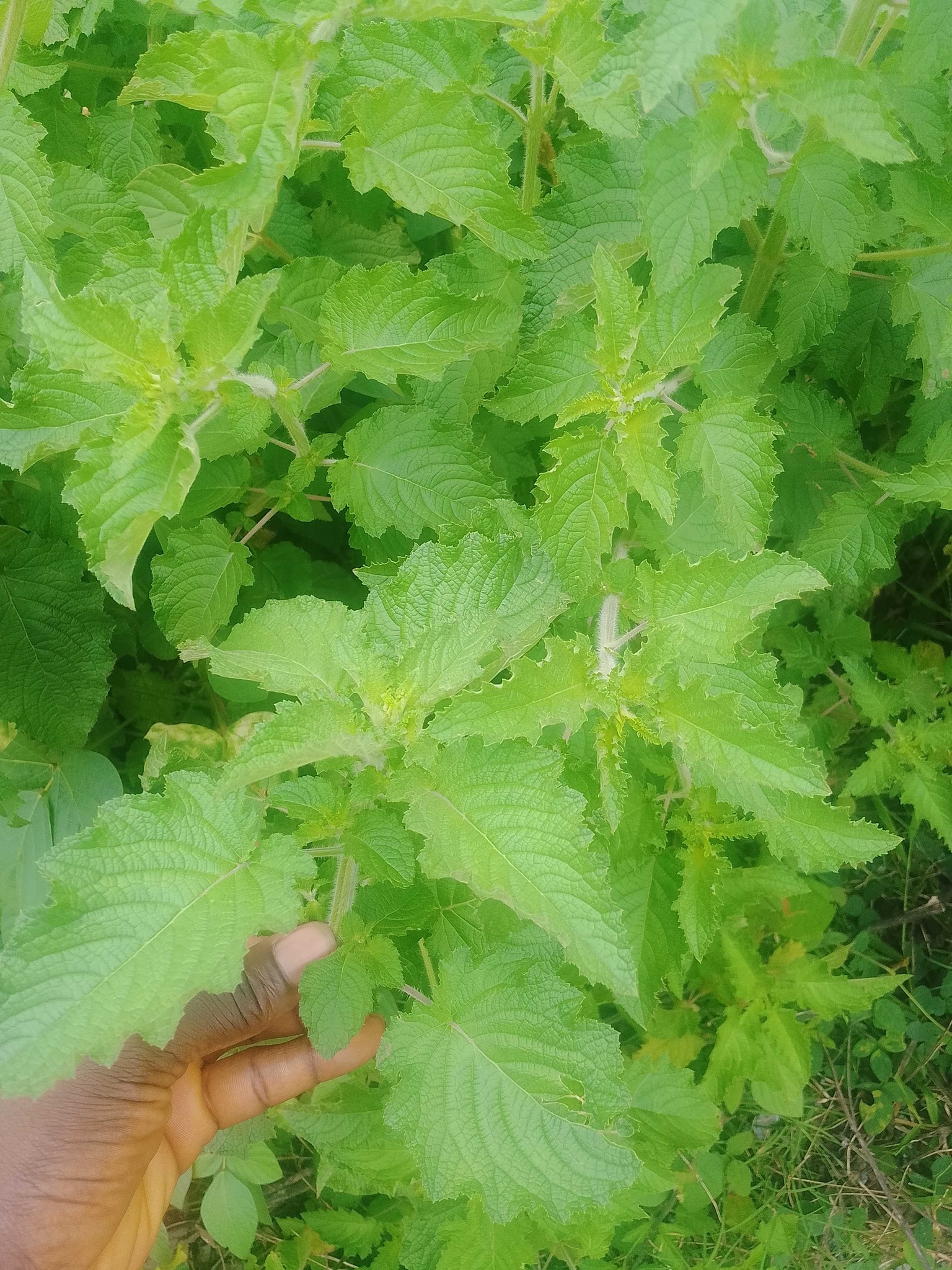
An aromatic herbaceous annual or short-lived perennial shrub with square stems, simple opposite leaves with serrated margins, and visible pubescence along the stems and veins.
- Light
- Full sun to partial shade, requiring at least 6 hours of direct sunlight per day.
- Water
- Water when the top inch of soil feels dry. Drought tolerant once established; avoid prolonged waterlogging to prevent root rot.
- Growth
- An erect, branched, herbaceous shrub or subshrub growing up to 1.5 to 2 meters in height with a moderate to fast growth rate.
Care instructions
Grow in full sun to partial shade with well-draining soil. Water moderately, allowing the soil to dry out between waterings as it has good drought tolerance once established.
Growing details
Sunlight
Full sun to partial shade, requiring at least 6 hours of direct sunlight per day.
Watering
Water when the top inch of soil feels dry. Drought tolerant once established; avoid prolonged waterlogging to prevent root rot.
Soil
Prefers loose, well-draining sandy or loamy soils with a neutral to slightly acidic pH range of 6.0 to 7.0.
Hardiness zone
USDA Hardiness Zones 9-11; sensitive to frost and grown as an annual in cooler climates.
Growth habit
An erect, branched, herbaceous shrub or subshrub growing up to 1.5 to 2 meters in height with a moderate to fast growth rate.
Bloom season
Blooms during the late summer to autumn months, producing small bluish-purple to white labiate flowers arranged in axillary clusters.
Propagation
Easily propagated from seeds sown in warm soil during spring or through stem cuttings taken during the active growing season.
Common pests & issues
Generally resilient against major pests and diseases, though susceptible to root rot in poorly draining soils and occasional aphid infestations.
Similar species
Other members of the Lamiaceae family, such as Hyptis capitata, but distinguished by its loose floral clusters and distinctly scented foliage.