
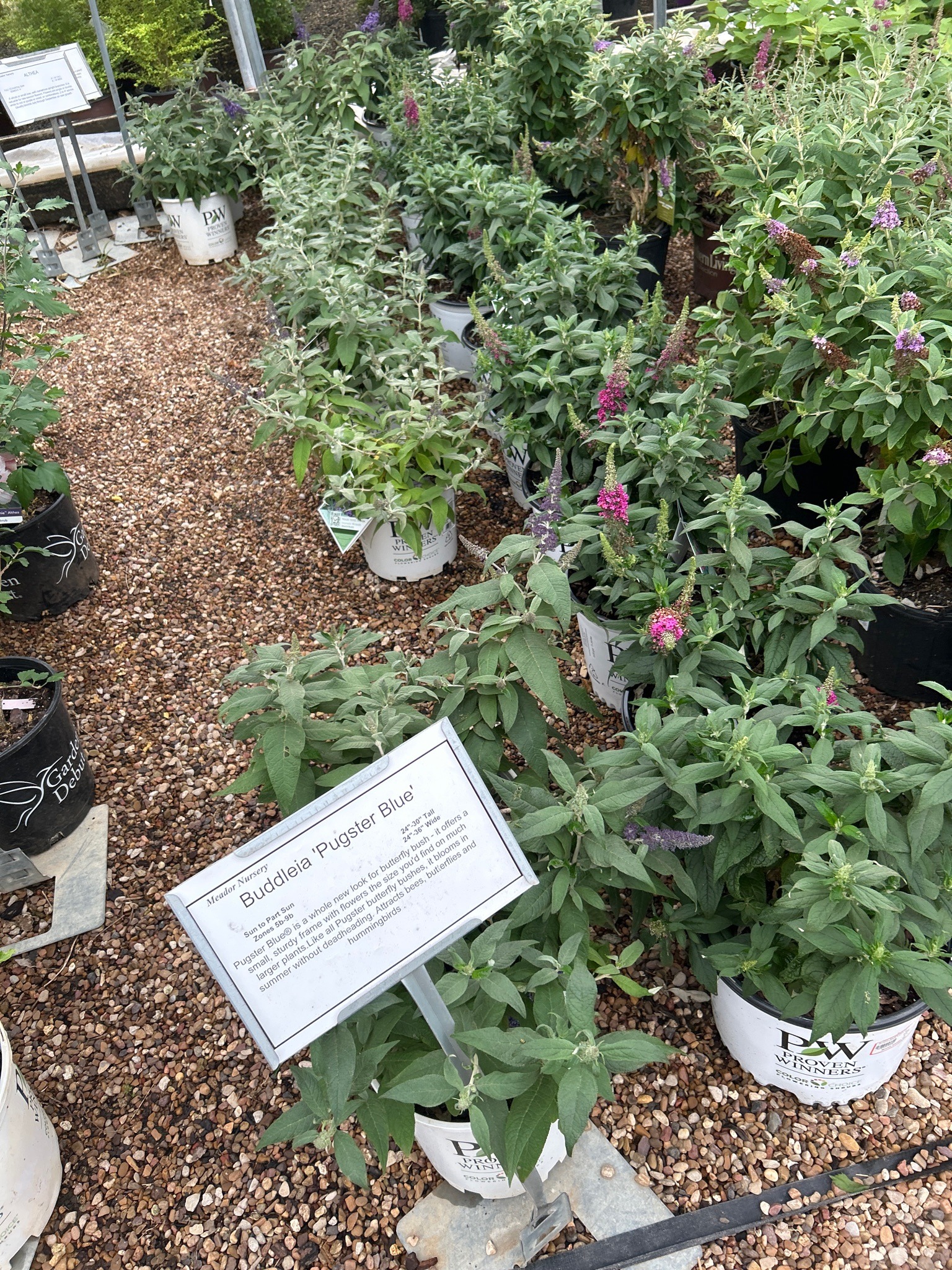
Butterfly Bush 'Pugster Blue'
Buddleja davidii 'Pugster Blue'
A compact, dwarf deciduous shrub featuring thick, sturdy stems and exceptionally large, cone-shaped clusters of vibrant blue-purple flowers with orange eyes.
- Light
- Full sun (6+ hours per day for best blooming)
- Water
- Average watering; allow the soil to dry out between waterings. Drought tolerant once established but sensitive to 'wet feet' or over-watering.
- Growth
- Perennial dwarf shrub; mature size is roughly 2 feet tall and 2-3 feet wide with a rounded, compact habit.
Care instructions
Plant in a sunny location with excellent drainage. Prune in late winter or early spring just after new growth emerges. Requires very little maintenance once established.
Growing details
Sunlight
Full sun (6+ hours per day for best blooming)
Watering
Average watering; allow the soil to dry out between waterings. Drought tolerant once established but sensitive to 'wet feet' or over-watering.
Soil
Well-drained soil is essential. Prefers slightly acidic to neutral pH (6.0 to 7.0) but is adaptable to various soil types.
Hardiness zone
USDA zones 5 through 9; cold hardy to -20°F (-29°C).
Growth habit
Perennial dwarf shrub; mature size is roughly 2 feet tall and 2-3 feet wide with a rounded, compact habit.
Bloom season
Produces fragrant, dense flower spikes from early summer through the first frost.
Propagation
Propagated by softwood cuttings in spring or summer; 'Pugster' is a patented series, so commercial asexual propagation is restricted.
Common pests & issues
Main issues include root rot in poorly drained soil, spider mites in very hot/dry conditions, and japanese beetles.
Similar species
Similar to other dwarf Buddleja series like 'Lo & Behold', but the Pugster series is distinguished by its thicker stems and significantly larger flower clusters.