
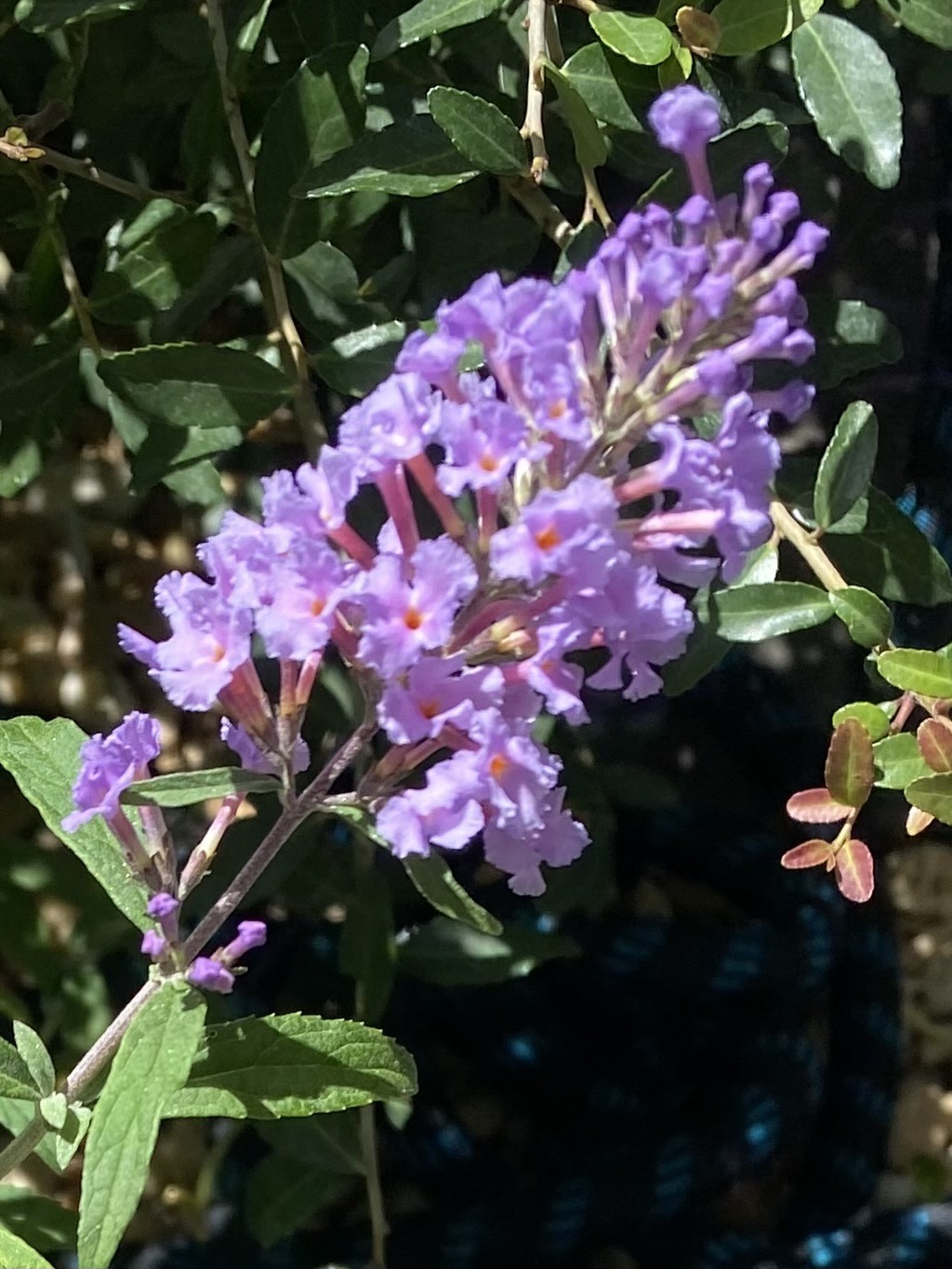
Butterfly Bush
Buddleja davidii
A deciduous shrub featuring arching branches, lance-shaped grayish-green leaves, and large, dense, conical panicles of fragrant, tubular flowers in shades of purple, pink, blue, or white.
- Light
- Full sun, requiring at least 6 to 8 hours of direct sunlight daily for optimal flowering.
- Water
- Moderate watering needs. Water deeply when the top few inches of soil become dry. Once established, it tolerates dry spells reasonably well.
- Growth
- Perennial deciduous shrub with an upright, arching growth habit. Reaches a mature height of 6 to 12 feet and a spread of 4 to 10 feet with a fast growth rate.
Care instructions
Plant in full sun with well-draining soil. Water deeply during the first growing season to establish a strong root system, then provide moderate watering. Prune back hard in early spring to encourage vigorous new growth and abundant flowering.
Growing details
Sunlight
Full sun, requiring at least 6 to 8 hours of direct sunlight daily for optimal flowering.
Watering
Moderate watering needs. Water deeply when the top few inches of soil become dry. Once established, it tolerates dry spells reasonably well.
Soil
Prefers loamy, sandy, or well-draining soils with a neutral to slightly alkaline pH range between 6.0 and 7.5.
Hardiness zone
USDA Hardiness Zones 5 through 9
Growth habit
Perennial deciduous shrub with an upright, arching growth habit. Reaches a mature height of 6 to 12 feet and a spread of 4 to 10 feet with a fast growth rate.
Bloom season
Blooms from mid-summer through autumn, producing dense clusters of small, four-petaled tubular flowers with distinct orange centers.
Propagation
Easily propagated through softwood cuttings taken in late spring or summer, or hardwood cuttings in winter. Can also be grown from seeds sown in spring.
Common pests & issues
Generally resilient, but susceptible to spider mites, root rot if soils remain soggy, and occasionally powdery mildew in humid environments.
Similar species
Lilacs (Syringa), which can be distinguished by their smoother, heart-shaped leaves and earlier spring bloom time.