
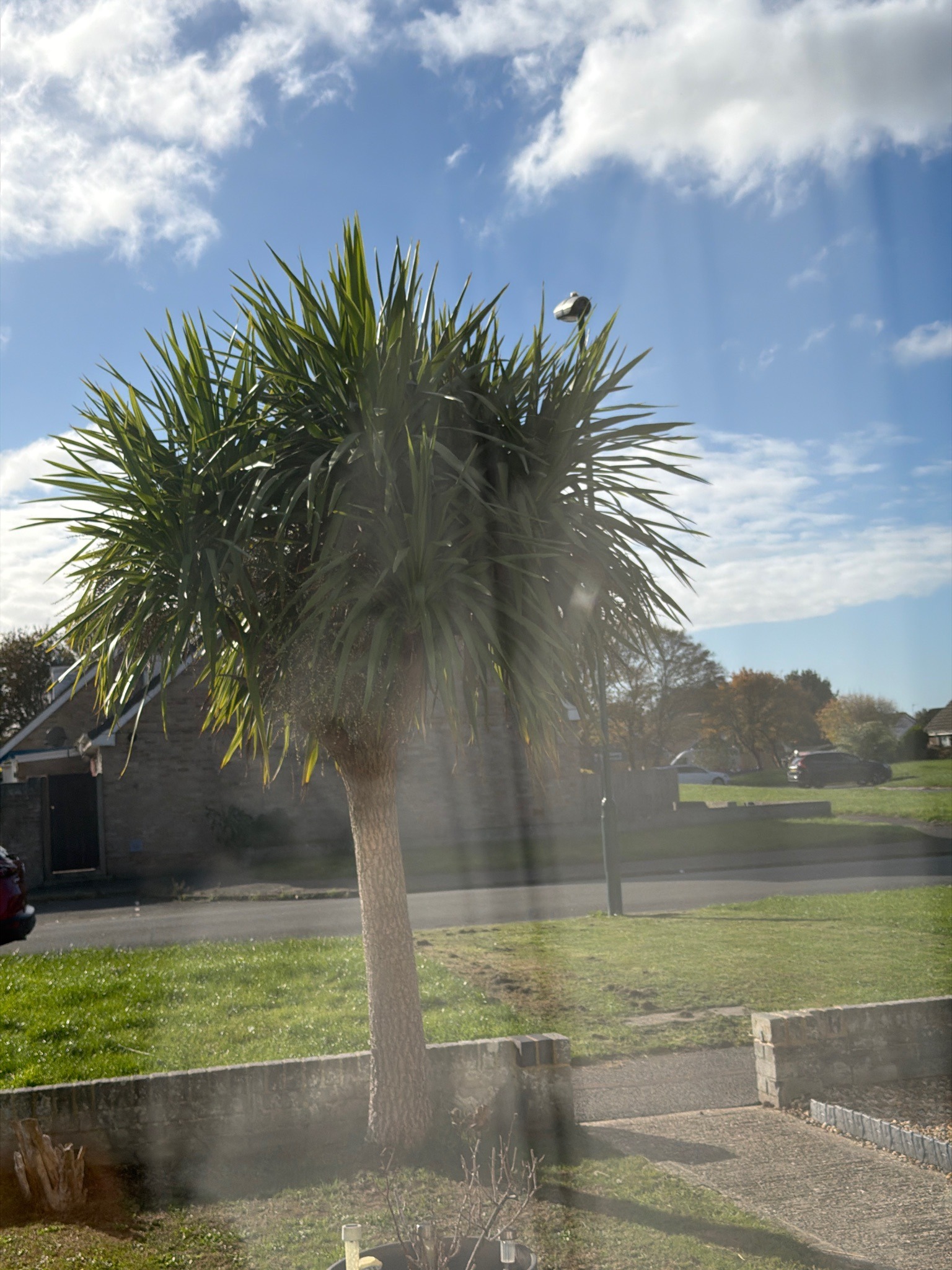
Cabbage tree
Cordyline australis
An evergreen tree featuring a stout, woody trunk with rough bark and dense, sword-shaped green leaves clustered at the ends of the branches.
- Light
- Full sun to partial shade, requiring at least 6 hours of direct sunlight daily.
- Water
- Water deeply during the growing season, allowing the top layer of soil to dry out between waterings. Highly drought-tolerant once established.
- Growth
- Arborescent monocot with a single or branched trunk, reaching heights of 15 to 30 feet and a spread of 6 to 10 feet with a moderate growth rate.
Care instructions
Plant in full sun to partial shade with well-draining soil. Water regularly when young, but establish drought tolerance as it matures. Apply a balanced, slow-release fertilizer in spring to support healthy leaf growth.
Growing details
Sunlight
Full sun to partial shade, requiring at least 6 hours of direct sunlight daily.
Watering
Water deeply during the growing season, allowing the top layer of soil to dry out between waterings. Highly drought-tolerant once established.
Soil
Prefers well-draining loamy, sandy, or clay soils with a neutral to slightly acidic pH range of 6.0 to 7.0.
Hardiness zone
USDA Hardiness Zones 8 through 10, tolerating light frost.
Growth habit
Arborescent monocot with a single or branched trunk, reaching heights of 15 to 30 feet and a spread of 6 to 10 feet with a moderate growth rate.
Bloom season
Late spring to early summer, producing large, branching panicles of small, fragrant white or cream-colored flowers.
Propagation
Propagated easily from stem cuttings or by planting seeds collected from mature trees in spring.
Common pests & issues
Generally resilient, but susceptible to scale insects, mealybugs, and root rot in poorly draining soils.
Similar species
Yucca elephantipes, which features stiffer, sharper-tipped leaves and lacks the fibrous trunk rings typical of Cordyline australis.