
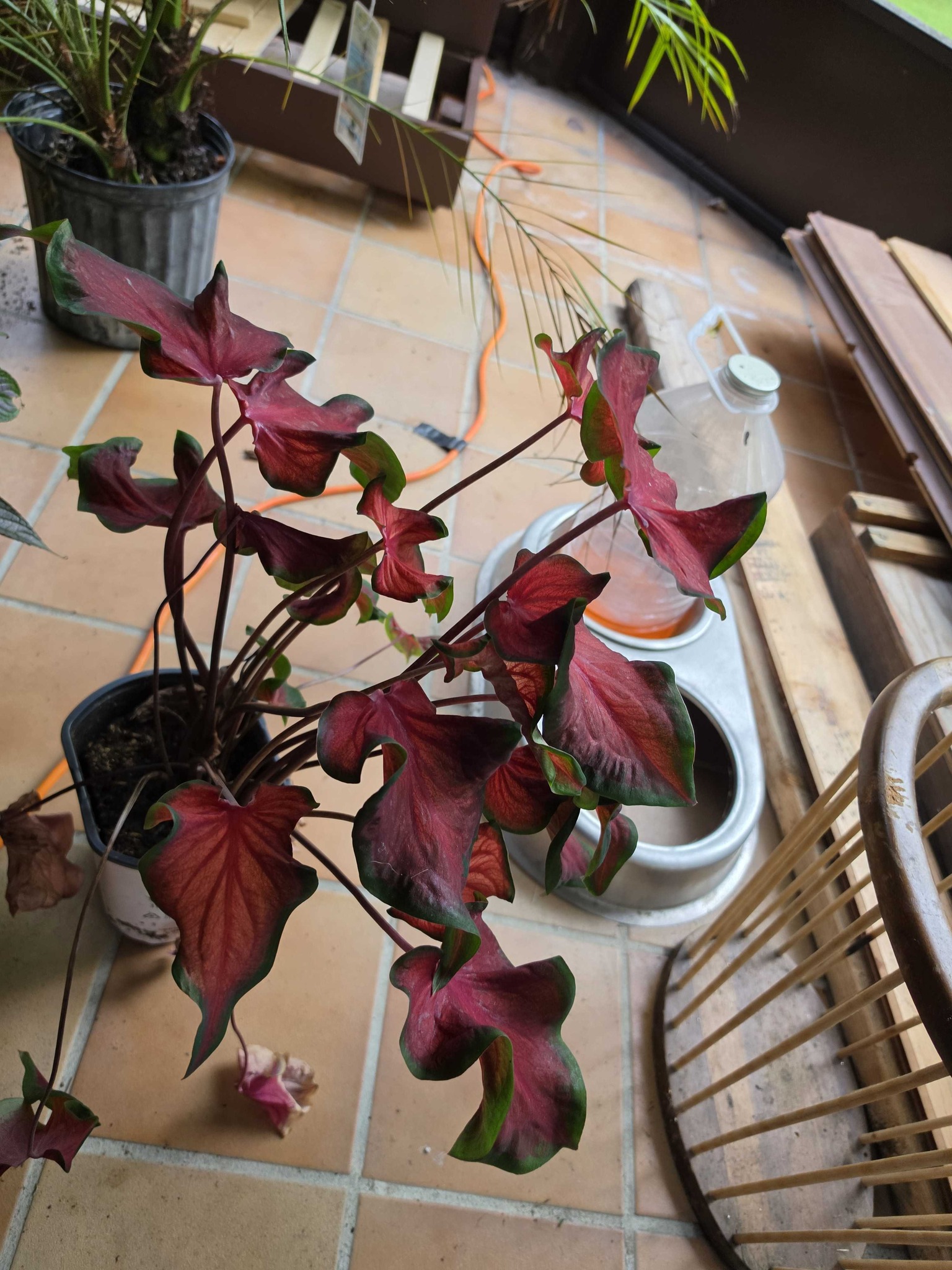
Caladium
Caladium bicolor
A herbaceous perennial grown for its striking, large, heart- or arrowhead-shaped leaves featuring vibrant patterns of red, pink, white, and green.
- Light
- Partial shade to full shade, receiving bright indirect light for 4 to 6 hours daily, avoiding harsh direct sun which can scorch the leaves.
- Water
- Water regularly to keep the soil evenly moist, but not soggy. Allow the top inch to dry slightly between waterings. Reduce watering as leaves yellow and drop in autumn.
- Growth
- Tuberous perennial forming an upright, clump-forming habit, reaching heights and spreads of 1 to 2 feet with a moderate growth rate during warm months.
Care instructions
Provide bright, indirect sunlight or partial shade. Keep the soil consistently moist during the active growing season, and provide a balanced liquid fertilizer every few weeks. Reduce watering significantly when the foliage naturally dies back for the dormant period.
Growing details
Sunlight
Partial shade to full shade, receiving bright indirect light for 4 to 6 hours daily, avoiding harsh direct sun which can scorch the leaves.
Watering
Water regularly to keep the soil evenly moist, but not soggy. Allow the top inch to dry slightly between waterings. Reduce watering as leaves yellow and drop in autumn.
Soil
Rich, organic, well-draining soil with a slightly acidic to neutral pH range of 5.5 to 6.5.
Hardiness zone
USDA Hardiness Zones 9 through 11 as a perennial, frequently grown as an annual or potted indoor plant in cooler regions.
Growth habit
Tuberous perennial forming an upright, clump-forming habit, reaching heights and spreads of 1 to 2 feet with a moderate growth rate during warm months.
Bloom season
Summer; produces inconspicuous greenish-white spadices enclosed in a spathe, though primarily grown for foliage rather than flowers.
Propagation
Propagated by dividing the tubers in early spring before growth begins, ensuring each section has at least one prominent eye or bud.
Common pests & issues
Susceptible to tuber rot if soils remain excessively waterlogged. Pests such as aphids and spider mites can occasionally affect indoor or greenhouse specimens.
Similar species
Colocasia and Alocasia, which generally grow larger, develop woody or stem-like structures above ground, and have different leaf attachment points compared to the basal leaves of Caladium.