
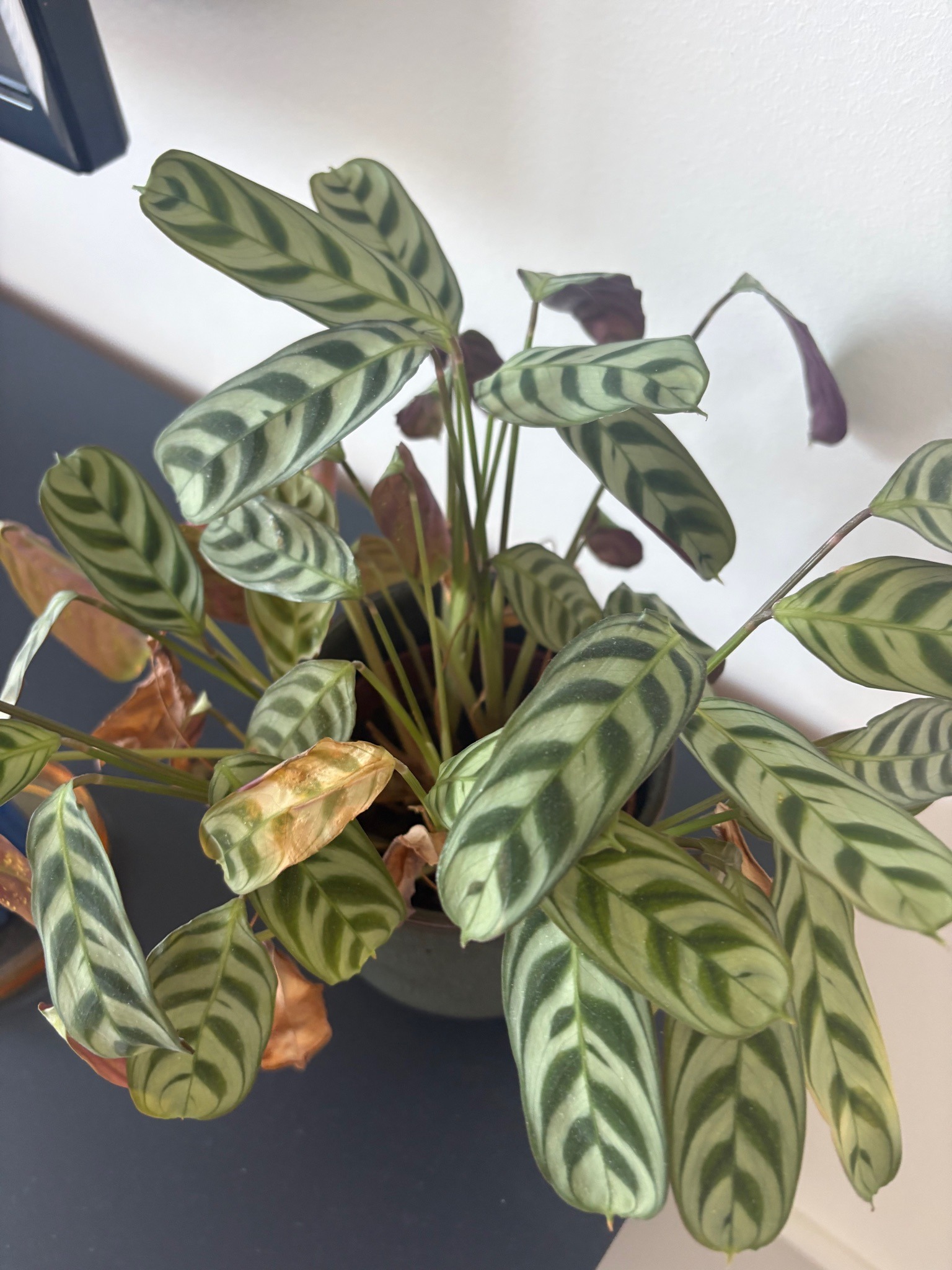
Calathea Lancifolia
Goeppertia insignis
Features long, narrow, wavy-edged leaves with a light green background and prominent dark green, oval-shaped spots alternating along the midrib, resembling the pattern of snake skin or feathers. The undersides of the leaves are a deep purplish-red.
- Light
- Bright, indirect light for 6 to 8 hours per day. Avoid direct sunlight which can scorch the delicate leaves.
- Water
- Water thoroughly whenever the top inch of soil feels dry. Maintain consistent moisture without letting the pot sit in standing water. Highly sensitive to mineral buildup in tap water, so use filtered or rain water.
- Growth
- Evergreen perennial clumping houseplant with an upright and spreading growth form. Reaches a mature height of 1 to 2 feet and a spread of 1 to 1.5 feet with a moderate growth rate.
Care instructions
Provide bright, indirect sunlight and maintain consistently moist soil using distilled or filtered water. Keep ambient humidity high and apply a balanced liquid fertilizer diluted to half strength monthly during the spring and summer growing season.
Growing details
Sunlight
Bright, indirect light for 6 to 8 hours per day. Avoid direct sunlight which can scorch the delicate leaves.
Watering
Water thoroughly whenever the top inch of soil feels dry. Maintain consistent moisture without letting the pot sit in standing water. Highly sensitive to mineral buildup in tap water, so use filtered or rain water.
Soil
Rich, well-draining potting mix containing peat moss, perlite, and orchid bark to retain moisture while ensuring aeration. Prefers a slightly acidic pH range of 5.5 to 6.5.
Hardiness zone
USDA zones 11 through 12. Grown primarily as an indoor houseplant in cooler climates as it cannot tolerate frost or temperatures below 60 degrees Fahrenheit.
Growth habit
Evergreen perennial clumping houseplant with an upright and spreading growth form. Reaches a mature height of 1 to 2 feet and a spread of 1 to 1.5 feet with a moderate growth rate.
Bloom season
Rarely blooms indoors. When grown in ideal tropical greenhouse conditions, it produces small, white or pale yellow tubular flowers on short spikes, usually during the spring and summer months.
Propagation
Propagated primarily through division during repotting in the spring. Carefully separate the rhizome clumps, ensuring each division has several healthy stems and an established root system before potting individually.
Common pests & issues
Prone to spider mites and fungus gnats in dry or overly wet conditions. Leaf tip browning and curling often occur due to low humidity, underwatering, or mineral accumulation from tap water.
Similar species
Calathea makoyana (Peacock Plant) and Calathea rufibarba (Velvet Calathea). C. lancifolia is easily distinguished by its long, sword-shaped leaves and wavy margins, whereas C. makoyana has wider, rounded leaves with feather-like markings.