
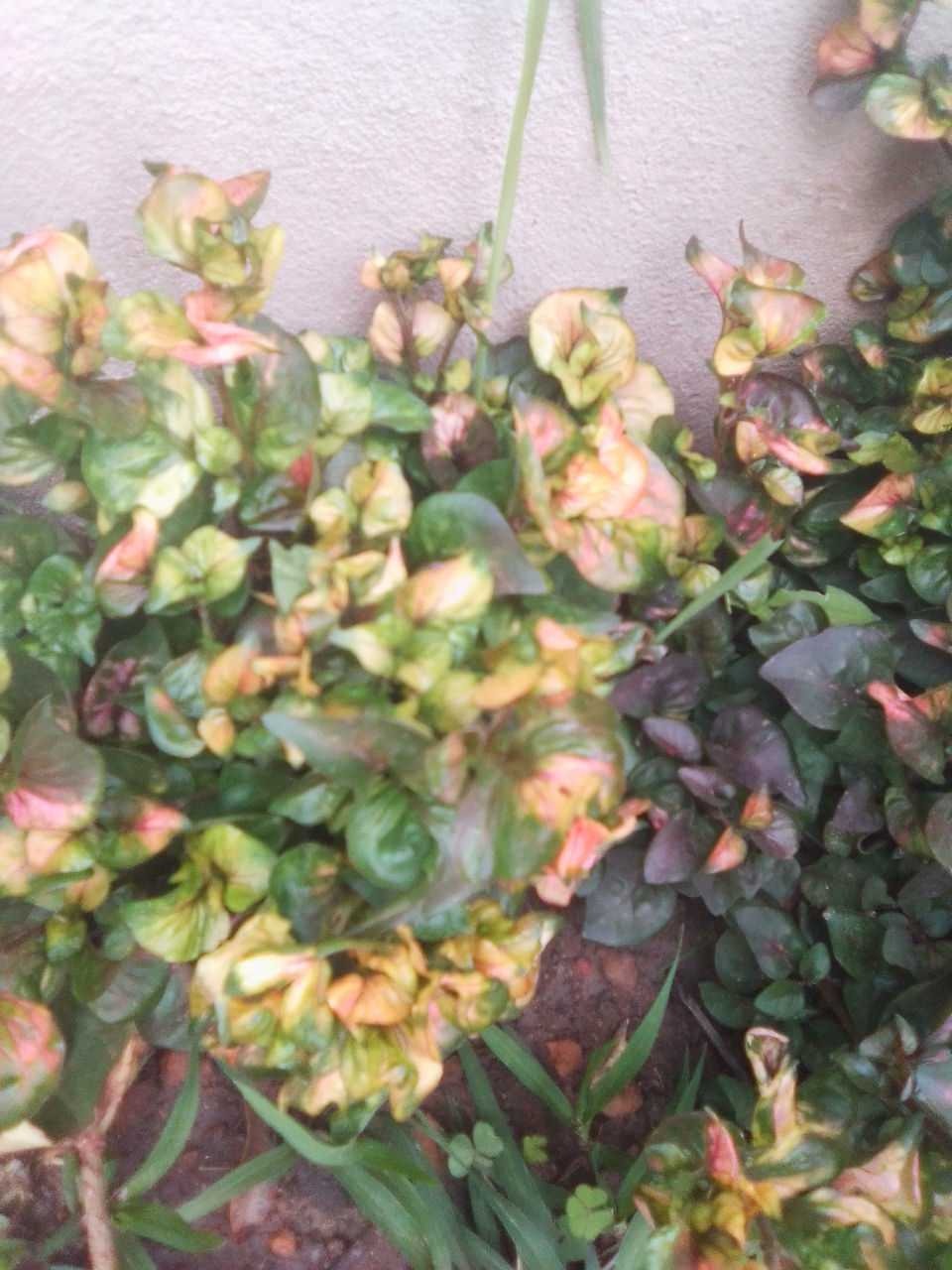
Calico Plant
Alternanthera ficoidea
A low-growing, tender perennial featuring vibrant foliage with variegated combinations of green, pink, cream, and bronze, often characterized by somewhat crinkled or twisted leaf textures.
- Light
- Full sun to partial shade, requiring about 4 to 6 hours of bright light daily.
- Water
- Water regularly to keep the soil evenly moist. It dislikes prolonged drought and will wilt if underwatered, but excessive standing water can lead to root rot.
- Growth
- Low-growing herbaceous perennial or subshrub forming a dense, bushy mat, reaching heights of 6 to 18 inches with a similar spread, exhibiting a moderate growth rate.
Care instructions
Provide bright indirect light or partial sun to maintain vibrant leaf coloration, keep the soil consistently moist without waterlogging, and apply a balanced liquid fertilizer monthly during the active growing season.
Growing details
Sunlight
Full sun to partial shade, requiring about 4 to 6 hours of bright light daily.
Watering
Water regularly to keep the soil evenly moist. It dislikes prolonged drought and will wilt if underwatered, but excessive standing water can lead to root rot.
Soil
Rich, well-draining loamy or organic soil with a slightly acidic to neutral pH range of 6.0 to 7.0.
Hardiness zone
USDA Hardiness Zones 10 through 11, grown as an annual in cooler temperate climates.
Growth habit
Low-growing herbaceous perennial or subshrub forming a dense, bushy mat, reaching heights of 6 to 18 inches with a similar spread, exhibiting a moderate growth rate.
Bloom season
Insignificant small white or yellowish flowers appearing sporadically, mostly grown for foliage rather than blooms.
Propagation
Easily propagated through stem tip cuttings rooted in moist soil or water during spring or summer.
Common pests & issues
Susceptible to aphids, mealybugs, and spider mites. Root rot can occur in poorly draining soils.
Similar species
Alternanthera dentata (Joseph's Coat), which typically features larger, broader, and more uniformly dark purple or bronze leaves compared to the heavily variegated and crinkled foliage of Alternanthera ficoidea.