
Callery Pear
Pyrus calleryana
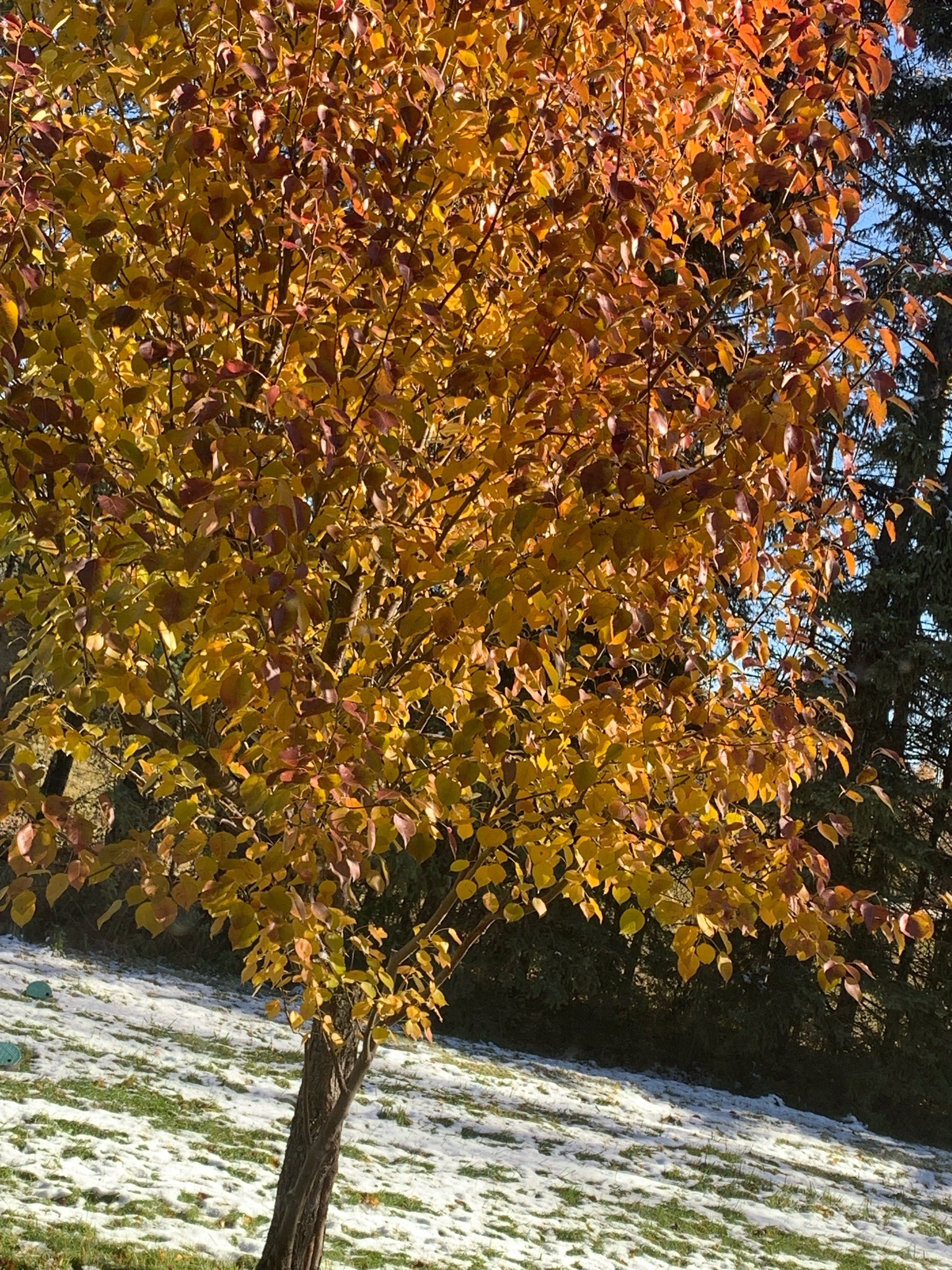
A deciduous tree known for its dense, upright to rounded crown, glossy dark green leaves that turn vibrant shades of yellow, orange, and red in autumn, and profuse white spring flowers.
- Light
- Full sun, requiring at least 6 to 8 hours of direct sunlight per day.
- Water
- Moderate watering needs. Water deeply once a week during dry spells, allowing the top couple of inches of soil to dry out between waterings. Highly drought-tolerant once mature.
- Growth
- Deciduous perennial tree with a moderate to fast growth rate, typically reaching mature heights of 30 to 50 feet and spreads of 20 to 30 feet with a dense, pyramidal to rounded crown.
Care instructions
Provide full sun exposure for optimal growth and flowering. Water regularly when newly planted to establish a deep root system, transitioning to moderate drought tolerance once established. Plant in well-drained soil with a balanced general-purpose fertilizer applied in early spring before new growth begins.
Growing details
Sunlight
Full sun, requiring at least 6 to 8 hours of direct sunlight per day.
Watering
Moderate watering needs. Water deeply once a week during dry spells, allowing the top couple of inches of soil to dry out between waterings. Highly drought-tolerant once mature.
Soil
Adaptable to a wide range of well-drained soil types including clay, loam, and sand, with a preferred pH range of 6.0 to 7.0 (slightly acidic to neutral).
Hardiness zone
USDA Hardiness Zones 5 through 9, exhibiting good cold and heat tolerance.
Growth habit
Deciduous perennial tree with a moderate to fast growth rate, typically reaching mature heights of 30 to 50 feet and spreads of 20 to 30 feet with a dense, pyramidal to rounded crown.
Bloom season
Spring. Produces clusters of small, white, five-petaled flowers before the leaves fully emerge, possessing a distinct scent.
Propagation
Propagated primarily through seed stratification, or through grafting onto compatible rootstocks for specific named cultivars.
Common pests & issues
Susceptible to fire blight, leaf spots, and branch breakage due to weak branch angles under heavy wind or ice loads. Pruning in late winter helps maintain structural integrity.
Similar species
Bradford Pear, Cleveland Select Pear, and other Pyrus cultivars, which are distinguished primarily by subtle differences in mature canopy shape, branching angles, and density.