
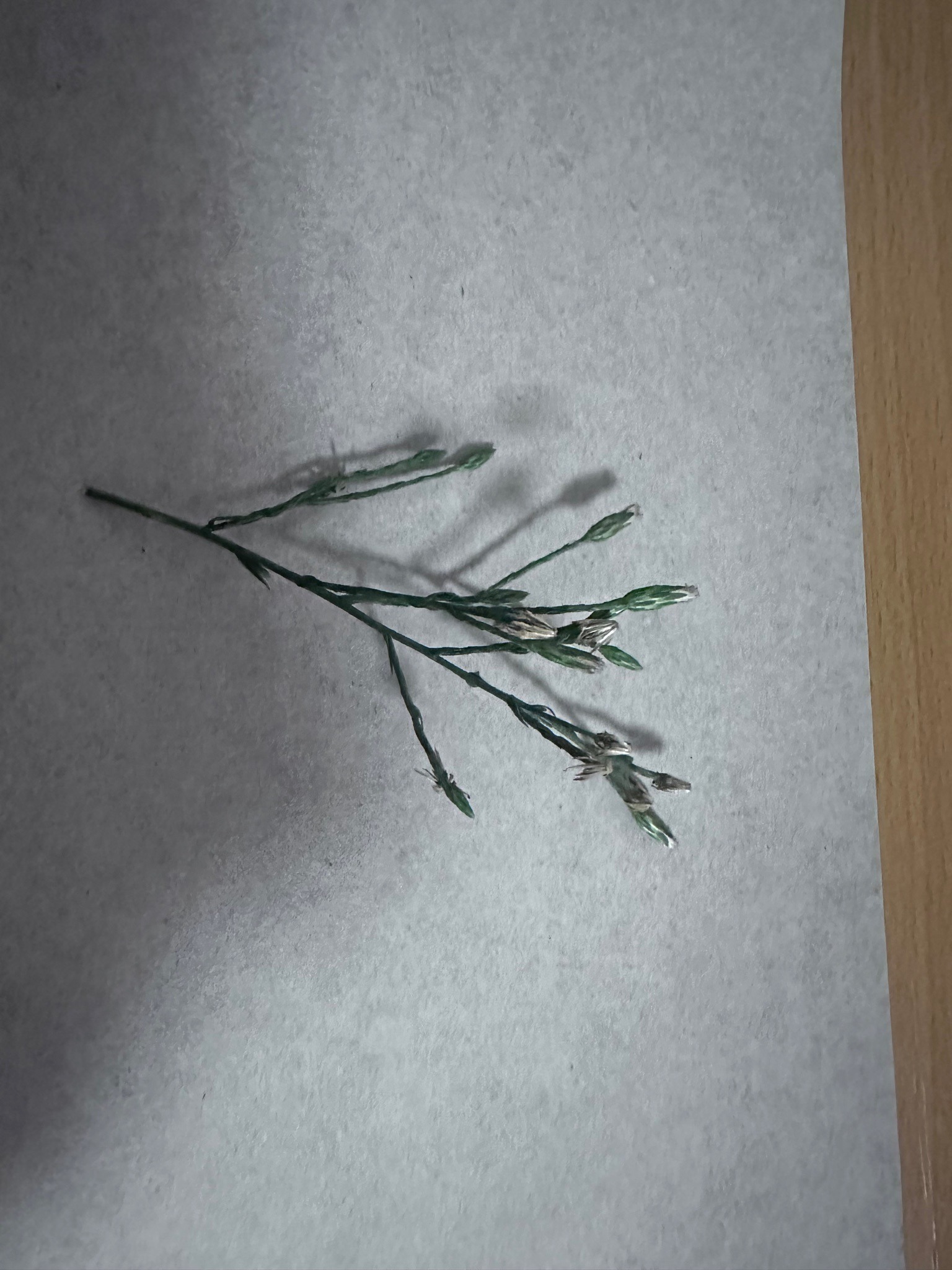
Canada Bluegrass
Poa compressa
A perennial grass featuring distinctive flattened, blue-green stems and narrow, panicle-style flower clusters.
- Light
- Full sun, requiring at least six hours of direct sunlight per day
- Water
- Moderate water needs; drought-tolerant once established. Avoid waterlogged soils to prevent root rot.
- Growth
- Perennial grass spreading via rhizomes, forming a loose turf. Typically grows to a height of 6 to 24 inches with an open, spreading form.
Care instructions
Provide full sun exposure and well-draining soil. Water moderately, allowing the soil to dry slightly between watering sessions. Fertilize sparingly in spring.
Growing details
Sunlight
Full sun, requiring at least six hours of direct sunlight per day
Watering
Moderate water needs; drought-tolerant once established. Avoid waterlogged soils to prevent root rot.
Soil
Adaptable to various soil types including poor, dry, or rocky soils, with a preferred pH range of 6.0 to 7.0.
Hardiness zone
USDA Hardiness Zones 3 through 9
Growth habit
Perennial grass spreading via rhizomes, forming a loose turf. Typically grows to a height of 6 to 24 inches with an open, spreading form.
Bloom season
Blooms from late spring to mid-summer, producing slender, green to purplish panicles of spikelets.
Propagation
Propagated easily through seed germination or division of established rhizome clumps in spring or autumn.
Common pests & issues
Generally resilient, but can occasionally be affected by rust diseases or typical lawn pests under overly humid conditions.
Similar species
Kentucky Bluegrass (Poa pratensis), which can be distinguished by its distinctly rounded stems compared to the compressed, flattened stems of Canada Bluegrass.