
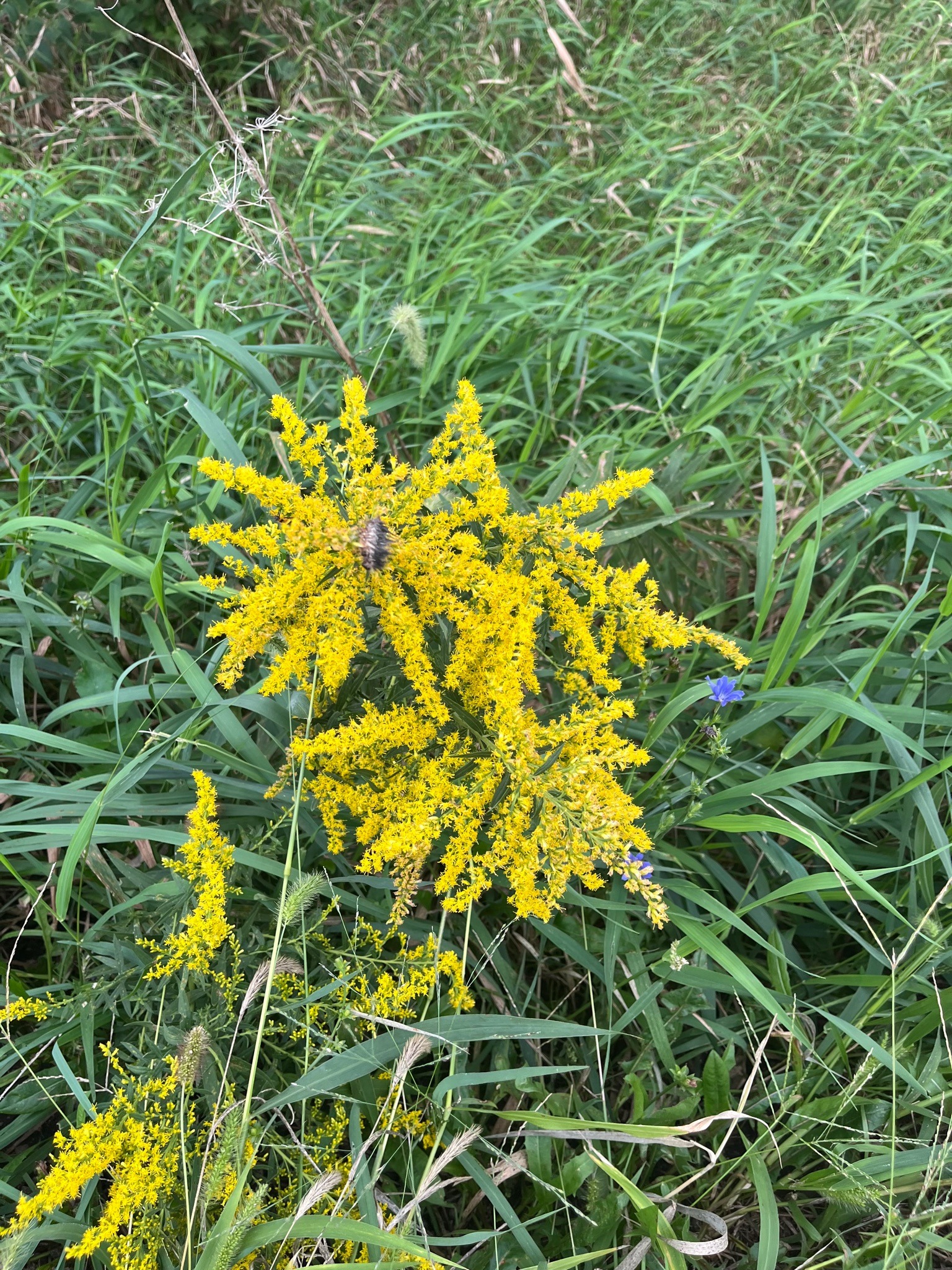
Canada Goldenrod
Solidago canadensis
A herbaceous perennial plant featuring upright stems clothed in alternate lance-shaped leaves, topped with large, pyramidal clusters of tiny bright yellow flower heads.
- Light
- Full sun, requiring at least 6 to 8 hours of direct sunlight per day.
- Water
- Requires moderate watering when newly planted and during prolonged dry periods. Established plants have good drought tolerance. Avoid waterlogged soils to prevent root issues.
- Growth
- Herbaceous perennial forming upright, clonal clumps via rhizomes. Reaches a mature height of 2 to 5 feet with a spread of 2 to 3 feet, exhibiting a fast growth rate.
Care instructions
Provide full sun exposure and well-draining soil. Water moderately during dry spells to maintain soil moisture, though established plants tolerate periodic dryness. Apply a balanced, low-nitrogen fertilizer sparingly in spring if soil fertility is low.
Growing details
Sunlight
Full sun, requiring at least 6 to 8 hours of direct sunlight per day.
Watering
Requires moderate watering when newly planted and during prolonged dry periods. Established plants have good drought tolerance. Avoid waterlogged soils to prevent root issues.
Soil
Prefers well-draining loamy, sandy, or clay soils with a neutral to slightly acidic pH range of 6.0 to 7.0.
Hardiness zone
USDA Hardiness Zones 3 through 9.
Growth habit
Herbaceous perennial forming upright, clonal clumps via rhizomes. Reaches a mature height of 2 to 5 feet with a spread of 2 to 3 feet, exhibiting a fast growth rate.
Bloom season
Blooms from mid-summer through autumn, producing dense, plume-like panicles of small bright yellow daisy-like flower heads.
Propagation
Propagated easily by division of established clumps in spring or autumn, or by sowing seeds directly in the garden after the last frost.
Common pests & issues
Generally resilient, but can occasionally be affected by powdery mildew or rust in humid conditions with poor air circulation. Pests such as lace bugs or aphids may occasionally appear.
Similar species
Can be distinguished from other goldenrod species such as tall goldenrod (Solidago altissima) by its stem hairiness patterns and leaf characteristics, and is often confused with ragweed, though goldenrod has bright showy flowers rather than inconspicuous green ones.