
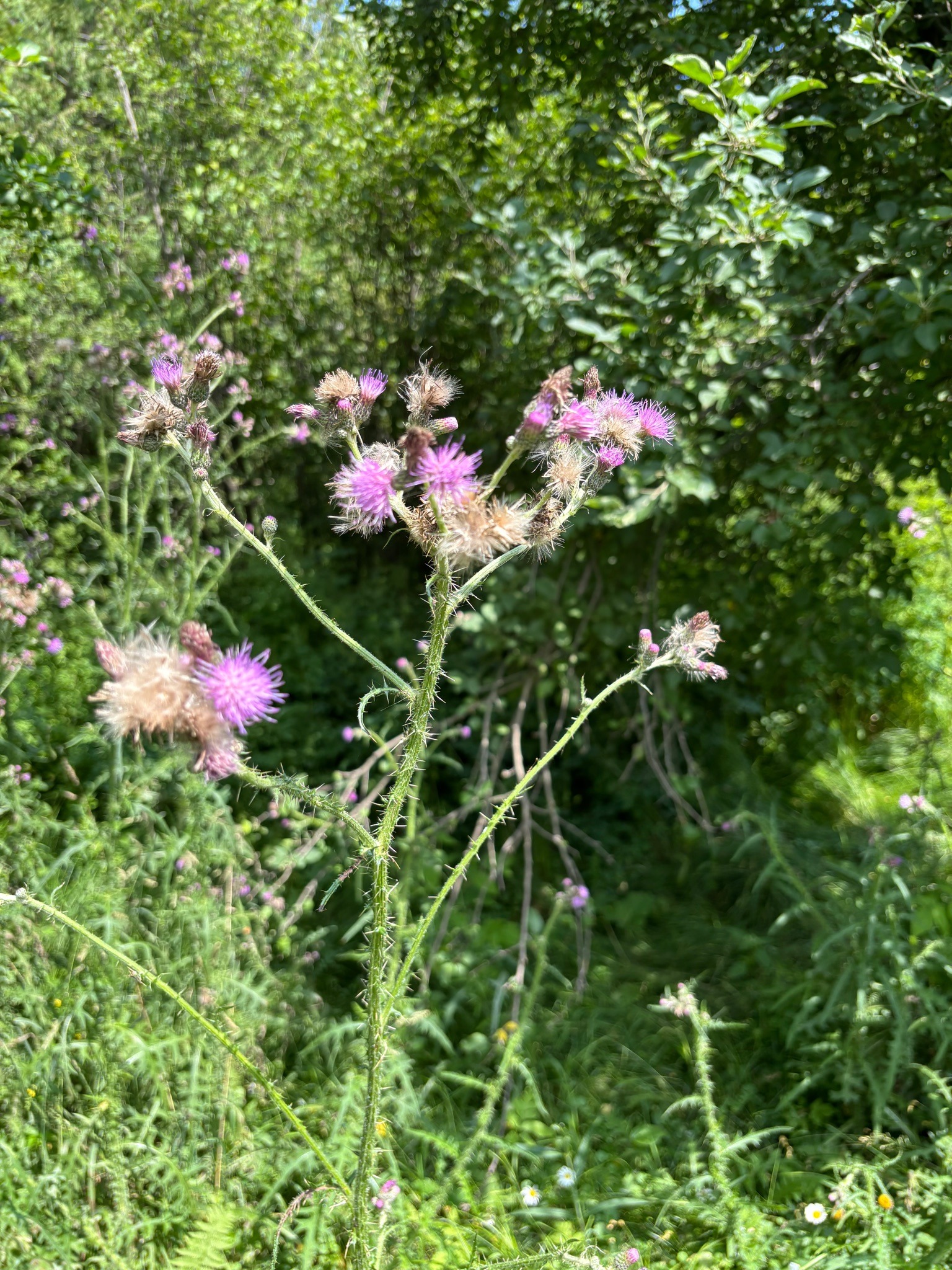
Canada Thistle
Cirsium arvense
A tall perennial herbaceous plant known for its slender, spiny, winged stems and clusters of small, lavender-to-purple disk flower heads that mature into fluffy seed tufts.
- Light
- Full sun to partial sun (6+ hours of direct sunlight daily for optimum growth).
- Water
- Low to moderate; highly drought-tolerant once established due to an extensive horizontal and vertical creeping root system.
- Growth
- Colonial perennial growing erect from deep, creeping horizontal roots; reaches heights of 1 to 4 feet (0.3 to 1.2 meters).
Care instructions
Generally considered a persistent weed rather than a cultivated plant. If grown, it requires full sun, minimal watering once established, and well-draining soil. It thrives in neglected, disturbed sites without fertilizer.
Growing details
Sunlight
Full sun to partial sun (6+ hours of direct sunlight daily for optimum growth).
Watering
Low to moderate; highly drought-tolerant once established due to an extensive horizontal and vertical creeping root system.
Soil
Adaptable to a wide range of soils, including clay, loam, and gravelly soils; prefers well-drained conditions with a neutral to slightly alkaline pH.
Hardiness zone
USDA Zones 3 through 9.
Growth habit
Colonial perennial growing erect from deep, creeping horizontal roots; reaches heights of 1 to 4 feet (0.3 to 1.2 meters).
Bloom season
Mid-summer to early autumn; features small, fragrant, rose-purple to pinkish-lavender disk flowers in clusters.
Propagation
Propagates aggressively through underground root fragments (rhizomes) as well as wind-dispersed seeds.
Common pests & issues
Susceptible to rust fungi, stem borers, and foliage-feeding beetles, though these rarely hinder its vigorous spreading nature.
Similar species
Bull Thistle (Cirsium vulgare) has much larger flower heads and prominent spiny wings running full length on the stem; Musk Thistle (Carduus nutans) features large, nodding purple flower heads.