
Canadian Horseweed
Erigeron canadensis
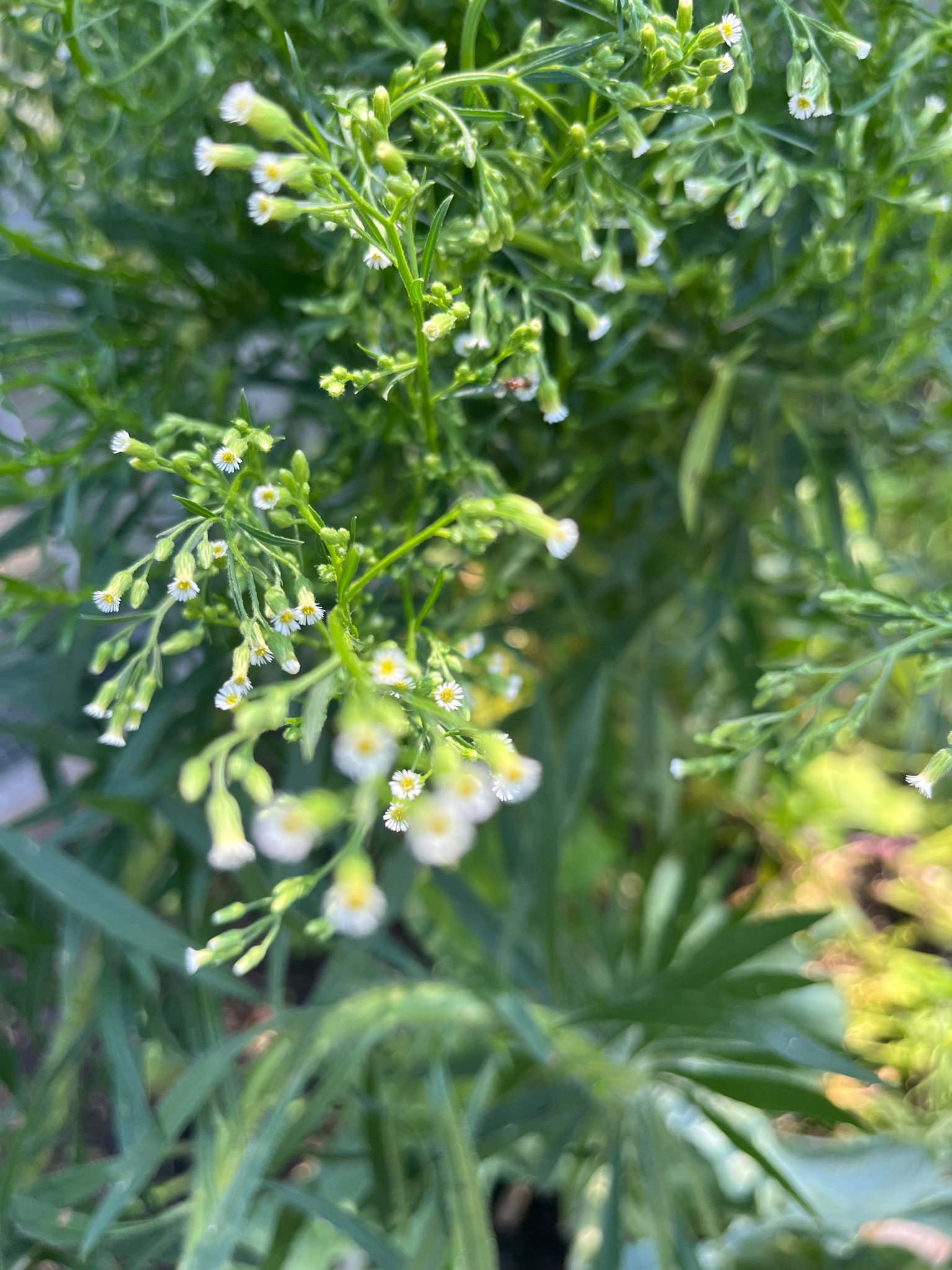
An erect annual plant featuring numerous narrow, linear leaves and branching stems that terminate in dense arrays of small flower heads containing tiny white or pale pink ray florets surrounding yellow disk florets.
- Light
- Full sun, requiring 6 to 8 hours of direct sunlight per day.
- Water
- Moderate watering needs. Allow the soil to dry out between watering sessions. Highly drought tolerant once established, and susceptible to root rot in waterlogged conditions.
- Growth
- An upright, herbaceous annual plant growing between 1 to 6 feet tall with a slender, vertical stem and narrow spread, exhibiting a rapid growth rate during spring and summer.
Care instructions
Prefers full sun exposures with at least 6 hours of direct light daily. Requires well-drained soil and moderate moisture, though established plants show significant drought tolerance. Fertilization is generally not necessary.
Growing details
Sunlight
Full sun, requiring 6 to 8 hours of direct sunlight per day.
Watering
Moderate watering needs. Allow the soil to dry out between watering sessions. Highly drought tolerant once established, and susceptible to root rot in waterlogged conditions.
Soil
Adaptable to various well-drained soil types including sandy, loamy, and clay soils, with a preferred pH range of 6.0 to 7.5.
Hardiness zone
USDA hardiness zones 2 through 10, functioning primarily as an annual across all ranges.
Growth habit
An upright, herbaceous annual plant growing between 1 to 6 feet tall with a slender, vertical stem and narrow spread, exhibiting a rapid growth rate during spring and summer.
Bloom season
Blooms from mid-summer through autumn, producing numerous small composite flower heads with white ray petals and yellow centers.
Propagation
Propagates primarily by wind-dispersed seeds released in large quantities during autumn.
Common pests & issues
Generally resistant to major insect pests and severe diseases, though occasionally susceptible to powdery mildew or stem rot in overly damp conditions.
Similar species
Similar to other fleabane species such as Erigeron annuus, but distinguished by its notably narrower leaves, taller stature, and much smaller, tightly clustered flower heads.