
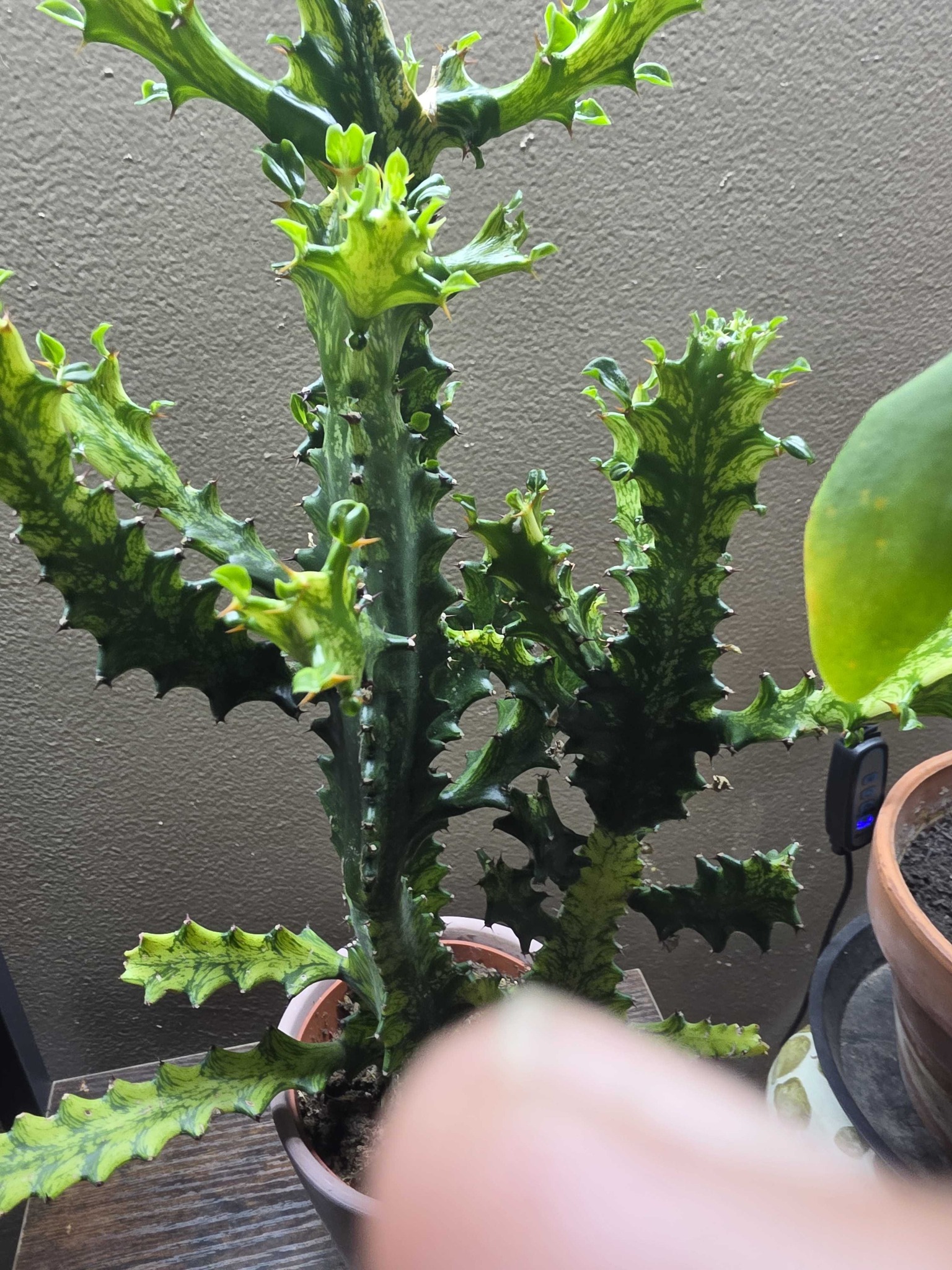
Candelabra Tree (Variegated form)
Euphorbia lactea
A succulent shrub featuring upright, branching, ribbed stems with distinct undulating or wing-like margins and pairs of small spines. The cultivar shown displays striking variegation with shades of green, cream, and yellow mottling.
- Light
- Full sun to very bright indirect light, ideally 6 or more hours of bright light daily.
- Water
- Water deeply but infrequently, allowing the soil to dry out thoroughly between waterings. Reduce watering significantly during the winter months. Overwatering leads to root rot.
- Growth
- Perennial succulent shrub with an upright, candelabra-like branching growth form. Can reach mature heights of 8 to 15 feet in native outdoor habitats, but stays much smaller when container-grown indoors.
Care instructions
Provide bright, direct sunlight and ensure the potting medium dries out completely between waterings. Use a well-draining cactus or succulent soil mix. Protect from freezing temperatures and fertilize sparingly during the active growing season.
Growing details
Sunlight
Full sun to very bright indirect light, ideally 6 or more hours of bright light daily.
Watering
Water deeply but infrequently, allowing the soil to dry out thoroughly between waterings. Reduce watering significantly during the winter months. Overwatering leads to root rot.
Soil
Fast-draining sandy or gravelly soil mix designed for cacti and succulents, with a neutral to slightly acidic pH range of 6.0 to 7.0.
Hardiness zone
USDA Hardiness Zones 10 through 11, highly sensitive to frost and cold drafts.
Growth habit
Perennial succulent shrub with an upright, candelabra-like branching growth form. Can reach mature heights of 8 to 15 feet in native outdoor habitats, but stays much smaller when container-grown indoors.
Bloom season
Rarely blooms when cultivated indoors; when grown outdoors in ideal conditions, it produces tiny, inconspicuous cyathia flowers.
Propagation
Propagated primarily through stem cuttings taken during the spring or summer. Allow cuttings to callus over for several days before planting in a dry, sandy rooting medium.
Common pests & issues
Susceptible to root rot if overwatered or kept in poorly draining soil. Mealybugs and scale insects may occasionally infest the stems.
Similar species
Euphorbia ingens and Euphorbia trigona, which can be distinguished by their different stem ribbing patterns, spine arrangements, and lack of characteristic marbled variegation.