
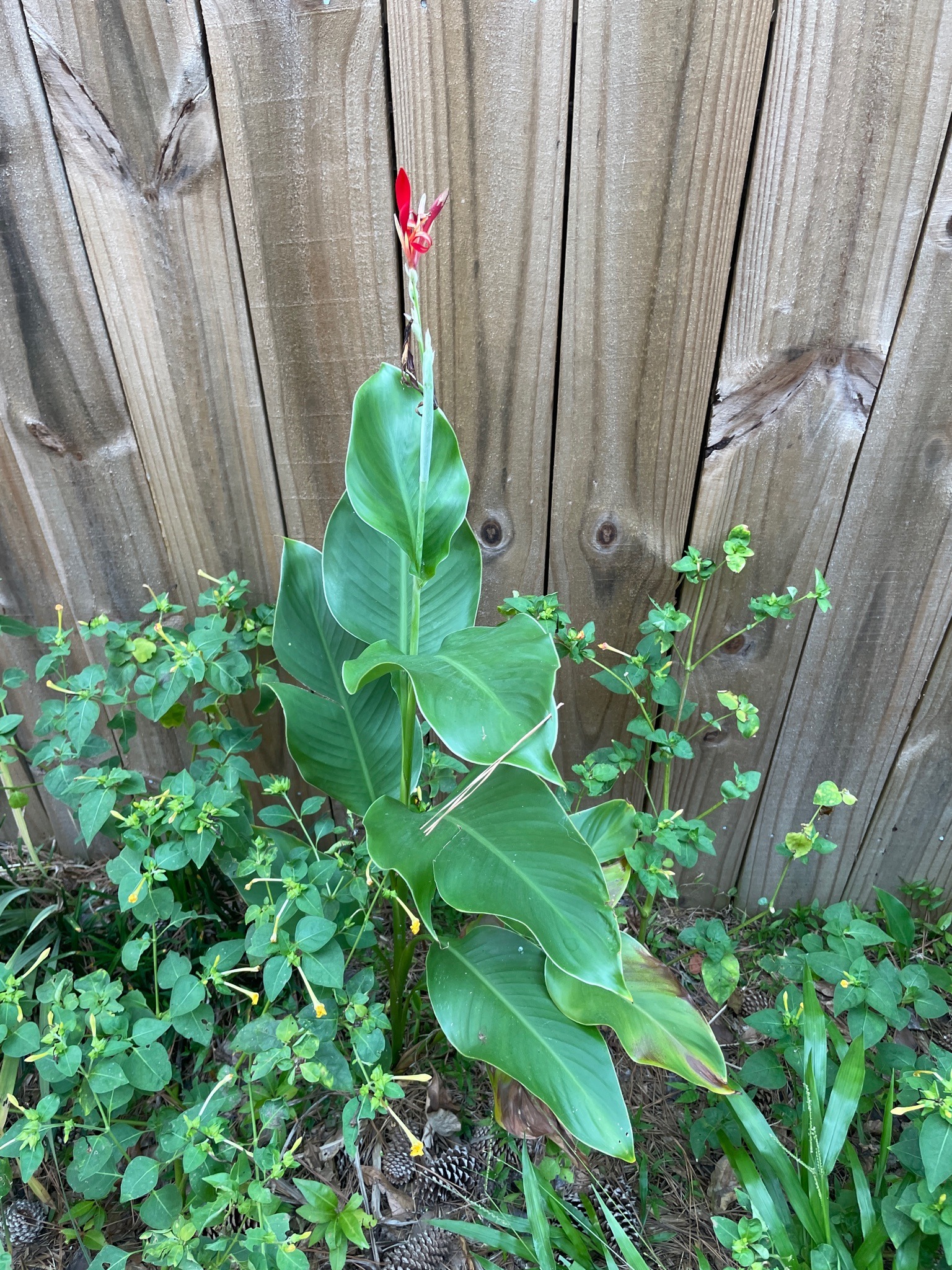
Canna Lily
Canna indica
A striking herbaceous perennial featuring large, paddle-shaped, alternate leaves and erect stems terminating in bright red or multicolored flowers.
- Light
- Full sun, requiring at least 6 to 8 hours of direct sunlight per day.
- Water
- High water requirements. Keep the soil evenly moist and never allow it to dry out completely. Tolerates wet soil and even shallow standing water.
- Growth
- Herbaceous perennial growing from thick rhizomes, reaching mature heights of 2 to 6 feet with a spread of 2 to 3 feet, exhibiting a fast growth rate.
Care instructions
Provide full sun and consistently moist, rich soil. Water regularly, especially during dry spells, and apply a balanced fertilizer monthly during the growing season.
Growing details
Sunlight
Full sun, requiring at least 6 to 8 hours of direct sunlight per day.
Watering
High water requirements. Keep the soil evenly moist and never allow it to dry out completely. Tolerates wet soil and even shallow standing water.
Soil
Rich, loamy, organic-rich soil with excellent moisture retention and a slightly acidic to neutral pH between 6.0 and 7.0.
Hardiness zone
USDA zones 8 through 11, treated as an annual or stored indoors in colder winter climates.
Growth habit
Herbaceous perennial growing from thick rhizomes, reaching mature heights of 2 to 6 feet with a spread of 2 to 3 feet, exhibiting a fast growth rate.
Bloom season
Blooms from early summer until the first autumn frost, producing asymmetrical flowers in shades of red, orange, yellow, or pink.
Propagation
Propagated by division of rhizomes in early spring, ensuring each section has at least one strong growing eye, or by seeds.
Common pests & issues
Susceptible to bacterial wilt, rust, and viral infections such as canna mottle virus. Pests include Japanese beetles, caterpillars, and slugs, which can be managed with appropriate horticultural interventions.
Similar species
Strelitzia (Bird of Paradise) and Heliconia, which share similar paddle-shaped foliage structures, but can be distinguished by their distinct floral arrangements and structural habits.