
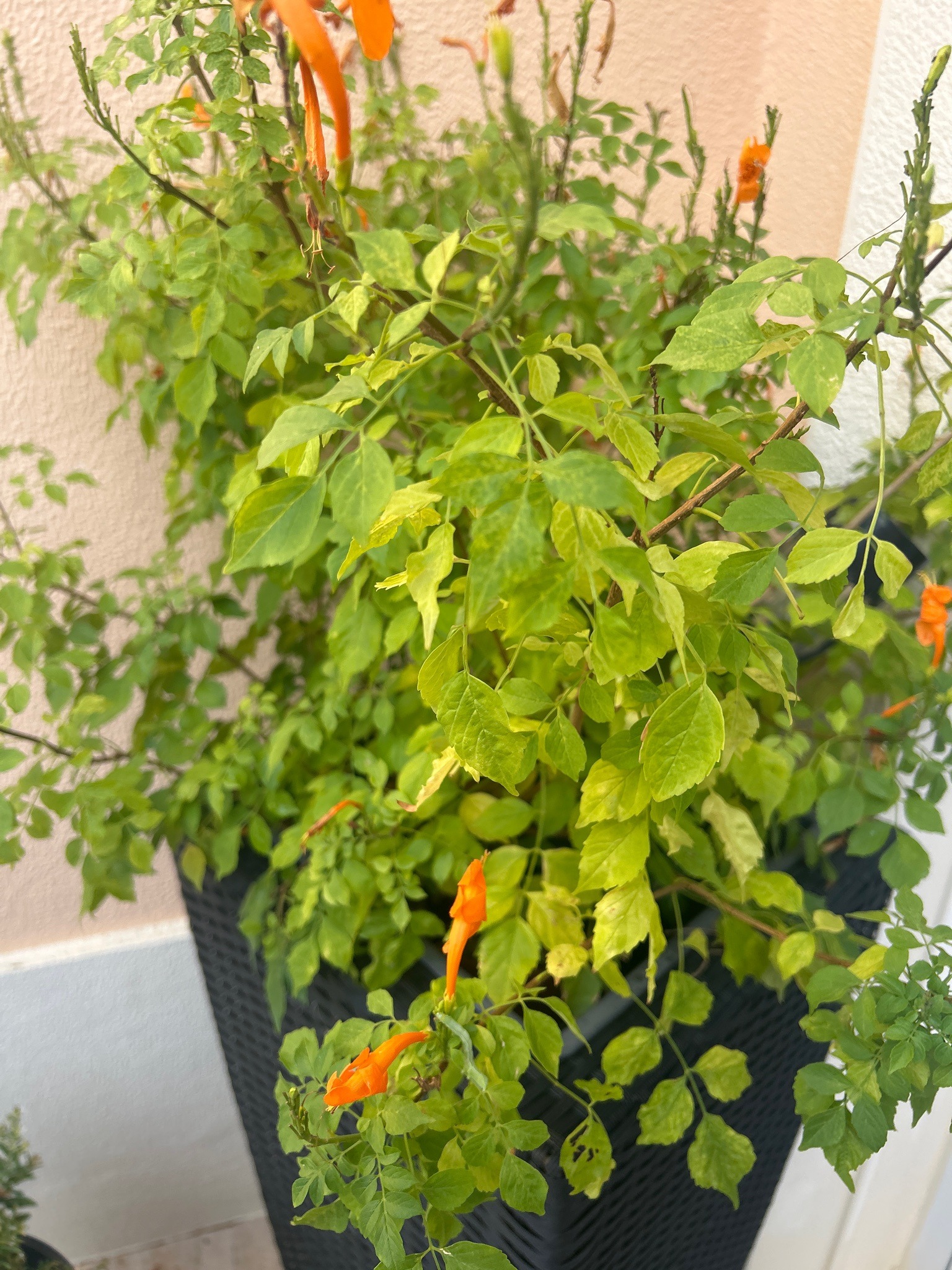
Cape Honeysuckle
Tecoma capensis
An evergreen shrub featuring glossy, compound green leaves and clusters of tubular, bright orange-red flowers that bloom in elongated terminal spikes.
- Light
- Full sun to partial shade, requiring at least six hours of direct sunlight daily for optimal flowering.
- Water
- Moderate watering needs. Water deeply when the top two inches of soil are dry. Drought tolerant once established, but avoid prolonged dryness.
- Growth
- An evergreen, scrambling shrub reaching heights of 3 to 10 feet with a similar spread. Can be trained as a climber or hedge with moderate to fast growth.
Care instructions
Provide full sun to partial shade with well-draining soil. Water regularly during the growing season, allowing the top layer of soil to dry between waterings. Feed monthly with a balanced fertilizer during spring and summer.
Growing details
Sunlight
Full sun to partial shade, requiring at least six hours of direct sunlight daily for optimal flowering.
Watering
Moderate watering needs. Water deeply when the top two inches of soil are dry. Drought tolerant once established, but avoid prolonged dryness.
Soil
Prefers well-draining, fertile loamy or sandy soils with a slightly acidic to neutral pH range of 6.0 to 7.5.
Hardiness zone
USDA Hardiness Zones 9 through 11. Sensitive to heavy frost.
Growth habit
An evergreen, scrambling shrub reaching heights of 3 to 10 feet with a similar spread. Can be trained as a climber or hedge with moderate to fast growth.
Bloom season
Blooms from autumn through spring, producing tubular, bright orange to red flowers grouped in terminal clusters.
Propagation
Propagated easily through stem cuttings taken in spring or summer, or by layering and seeds.
Common pests & issues
Susceptible to aphids, whiteflies, and spider mites. Root rot can occur in poorly draining soils.
Similar species
Tecoma stans (Yellow Bells), which features bright yellow trumpet-shaped flowers instead of orange-red.