
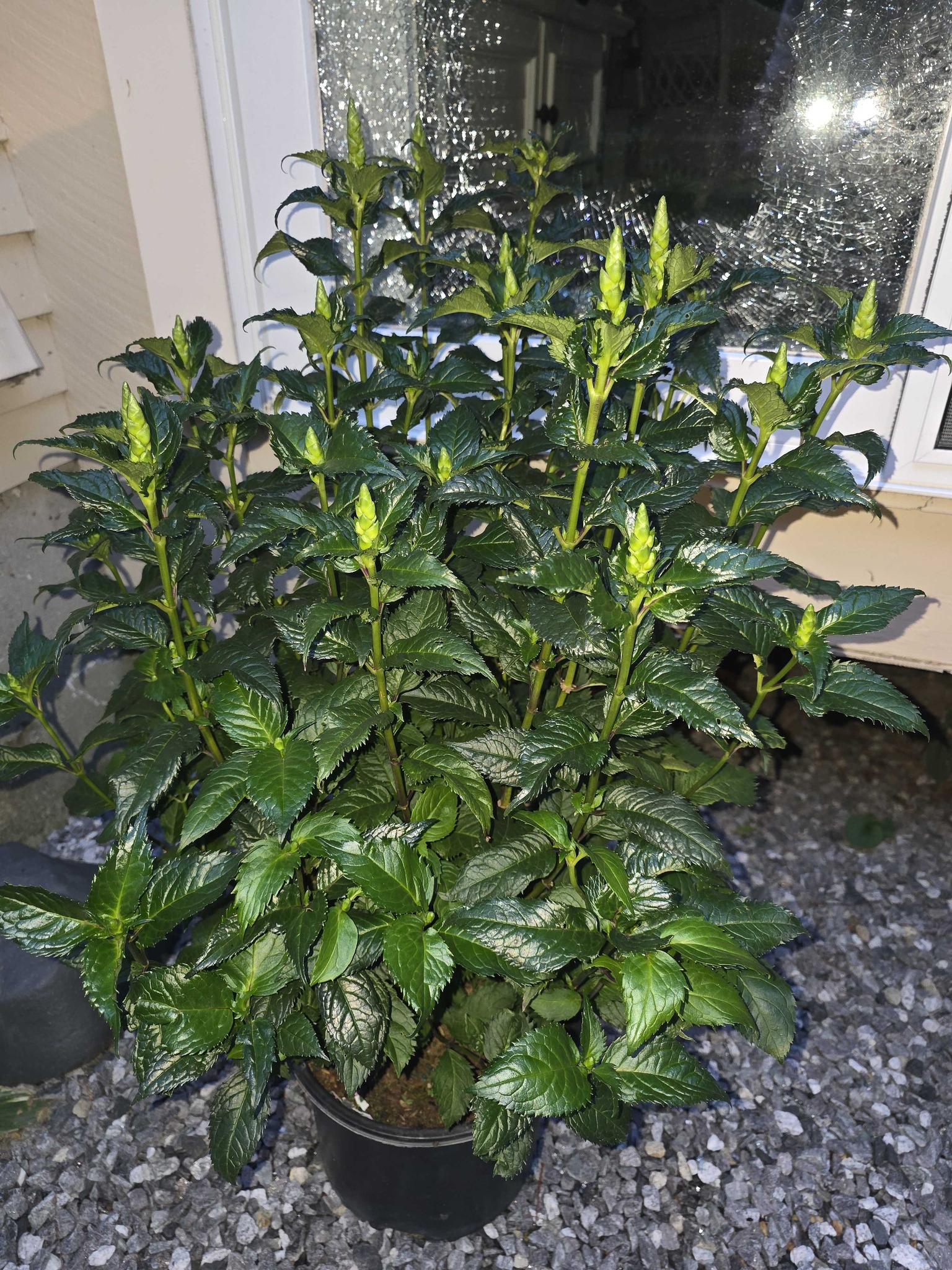
Cardinal Flower
Lobelia cardinalis
An upright herbaceous perennial featuring dark green, alternate, lance-shaped leaves with serrated margins, upright rigid stems, and distinctive pointed green flower buds that develop into tubular red blossoms.
- Light
- Full sun to partial shade, ideally receiving at least 6 hours of direct sunlight daily, though partial afternoon shade is beneficial in hotter southern climates.
- Water
- Requires consistently moist to wet soil. High moisture tolerance and does not tolerate dry soil conditions well; frequent watering is necessary during prolonged dry spells.
- Growth
- Herbaceous perennial forming an upright, clump-forming habit with a moderate growth rate, reaching mature heights of 2 to 4 feet and spreads of 1 to 2 feet.
Care instructions
Provide full sun to partial shade, keep soil consistently moist without letting it dry out completely, and apply a balanced, water-soluble fertilizer during the spring growth phase.
Growing details
Sunlight
Full sun to partial shade, ideally receiving at least 6 hours of direct sunlight daily, though partial afternoon shade is beneficial in hotter southern climates.
Watering
Requires consistently moist to wet soil. High moisture tolerance and does not tolerate dry soil conditions well; frequent watering is necessary during prolonged dry spells.
Soil
Prefers rich, organic, loamy or clay soils with high moisture retention capacity. Ideal soil pH ranges from acidic to neutral (6.0 to 7.0).
Hardiness zone
USDA Hardiness Zones 3 through 9.
Growth habit
Herbaceous perennial forming an upright, clump-forming habit with a moderate growth rate, reaching mature heights of 2 to 4 feet and spreads of 1 to 2 feet.
Bloom season
Blooms from mid-summer through early autumn, producing spikes of vivid tubular flowers.
Propagation
Propagated through seeds sown on the surface of moist soil without covering (as they require light to germinate), or through stem cuttings and basal shoot division in spring.
Common pests & issues
Susceptible to snails, slugs, and occasionally powdery mildew or leaf spots. Prevent by ensuring adequate air circulation and managing excess ground moisture.
Similar species
Lobelia siphilitica (Great Blue Lobelia), which can be distinguished by its blue flowers and slightly broader leaves, though they share a similar upright spike growth habit.