
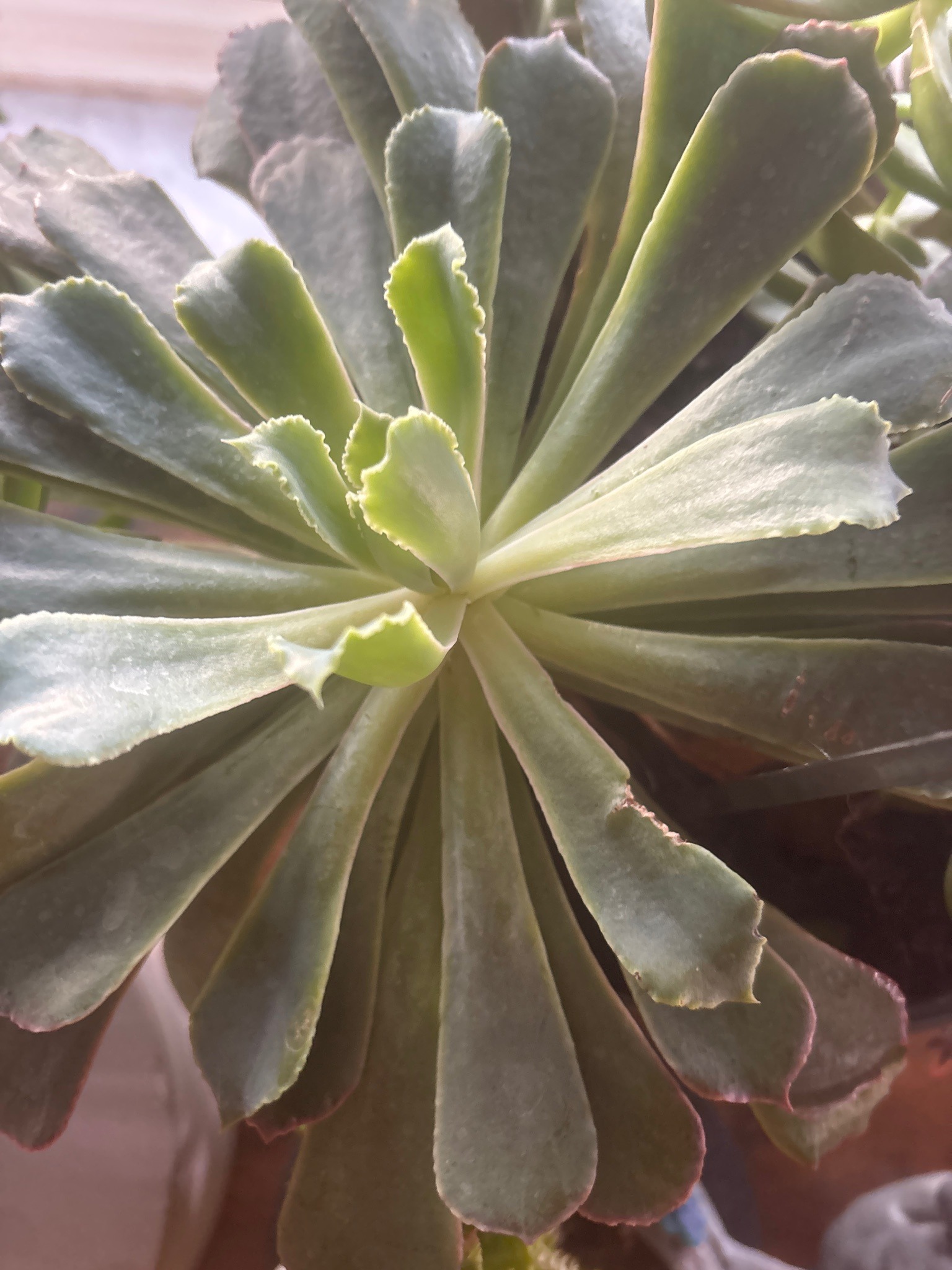
Carnival Echeveria
Echeveria cante x gibbiflora
A rosette-forming succulent featuring long, spatula-shaped leaves with distinct undulating or crinkled margins, often displaying subtle powdery coatings and reddish highlights along the edges.
- Light
- Full sun to bright partial indirect light, ideally 6 or more hours of sunlight per day
- Water
- Water deeply when the soil is completely dry using the soak-and-dry method. Reduce watering during the winter dormancy period. Avoid getting water trapped in the center rosette to prevent rot.
- Growth
- Perennial succulent forming a compact, stemless or short-stemmed rosette, reaching 6 to 12 inches in height and spreading up to 12 to 18 inches wide with a moderate growth rate
Care instructions
Provide bright, direct sunlight for several hours daily. Water thoroughly only when the soil is completely dry, allowing excess to drain freely. Use gritty, fast-draining soil and a container with drainage holes. Fertilize lightly during the active growing season with a balanced, diluted liquid fertilizer.
Growing details
Sunlight
Full sun to bright partial indirect light, ideally 6 or more hours of sunlight per day
Watering
Water deeply when the soil is completely dry using the soak-and-dry method. Reduce watering during the winter dormancy period. Avoid getting water trapped in the center rosette to prevent rot.
Soil
Gritty, highly porous cactus and succulent potting mix with excellent drainage. Optimal pH range is between 6.0 and 7.5.
Hardiness zone
USDA Hardiness Zones 9 to 11, grown primarily indoors or as a patio container plant in cooler climates
Growth habit
Perennial succulent forming a compact, stemless or short-stemmed rosette, reaching 6 to 12 inches in height and spreading up to 12 to 18 inches wide with a moderate growth rate
Bloom season
Spring to summer, producing tall, arching flower stalks with bell-shaped coral or pink flowers
Propagation
Propagated easily through leaf cuttings taken from healthy lower leaves, stem cuttings, or by separating offsets that form at the base of the mature plant
Common pests & issues
Susceptible to root rot from overwatering or poorly draining soil. Mealybugs and aphids can occasionally target the new growth in the center of the rosette; treat with appropriate horticultural oils or manual removal.
Similar species
Other ruffled Echeveria hybrids like Echeveria 'Neon Breakers' or Echeveria shaviana, distinguished by leaf coloration, leaf thickness, and the intensity of the margin crinkling.
User notes
Succulent