
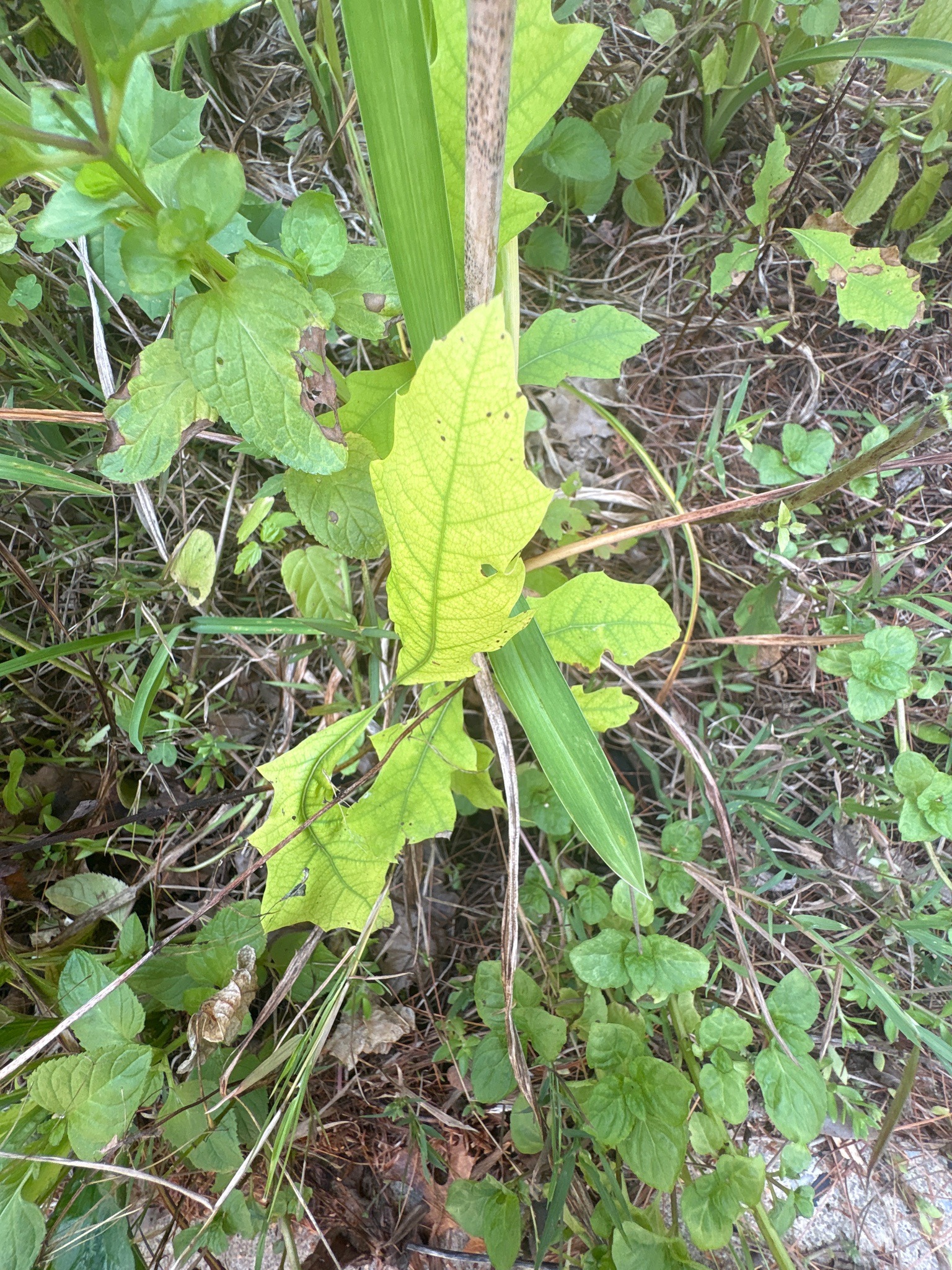
Carolina Horsenettle
Solanum carolinense
An herbaceous perennial plant featuring lobed, wavy-edged leaves with a slightly lighter green underside, often intermixed with other ground vegetation.
- Light
- Full sun, requiring at least six hours of direct sunlight per day.
- Water
- Moderate watering needs. Allow the top inch of soil to dry out between watering sessions; highly adaptable to various moisture levels once established.
- Growth
- Herbaceous perennial growing up to 2 to 3 feet in height with an upright, branching habit and an extensive root system.
Care instructions
Thrives best in full sun exposure with well-draining soil. Requires moderate watering during dry spells and benefits from occasional balanced fertilization during the growing season.
Growing details
Sunlight
Full sun, requiring at least six hours of direct sunlight per day.
Watering
Moderate watering needs. Allow the top inch of soil to dry out between watering sessions; highly adaptable to various moisture levels once established.
Soil
Prefers loose, well-draining sandy or loamy soils with a slightly acidic to neutral pH range of 6.0 to 7.0.
Hardiness zone
USDA Hardiness Zones 5 through 9
Growth habit
Herbaceous perennial growing up to 2 to 3 feet in height with an upright, branching habit and an extensive root system.
Bloom season
Flowers from late spring through autumn, producing star-shaped blooms that are typically white or pale violet with prominent yellow central stamens.
Propagation
Propagates easily via seeds dispersed by wildlife or through underground root fragments that sprout new growth.
Common pests & issues
Generally resilient, but can occasionally be affected by standard garden pests like aphids or fungal leaf spot in overly humid environments.
Similar species
Similar to other members of the Solanaceae family, but distinguished by its specific lobed leaf margins and characteristic growth habit.