
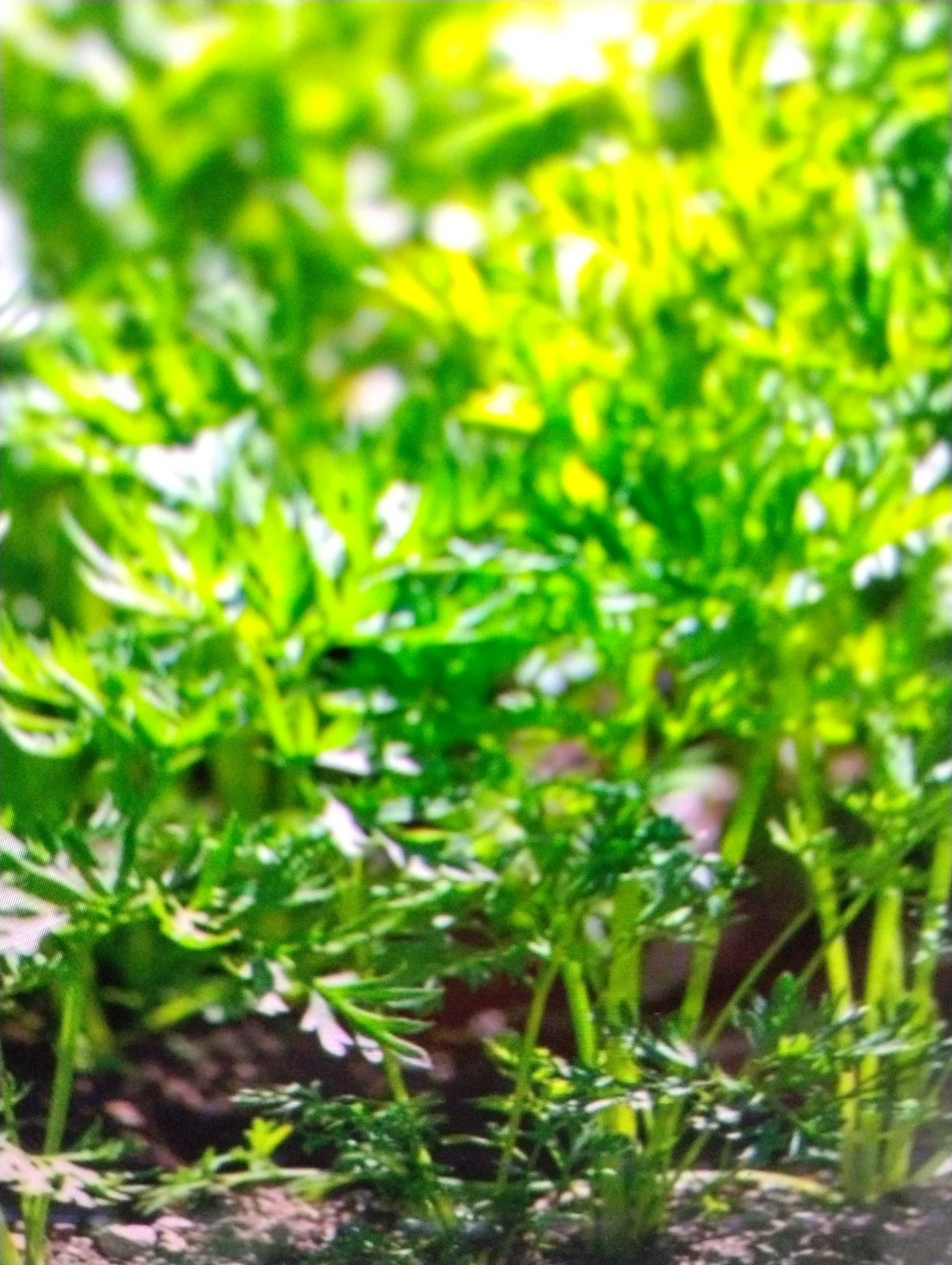
Carrot
Daucus carota
A biennial herbaceous plant featuring finely divided, feathery green foliage arranged in a rosette, growing above ground from a prominent underground taproot.
- Light
- Full sun, requiring at least 6 to 8 hours of direct sunlight per day
- Water
- Water deeply and regularly, about 1 inch of water per week, maintaining evenly moist soil to prevent the root from splitting or becoming woody. Avoid drought stress.
- Growth
- Herbaceous biennial forming a basal rosette of feathery leaves with a fleshy taproot. Typically reaches 1 to 2 feet in height with a narrow spread.
Care instructions
Provide full sun exposure, consistent moisture without waterlogging, and loose, sandy soil with a neutral pH. Feed sparingly with a low-nitrogen, high-phosphorus fertilizer to encourage root rather than excessive foliage development.
Growing details
Sunlight
Full sun, requiring at least 6 to 8 hours of direct sunlight per day
Watering
Water deeply and regularly, about 1 inch of water per week, maintaining evenly moist soil to prevent the root from splitting or becoming woody. Avoid drought stress.
Soil
Loose, sandy, or loamy well-draining soil free of rocks to allow straight root expansion. Optimal pH ranges from 6.0 to 6.8.
Hardiness zone
USDA Hardiness Zones 3 through 10, typically grown as an annual crop.
Growth habit
Herbaceous biennial forming a basal rosette of feathery leaves with a fleshy taproot. Typically reaches 1 to 2 feet in height with a narrow spread.
Bloom season
Summer of the second year, producing flat-topped umbels of small white flowers.
Propagation
Propagated strictly via seeds sown directly into the ground in early spring or late summer, as seedlings do not transplant well due to taproot disturbance.
Common pests & issues
Common pests include rust fly and nematodes, while fungal leaf blight can occur in humid conditions. Prevent by rotating crops, ensuring good air circulation, and maintaining well-draining soil.
Similar species
Look-alike species include wild carrot (Queen Anne's lace) and parsley; distinguished by the finely textured aromatic foliage and specific subterranean taproot formation.