
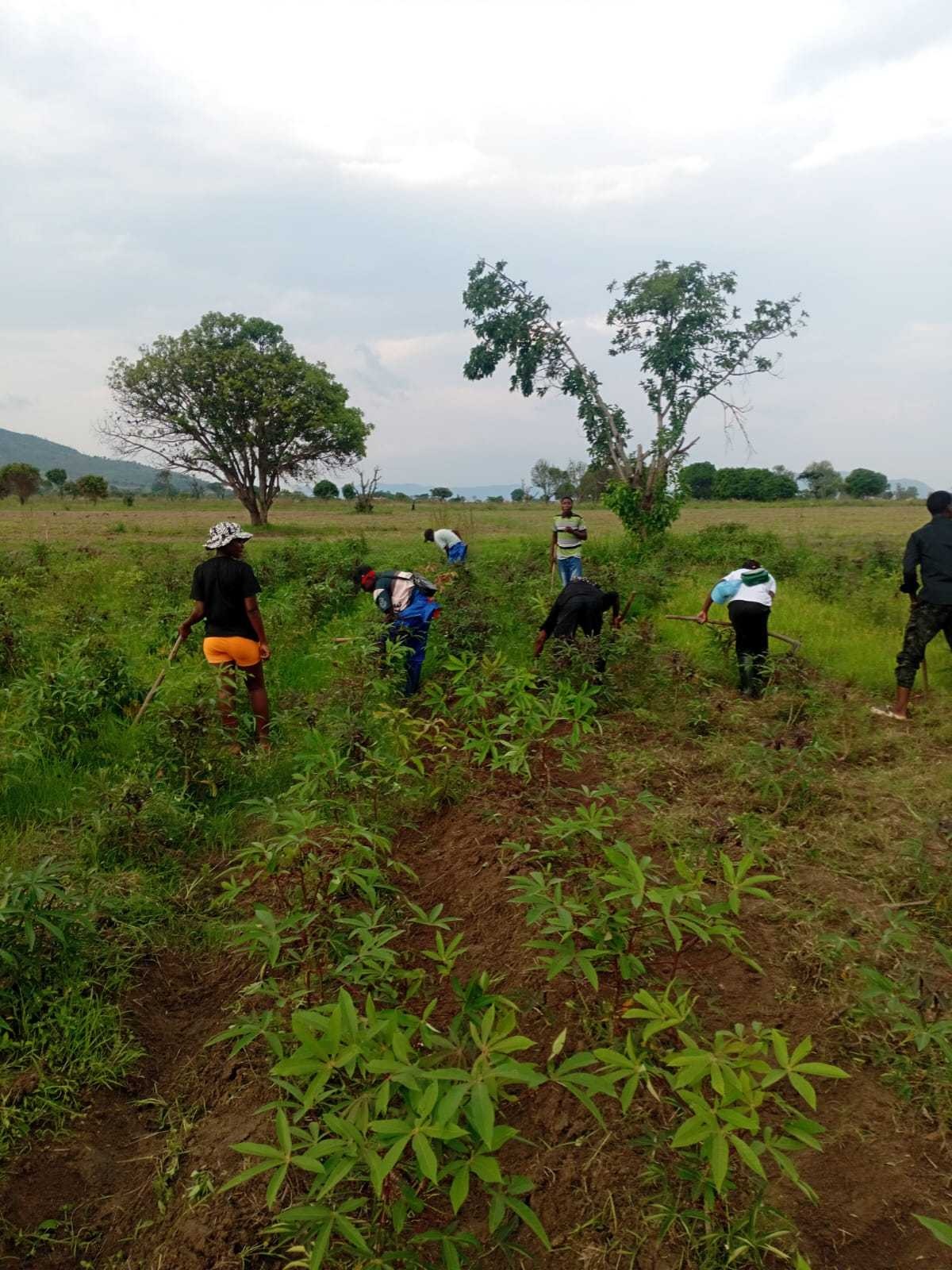
Cassava
Manihot esculenta
A woody shrub featuring palmate leaves with deep lobes, typically ranging from 5 to 9 segments, and prominent stems.
- Light
- Full sun, requiring at least 6 to 8 hours of direct sunlight per day
- Water
- Moderate water needs; drought-tolerant once established. Water deeply when the top few inches of soil become dry, avoiding waterlogged conditions.
- Growth
- Perennial woody shrub growing between 2 to 4 meters in height with a moderate growth rate
Care instructions
Provide full sun and well-draining soil. Water regularly during establishment, reducing frequency as the plant matures. Apply a balanced fertilizer during the early growth stages.
Growing details
Sunlight
Full sun, requiring at least 6 to 8 hours of direct sunlight per day
Watering
Moderate water needs; drought-tolerant once established. Water deeply when the top few inches of soil become dry, avoiding waterlogged conditions.
Soil
Well-draining sandy loam or loamy soils with a preferred pH range of 5.5 to 6.5
Hardiness zone
USDA hardiness zones 9 to 11, sensitive to frost and freezing temperatures
Growth habit
Perennial woody shrub growing between 2 to 4 meters in height with a moderate growth rate
Bloom season
Insignificant small flowers appearing in panicles, typically during warmer months; non-showy
Propagation
Propagated primarily through stem cuttings taken from mature, healthy branches
Common pests & issues
Susceptible to root rot in poorly draining soils, as well as occasional infestations of spider mites and mealybugs
Similar species
Jatropha species and castor bean plants, which can be distinguished by specific floral structures, seed pods, and stem characteristics