
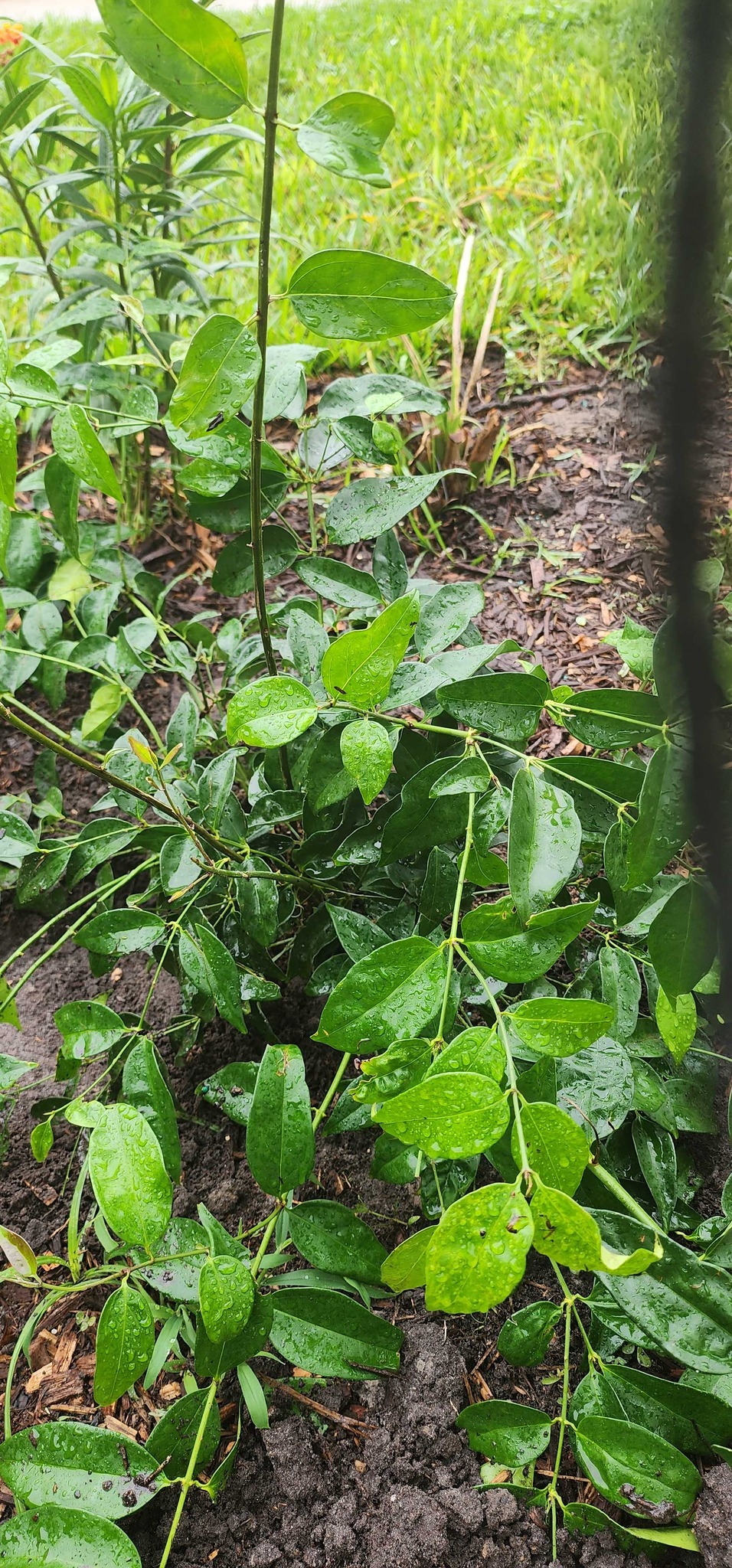
Cat's Claw Vine
Dolichandra unguis-cati
A woody vine characterized by opposite compound leaves featuring two leaflets and a specialized terminal tendril modified into three sharp hooks resembling a cat's claw, which enables it to climb surfaces.
- Light
- Full sun to partial shade, requiring at least 6 hours of direct sunlight daily for optimal vigor
- Water
- Moderate water needs during the growing season; let the soil dry slightly between waterings. Drought-tolerant once established.
- Growth
- Perennial woody vine with a vigorous, climbing growth habit. Can ascend up to 30 to 50 feet high on supports with an extensive spreading reach.
Care instructions
Provide full sun to partial shade in well-drained soil. Water deeply during establishment, and reduce frequency once mature as established plants tolerate dry spells. Apply a balanced fertilizer in spring if growth appears slow.
Growing details
Sunlight
Full sun to partial shade, requiring at least 6 hours of direct sunlight daily for optimal vigor
Watering
Moderate water needs during the growing season; let the soil dry slightly between waterings. Drought-tolerant once established.
Soil
Adaptable to a wide range of soil types including clay, loam, or sand, provided it has excellent drainage and a neutral to slightly acidic pH range of 6.0 to 7.0.
Hardiness zone
USDA Hardiness Zones 9 through 11
Growth habit
Perennial woody vine with a vigorous, climbing growth habit. Can ascend up to 30 to 50 feet high on supports with an extensive spreading reach.
Bloom season
Spring to early summer, producing bright yellow, trumpet-shaped flowers arranged in clusters.
Propagation
Propagated primarily through stem cuttings or seeds sown in warm, well-draining potting media during spring.
Common pests & issues
Generally resilient, but may occasionally experience root rot if planted in poorly draining soils. Pruning is often necessary to control vigorous lateral spread.
Similar species
Other tropical woody climbers with compound leaves, though the distinct three-pronged claw-like tendrils separate Dolichandra unguis-cati from most look-alikes.