
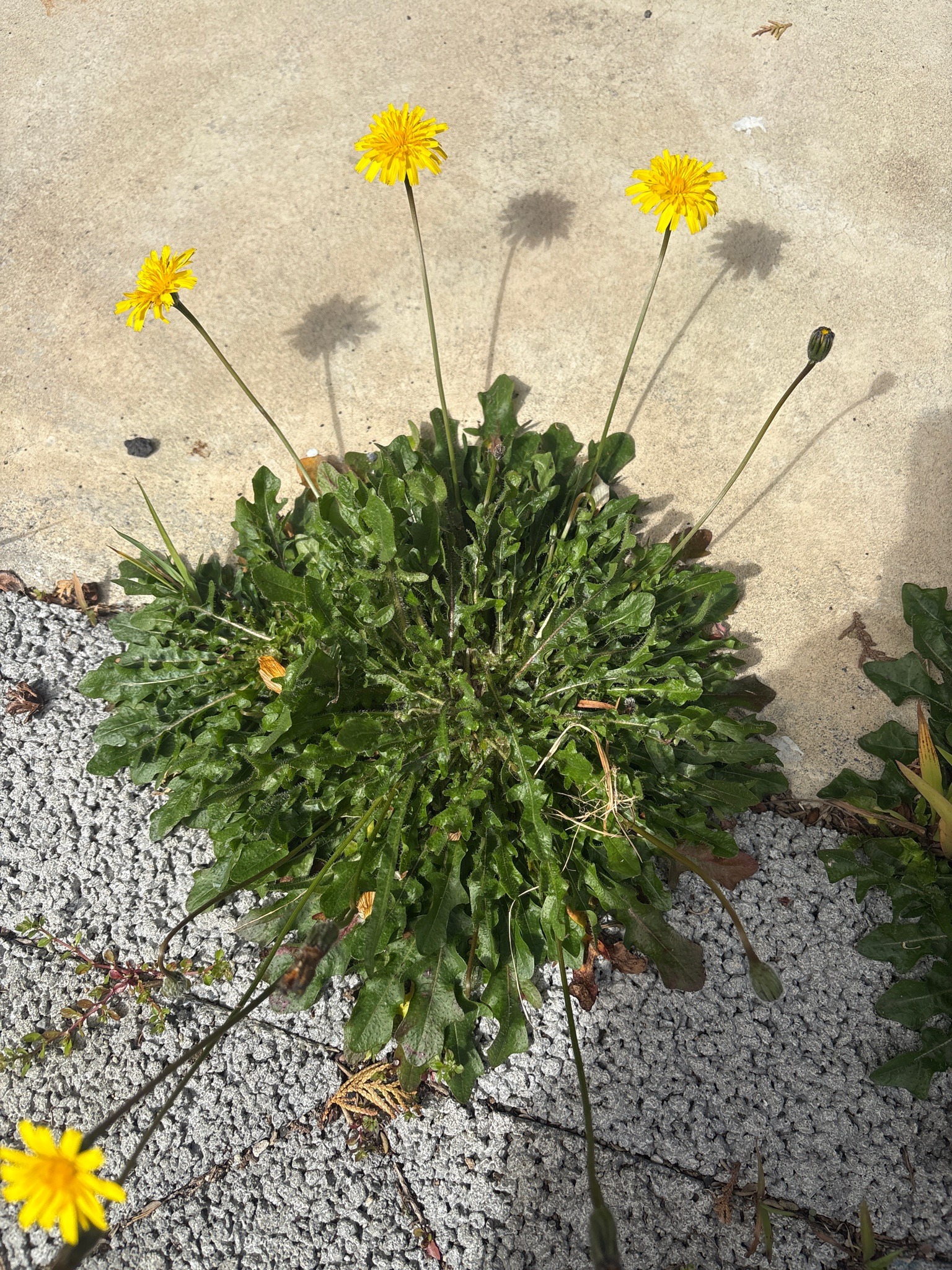
Catsear
Hypochaeris radicata
A low-growing rosette-forming herbaceous plant featuring deeply lobed, hairy basal leaves and slender, branched or unbranched scapes bearing bright yellow composite flower heads.
- Light
- Full sun, requiring at least 6 hours of direct sunlight daily.
- Water
- Low watering needs once established; allow soil to dry out between waterings. Highly tolerant of dry conditions.
- Growth
- Perennial rosette-forming plant with a deep taproot, growing up to 12 to 18 inches in height and spreading about 6 to 12 inches, with a moderate growth rate.
Care instructions
Prefers full sun and well-draining soil. It is highly drought-tolerant once established and requires minimal maintenance, adapting readily to poor soils and frequent mowing.
Growing details
Sunlight
Full sun, requiring at least 6 hours of direct sunlight daily.
Watering
Low watering needs once established; allow soil to dry out between waterings. Highly tolerant of dry conditions.
Soil
Adaptable to a wide range of well-draining soil types, including sandy, loamy, and clay soils, with a preferred pH range between 5.5 and 7.5.
Hardiness zone
USDA Hardiness Zones 3 through 9, exhibiting strong cold and heat tolerance.
Growth habit
Perennial rosette-forming plant with a deep taproot, growing up to 12 to 18 inches in height and spreading about 6 to 12 inches, with a moderate growth rate.
Bloom season
Blooms from spring through late summer, producing bright yellow dandelion-like flower heads on long, smooth or slightly bristly stems.
Propagation
Propagates readily through wind-dispersed seeds produced in spherical seed heads.
Common pests & issues
Generally resistant to major pests and diseases, though it can occasionally be affected by fungal leaf spots or root rots in poorly draining soils.
Similar species
Often confused with the common dandelion (Taraxacum officinale); however, catsear can be distinguished by its hairy leaves, branched stems, and multiple flower heads per stem, whereas dandelions have hairless leaves and single flower heads on hollow, unbranched scapes.