
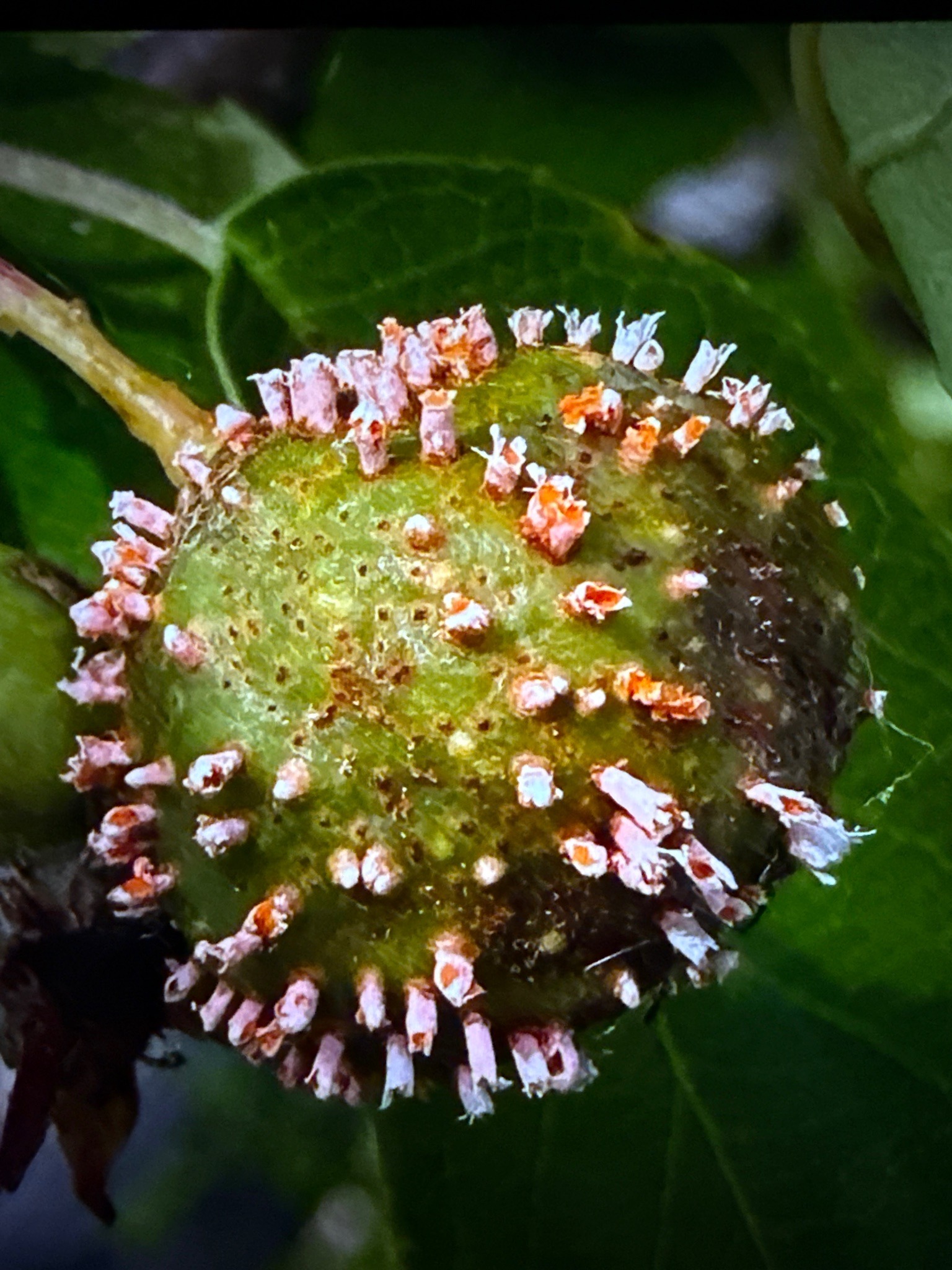
Cedar Apple Rust Gall
Gymnosporangium juniperi-virginianae
A fungal growth appearing as a spherical green to brown gall on host leaves, developing protruding tubular structures known as aecia.
- Light
- Full sun to partial shade, typically requiring 6 or more hours of direct sunlight daily.
- Water
- Requires regular moisture, adapting to the natural rainfall patterns of the regional habitat.
- Growth
- Develops as an obligate plant parasite forming perennial galls on woody hosts, measuring roughly 1 to 2 inches in diameter.
Care instructions
Management involves removing nearby alternate host plants or applying appropriate fungicides during the spring spore-dispersal period to protect foliage.
Growing details
Sunlight
Full sun to partial shade, typically requiring 6 or more hours of direct sunlight daily.
Watering
Requires regular moisture, adapting to the natural rainfall patterns of the regional habitat.
Soil
Adaptable to various well-draining soil types with a neutral to slightly acidic pH range.
Hardiness zone
USDA Zones 3 through 9
Growth habit
Develops as an obligate plant parasite forming perennial galls on woody hosts, measuring roughly 1 to 2 inches in diameter.
Bloom season
Not applicable
Propagation
Propagates primarily via airborne spores traveling between alternate plant hosts during wet spring weather.
Common pests & issues
Causes localized tissue deformation and premature leaf drop on infected host trees.
Similar species
Quince rust and hawthorn rust galls, which can be distinguished by differences in host specificity and the shape of their spore-producing structures.